
Magzter GOLDで無制限に
10,000以上の雑誌、新聞、プレミアム記事に無制限にアクセスできます。
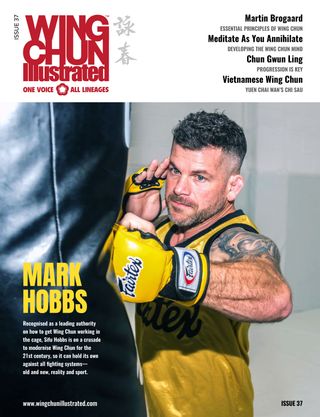
Vietnamese Wing Chun
Wing Chun Illustrated
|Issue No. 37, 2017
Yuen Chai Wan’s Chi Sau

IN VIETNAMESE Wing Chun, Chi Sau practice is known by various terms: Linh Giác (“Awareness Training”) or Niêm Thu (Chi Sau). Training and content can differ among the different families stemming from the founder of Vietnamese Wing Chun, Nguyen Te Công (Yuen Chai Wan).
In this article, I will summarise the basic ideas all lineages of Vietnamese Wing Chun share.
All branches agree the objective of training Chi Sau is to develop sensitivity to gain awareness of the opponent’s technique and structure and know of one’s own inequities. From this, practitioners learn to maximise advantage and gain victory over the opponent, but also take control over the ego.
There are branches that allow students to practise Chi Sau from the beginning under the guidance of a teacher. Others reserve it until after the basics and empty hand forms are completed. Only through patience and perseverance can Chi Sau practice be developed towards mastery.
Theory on Development of Chi Sau Practice
Some have said the Chi Sau practice as seen in Vietnamese Wing Chun closely resembles Taiji Tuishou (“Push Hands”). Other lineages of Wing Chun, as practised in Mainland China, also practice with a “Circling Hands” module. Luk Sau (or “Rolling Hands”) was most likely an invention of Yuen Kay San or Ip Man, as it figures prominently in those lineages.
More recently, Luk Sau has been incorporated into lesser-known lineages of Wing Chun to make them more in-line with the “mainstream” Ip Man Wing Chun. Regarding Vietnamese

このストーリーは、Wing Chun Illustrated の Issue No. 37, 2017 版からのものです。
Magzter GOLD を購読すると、厳選された何千ものプレミアム記事や、10,000 以上の雑誌や新聞にアクセスできます。
すでに購読者ですか? サインイン
Translate
Change font size