試す 金 - 無料
Enabling Retail
Apparel
|September 2016
Janice Goveas explores the steady growth of private labels and factors that have significantly contributed to it.

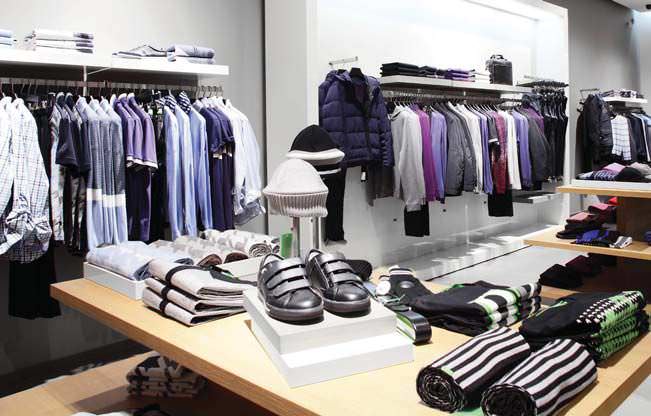
Popular fashion retail stores these days, as is customary, stock well- known brands but have now also started stocking their lesser-known cousins—the private labels. Since Indians are price conscious, it comes as no surprise that there seems to be a distinct preference for clothes that look and feel like ‘brands’ but are priced far lower than them. Naturally, private labels pose a growing threat to many international brands since they are vying for the same rack space in a multi-brand retail outlet.
In the current retail structure, however, private labels are a win-win solution for retailers and customers in India. Retailers use the might of their private labels to retain a strong bargaining power with their vendors. They demand better margins and exert more control over their merchandise mix. Customers, on the other hand, have access to a wider range, better quality to choose from and attractive price points.
The growth of private labels is directly linked to the growth of modern retailing. Retailers need to gain customer confidence, so as to successfully introduce private labels. The share of private labels in the modern retail in India is about 7 per cent, but it is as high as 40 per cent in European countries, and as less as 1 per cent in China.
WHAT ARE PRIVATE LABELS?
Private labels are essentially brands owned by a retailer, commonly known as in-house brands or business was launched by Shoppers Stop with its private label called STOP in 1994 and ever since has added more than 10 exclusive brands, forming more than 20 per cent of the company’s total range.


このストーリーは、Apparel の September 2016 版からのものです。
Magzter GOLD を購読すると、厳選された何千ものプレミアム記事や、10,000 以上の雑誌や新聞にアクセスできます。
すでに購読者ですか? サインイン
Apparel からのその他のストーリー

Apparel
All About Dressing As You Want
A. Das uncovers the current trend which is all about dressing as you want. Easy, over-sized, baggy fits and unstructured cuts are ruling every wardrobe.

6 mins
January 2022

Apparel
Online Shopping Likely To Reach $1.2 Trillion By 2025
Market Watch
1 min
January 2022

Apparel
Weaving A Sustainable Future
Brinda Gill talks to Ashita Singhal, awardwinning weaver, designer and social entrepreneur, and founder, Paiwand Studio, who is committed to converting textile waste into new, meaningful textiles.
6 mins
January 2022

Apparel
Summer of 2022
Heer Kothari walks our eager onlookers through the runways of New York, Milan and Paris, exploring the nuance of summer styling for men in 2022
4 mins
January 2022

Apparel
Journeying for the Joth
Brinda Gill drafts the interesting journey of Vinay Narkar, a textile designer and revivalist based in Solapur, spared no effort in the pursuit of joth, one of the lost weaves of Maharashtra, and reviving it.
8 mins
January 2022

Apparel
Go Digital - Get Organised Reshamandi Style!
Heer Kothari explores India’s first and largest market-place, digitising the natural textile supply chain. It is a full stack ecosystem in the form of a super app, starting from farm to fashion.
4 mins
January 2022

Apparel
Erotissch – Stitching differently
Chitra Balasubramaniam explores Erotissch, a brand by women for women, based on the concept of ‘Bed to street wear'.
3 mins
January 2022

Apparel
Colourful Fable
A. DAS interviews Karan Torani to find out the inspiration behind the designs of his label Torani and his thoughts on it being widely welcomed and connected well.
5 mins
January 2022

Apparel
Going #PLUS
Heer Kothari explores the growth of the Plus Size apparel segment in India.
4 mins
December 2021

Apparel
Endorsing Desi Oon
Brinda Gill discovers India’s indigenous wools, locally called Desi Oon, which hold potential for use in the apparel industry
8 mins
December 2021
Translate
Change font size