
Magzter GOLDで無制限に
10,000以上の雑誌、新聞、プレミアム記事に無制限にアクセスできます。
試す 金 - 無料
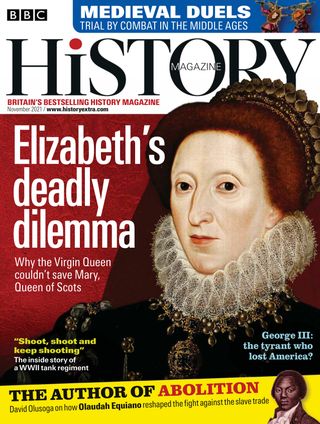
MEDIEVAL DUELS
BBC History Magazine
|November 2021
In 1386, two Frenchmen fought a duel in a field outside Paris, each seeking to bury his blade in the other's body. One combatant had been accused of raping the other's wife, a charge he denied vehemently. After an initial verdict of innocence was returned, the accuser demanded a trial by combat. The judgment was now God's alone... ...who would be chosen to die?

In the winter of 1386, a French noblewoman by the name of Marguerite de Carrouges found herself at the centre of a criminal case that electrified Paris, captivated the king and culminated in blood being spilled before an enormous crowd in a field just outside the French capital.
Earlier that year, Marguerite's husband, the knight Jean de Carrouges, had accused his former friend Jacques le Gris of raping Marguerite. After failing to get justice at the court of the Count of Alençon in Normandy, Jean beseeched the king for justice. He made a formal process of “appeal” or challenge against Jacques le Gris and requested the right to prove the justice of his cause in combat. This was the famous “trial by combat”, sometimes known as a judicial battle.
After an investigation, the parlement (the French sovereign appeal court) granted this right to de Carrouges, and he met le Gris in specially constructed lists, a space for tournaments, at Saint-Martin-des-Champs just outside Paris. The crowd was huge, and included King Charles VI himself. De Carrouges and le Gris took special oaths before the king, including a promise that they didn't have an unfair or magical advantage. Each man “placed his sole reliance on the justice of his cause, his body, his horse, and his arms”.
The fight itself was brutal. The two men charged at one another with their lances, butchered each other's war-horses and took to the ground in bitter and bloody combat. They were quite literally fighting for their lives. If de Carrouges won, he would apparently prove the justice of his cause, and le Gris would be found guilty and hanged. But if de Carrouges lost, le Gris' protestations of innocence would be proven true, and de Carrouges would be guilty of perjury, a capital offence.

このストーリーは、BBC History Magazine の November 2021 版からのものです。
Magzter GOLD を購読すると、厳選された何千ものプレミアム記事や、10,000 以上の雑誌や新聞にアクセスできます。
すでに購読者ですか? サインイン
BBC History Magazine からのその他のストーリー
BBC History UK
Royal progress
Alice Loxton's new book begins with a compelling premise.

1 mins
January 2026

BBC History UK
"Leaving Muslim contributions out of European history has allowed Islamophobic sentiment to flourish"
THARIK HUSSAIN speaks to Danny Bird about the long but often overlooked and distorted history of Muslims in Europe - and the enduring resistance to its reappraisal
9 mins
January 2026

BBC History UK
7 UNMISSABLE TRIPS IN 2026
With new routes, big anniversaries and fresh ways of discovering familiar favourites, TOM HALL highlights historical destinations to explore this year
4 mins
January 2026

BBC History UK
SOPHIE SCHOLL
Novelist Simon Scarrow chooses
2 mins
January 2026
BBC History UK
Portrait of the artists
TRACY BORMAN is enraptured by a beautifully written and richly illustrated exploration of early modern English art
2 mins
January 2026
BBC History UK
Humble heroes
Statues celebrate monarchs, rulers and conquerors - but who remembers the brave folk who gave their lives to save others? Anna Maria Barry recounts stories of selfsacrificing but otherwise ordinary people from the 19th and 20th centuries who are commemorated in one London park.
9 mins
January 2026
BBC History UK
BACK FROM THE DEAD
Britain’s War Office thanked the SAS for its remarkable efforts in WW2 by abolishing it – yet soon realised the error of its ways. Gavin Mortimer tells the story of how the elite unit reinvented itself to confront the challenges of the postwar world
8 mins
January 2026
BBC History UK
Q&A - A selection of historical conundrums answered by experts
Were Roman gladiators vegetarian?
8 mins
January 2026
BBC History UK
Martha McGill on a pioneering study of folk beliefs in early modern England
I was recently chatting with a handful of early modernists about the history book we'd take to a desert island.
1 min
January 2026
BBC History UK
Independent empires
Viewing the British empire through an American lens provides an intriguing alternative perspective on the 'Land of the Free', says DAVID ARMITAGE
4 mins
January 2026
Translate
Change font size