試す 金 - 無料
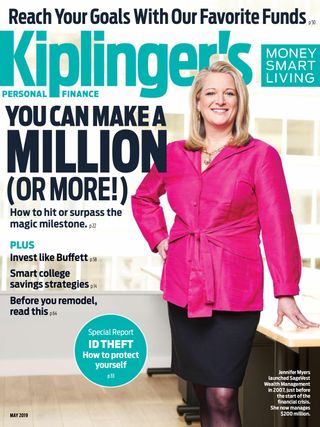
How To Make A Million (Or More!)
Kiplinger's Personal Finance
|May 2019
What these success stories have in common is passion and persistence and a vision for what their wealth can achieve.

Christina Stembel didn’t just bend the traditional business model for flower companies; she snipped it in half. // Stembel grew up on a farm in Bremen, Ind. (population 4,500), so it’s tempting to say that she founded Farmgirl Flowers to get back to her roots. But the real inspiration for her business came while she was working as an event planner near San Francisco in the mid 2000s. Tasked with cutting expenses, Stembel, now 41, looked for ways to reduce the costs of floral arrangements, which she thought were overpriced and underwhelming. She started ordering directly from local growers, which led her down a rabbit hole of research into the business of flowers. She concluded that the e-commerce side of the industry was ripe for disruption because a lot of people— particularly young people—weren’t satisfied with the floral arrangements available online.
“Younger consumers were purchasing far less often than previous generations, for the same reason I hated sending my mom flowers—they didn’t like what was out there,” she says. “You spend an hour sorting through options on websites to find the least ugly option, which shouldn’t be the thing you say about flowers.”
Stembel’s idea: Instead of adopting the model of the big flower companies’ websites, which offer everything from red roses to Asiatic lilies, she would sell only one arrangement that changes daily, based on what’s in season. Stembel launched Farmgirl Flowers in 2010 with $49,000 in savings. In 2015, the company started taking orders outside the Bay Area, relying primarily on social media and word of mouth to drive traffic to its website (FarmgirlFlowers.com).

このストーリーは、Kiplinger's Personal Finance の May 2019 版からのものです。
Magzter GOLD を購読すると、厳選された何千ものプレミアム記事や、10,000 以上の雑誌や新聞にアクセスできます。
すでに購読者ですか? サインイン
Kiplinger's Personal Finance からのその他のストーリー

Kiplinger's Personal Finance
SPEND LESS ON STREAMING TV
Subscribing to Netflix, Hulu and other popular services keeps getting more costly. Use our guide to watch the shows and movies you love at the right price.

10 mins
July 2026

Kiplinger's Personal Finance
MASTER THE ART OF SPENDING IN RETIREMENT
Many people find it tough to shift from saving to tapping wealth once they stop work. Here's how to enjoy your money morewithout fear of running out.
13 mins
July 2026

Kiplinger's Personal Finance
THE BULL MARCHES ON
Corporate profits are coming in hot, and for now, that trumps war, inflation and a host of other worries.
13 mins
July 2026

Kiplinger's Personal Finance
Appeal a Medicare Surcharge
THE NEW WORLD OF RETIREMENT BY SANDRA BLOCK
2 mins
July 2026
Kiplinger's Personal Finance
SHIFTING FORTUNES FOR THIS FUND
THE last time we checked in with Brown Capital Management International Small Company, the fund was reeling from a 2.3% decline in 2025-a year when the MSCI ACWI ex USA Small Cap Growth index gained 26%. The fund is heavy in tech stocks, which sank, and it's light on materials and industrials shares, sectors that fueled much of the rally in 2025.
1 mins
July 2026

Kiplinger's Personal Finance
Apple’s Next Chapter
After CEO Tim Cook’s dream run, his successor has a tough, megasize act to follow.
2 mins
July 2026
Kiplinger's Personal Finance
Check Your Banking History
YOU may be familiar with Equifax, Experian and TransUnion, which collect data from lenders on your borrowing and payment activity and compile it into credit reports.
1 min
July 2026

Kiplinger's Personal Finance
BOOST YOUR CREDIT SCORE
Make these moves to improve your credit health—and push your score to the top of the charts.
5 mins
July 2026

Kiplinger's Personal Finance
10 TIPS TO DECLUTTER YOUR HOME
You've spent a lifetime amassing your stuff. Here’s how to get rid of it.
5 mins
July 2026

Kiplinger's Personal Finance
Top 30 Recap: End of Year Three
DISAPPOINTED with the performance of the Dow Jones industrial average, I decided in 2023 to reinvent the index to reflect the changing nature of the U.S. economy.
4 mins
July 2026
Translate
Change font size