
Magzter GOLDで無制限に
10,000以上の雑誌、新聞、プレミアム記事に無制限にアクセスできます。
試す 金 - 無料
coral frenzy
African Birdlife
|March/April 2021
Coral trees (Erythrina species) are found in tropical and subtropical areas around the world, including in southern Africa where nine species occur.

Conspicuous and well-known, they are commonly seen in gardens and are planted along streets and driveways to provide shade and show off to best advantage their eye-catching displays of orange-red flowers. These are borne generally in winter or spring each year, covering the leafless grey-brown branches in a profusion of colour that draws the eye from a great distance and changes the palette of urban neighbourhoods.
It is not for our benefit, though, that this floral spectacle has evolved. It is intended to lure the trees’ principal pollinators – passerine birds – to visit the flowers and play their part in the plants’ procreative process. In return, the birds will be rewarded with copious quantities of nectar hidden deep among the petals.
Like various Aloe and Schotia (boerbean) species, coral trees belong to a group of valuable bird-pollinated plants that are predictable providers of nectar each year, predominantly in winter and spring. They, and others such as Strelitzia reginae, are pollinated mainly by a range of birds that feed on nectar opportunistically, as opposed to the highly specialised sunbirds and sugarbirds. Their flowers are ideally suited to attracting birds, being bright red or orange in colour, tubular in shape and odourless, and they produce generous quantities of dilute nectar. The genus Erythrina belongs to Fabaceae, the pea family, and its flowers can be recognised as such, with relatively thick, leathery petals arranged in a broadly open tubular shape instead of the typically curved and fused tube of many plants pollinated by sunbirds. They are presented in densely spiralled clusters at the ends of branches that provide a convenient perch for visiting birds. Not only are


このストーリーは、African Birdlife の March/April 2021 版からのものです。
Magzter GOLD を購読すると、厳選された何千ものプレミアム記事や、10,000 以上の雑誌や新聞にアクセスできます。
すでに購読者ですか? サインイン
African Birdlife からのその他のストーリー
African Birdlife
Southern SIGHTINGS
MID-JULY TO MID-SEPTEMBER 2025

2 mins
November/December 2025
African Birdlife
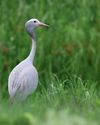
BLUE CRANE
A symbol of pride and vulnerability
6 mins
November/December 2025

African Birdlife
CHAOS AT THE KOM
Between 1 and 3 December 2024 there was a remarkable sardine run off Kommetjie on the Cape Peninsula.
1 min
November/December 2025

African Birdlife
Ramsar Convention on Wetlands
Whatever form they take, from peatlands to estuaries, wetlands are critical for the survival of waterbirds, such as the White-winged Flufftail, Maccoa Duck and Grey Crowned Crane. They are highly productive ecosystems that are characterised by diverse and abundant food sources and they provide essential feeding, breeding, migratory and resting habitat for numerous species. iSimangaliso Wetland Park, for example, supports more than 500 bird species.
1 mins
November/December 2025

African Birdlife
FRAMING wild feathers
WINNERS OF THE BIRDLIFE SOUTH AFRICA PHOTOGRAPHY COMPETITION 2025
4 mins
November/December 2025

African Birdlife
PITTA PILGRIMAGE
Look there - on that branch, behind those green leaves!’ Crouching in thick forest, with sweat dripping, heart pounding and eyes straining, I frantically searched with my binoculars, trying to work out which branch, which green leaves - indeed, which darned tree? I was close to panicking as we had come so far, and yet I just couldn't see where our guide was pointing.
4 mins
November/December 2025
African Birdlife
Unlocking a DIGITAL WORLD of bird stories
For more than 75 years, the South African Bird Ringing Unit (SAFRING), now hosted by the FitzPatrick Institute of African Ornithology, has woven together the complex life stories of southern Africa's birds.
1 mins
November/December 2025
African Birdlife
MIRRORLESS MARVEL
Testing Canon's R1 in the field
3 mins
November/December 2025
African Birdlife
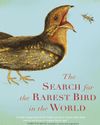
Is NECHISAR NIGHTJAR a hybrid?
Vernon Head's award-winning book The Search for the Rarest Bird in the World brought widespread attention to the curious case of the Nechisar Nightjar. In 1992, a dead nightjar was found on a dirt road in Nechisar National Park, southern Ethiopia. A wing was collected and the bird was later described as a new species based on its distinctive large white wing patch. Its scientific name, Caprimulgus solala, attests to the fact that it is known only from a single wing.
2 mins
November/December 2025
African Birdlife
a TALL Tail
In the high grass of eastern South Africa, midsummer is when the Long-tailed Widowbird transforms the veld into a stage.
1 min
November/December 2025
Translate
Change font size