कोशिश गोल्ड - मुक्त
Python 3.13 and 3.14
Open Source For You
|January 2026
Python is remarkable in the way it's evolving with the times. Here's a peek into the new features of Python 3.13 and 3.14, highlighting their real-world impact.
-
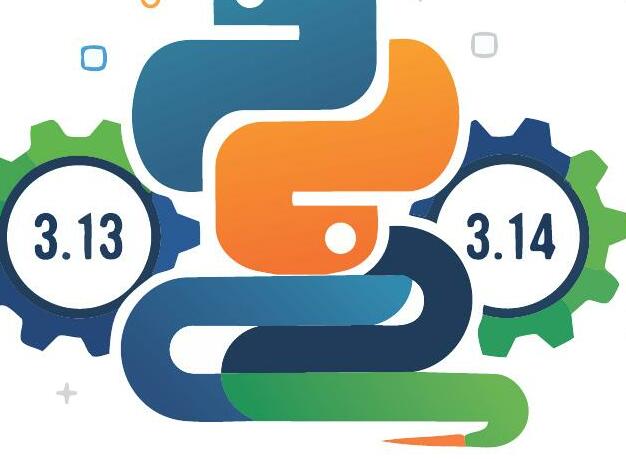
Python's continuous evolution over the last decade has been driven by a growing demand for higher performance, improved concurrency, and scalable execution in modern computing environments. As applications increasingly rely on data-intensive workloads, machine learning pipelines, cloud-native architectures, and parallel processing, Python must adapt to remain competitive. Python 3.13 and Python 3.14 mark some of the most significant milestones in this evolution, introducing foundational changes to the interpreter, runtime behaviour, and language design.
Python 3.13 introduces key experimental features including an early JIT compiler, a redesigned REPL, improved garbage collection, and the first free-threaded CPython build to boost performance and developer productivity. Python 3.14 builds on these foundations, making several features production-ready with fully supported free-threading, new syntax improvements like template strings and deferred annotations, expanded standard library tools, and enhanced debugging. Together, these releases move Python towards a faster, more parallel, and modern runtime architecture.
By examining the motivations behind each feature in these pivotal releases, comparing how Python evolved from 3.13 to 3.14, and assessing their practical implications, this article explains not only what is changing in Python but why those changes matter.
Key advancements in Python 3.13
Python 3.13 represents a transformative step towards a faster and more modular interpreter, introducing several experimental features that redefine the language's performance and concurrency model. While many features arrived in preview or opt-in form, their inclusion signals Python's long-term vision: reduced dependence on the Global Interpreter Lock (GIL), improved responsiveness, and a more modern, developer-friendly runtime. The most impactful enhancements introduced in Python 3.13 are listed here.

यह कहानी Open Source For You के January 2026 संस्करण से ली गई है।
हजारों चुनिंदा प्रीमियम कहानियों और 10,000 से अधिक पत्रिकाओं और समाचार पत्रों तक पहुंचने के लिए मैगज़्टर गोल्ड की सदस्यता लें।
क्या आप पहले से ही ग्राहक हैं? साइन इन करें
Open Source For You से और कहानियाँ

Open Source For You
Top 10 Open Source Tools for System and IT Administrators
All reputed online services have committed system and IT administrators working behind the scenes. Here are ten open source tools they should be aware of, as these can help them monitor, automate, as well as manage complex infrastructure with relative ease.

6 mins
February 2026
Open Source For You
Google opens access to its Gemini Deep Research Agent
Google has opened access to its Gemini Deep Research Agent for the first time, allowing developers to integrate advanced autonomous research capabilities directly into their applications.
1 min
February 2026

Open Source For You
NVIDIA buys SchedMD, keeps Slurm open source and vendor neutral
NVIDIA has acquired AI software company SchedMD, signalling a deeper commitment to open source technologies as competition intensifies across the artificial intelligence ecosystem.
1 min
February 2026

Open Source For You
How Open Source Tools Power Modern IT Operations
Open source tools have not replaced enterprise IT platforms; they have become the connective layer that makes modern operations possible.
6 mins
February 2026
Open Source For You
Mandiant's Auralnspector enhances Salesforce security
Google-owned cybersecurity firm Mandiant has released AuraInspector, a free, open source command-line tool designed to identify dangerous access control misconfigurations in Salesforce environments, marking a significant move to democratise enterprise-grade security testing.
1 min
February 2026
Open Source For You
Google launches Universal Commerce Protocol to power agentic AI commerce
Google has introduced the Universal Commerce Protocol (UCP), a new open standard that enables AI agents to autonomously perform end-to-end commerce activities, spanning product discovery, purchasing, checkout, payments, and postpurchase experiences.
1 min
February 2026

Open Source For You
Zero Trust CI/CD: The Death of Static Secrets
In an era where data breach costs continue to hit record highs, shifting to a secretless CI/CD pipeline is the most effective step to safeguard digital infrastructure.
7 mins
February 2026

Open Source For You
Quantum Algorithms: The Future of Computing
Explore the essence of quantum algorithms, their groundbreaking applications, recent innovations, and the challenges that remain.
8 mins
February 2026

Open Source For You
Bringing Clarity to the Chaos in AI
AI feels powerful, yet most teams struggle because they cannot define what intelligence they really need. But there are ways to address this challenge.
5 mins
February 2026

Open Source For You
Top researchers return to OpenAI
OpenAI has welcomed back three high-profile researchers, Barret Zoph, Luke Metz, and Sam Schoenholz, following their brief tenure at former OpenAI CTO Mira Murati's AI startup, Thinking Machines.
1 min
February 2026
Listen
Translate
Change font size