
मैगज़्टर गोल्ड के साथ असीमित हो जाओ
10,000 से अधिक पत्रिकाओं, समाचार पत्रों और प्रीमियम कहानियों तक असीमित पहुंच प्राप्त करें सिर्फ
कोशिश गोल्ड - मुक्त
“Combining graph databases and LLMs can improve the accuracy of LLM results by 54.2%!”
Open Source For You
|July 2025
Neo4j's Stephen Chin believes that a graph is the most intuitive and efficient data structure for storing, searching, and querying data with complex relationships. In a conversation with OSFY’s Yashasvini Razdan, the VP of Developer Relations at Neo4j spoke about the applications of graphical databases in AI and LLM-based solutions...

What industry trends are driving the need for graph technology?
A. There is a major gap between the number of AI applications successfully put into production and those meeting the intended requirements. The primary challenge lies in whether large language models (LLMs) and applications deliver accurate results, avoid hallucinations, and effectively utilise enterprise data and systems. Knowledge graphs bridge this gap by providing additional context and information, avoiding the ‘black box’ problem, and providing a smooth development experience without struggling with models that aren’t well-suited to the task. Research studies have shown that combining graph databases and LLMs can improve the accuracy of LLM results by 50%. This is significant because one of the biggest hurdles to widespread adoption of LLM technology is ensuring accurate, explainable results that can be confidently used in business contexts, especially for mission-critical applications.
By using knowledge graphs, organisations can transition from AI theories and prototypes to building production-ready applications. These applications not only deliver reliable results but also ensure data meets the needs of both internal and external stakeholders with confidence.
So where does open source come into play in all of this?
A. Neo4j has evolved into a highly successful commercial and enterprise database but remains firmly rooted in its open source origins. It is entirely built on open source with an open-sourced database. We have an open source Community Edition, which is free for anyone to use. Without the power of an open source ecosystem, graph technology would never have taken off.
What is the advantage of using open source AI solutions compared to proprietary solutions?


यह कहानी Open Source For You के July 2025 संस्करण से ली गई है।
हजारों चुनिंदा प्रीमियम कहानियों और 10,000 से अधिक पत्रिकाओं और समाचार पत्रों तक पहुंचने के लिए मैगज़्टर गोल्ड की सदस्यता लें।
क्या आप पहले से ही ग्राहक हैं? साइन इन करें
Open Source For You से और कहानियाँ

Open Source For You
Sending IoT Sensor Data to Public or Private Servers
This IoT system shows a simple and effective way to send sensor data using an ESP8266 microchip.

3 mins
March 2026

Open Source For You
Popular FOSS Tools for LLM Observability, Monitoring and Evaluation
This overview of popular tools for monitoring large language models also sheds light on how LLM-as-a-judge enhances their performance.
2 mins
March 2026
Open Source For You
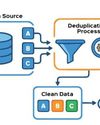
Data Deduplication Done the Right Way
Deduplication helps to save space on Linux-based storage systems. Choose the right platform and check whether it meets your goals.
6 mins
March 2026

Open Source For You
The Relevance of Rubber Duck Debugging in the Age of AI
Discover why rubber duck debugging is a powerful process today. There's also a step-by-step guide on how to use it in the age of artificial intelligence.
4 mins
March 2026

Open Source For You
GitHub weighs turning off pull requests as AĬ slop floods projects
GitHub has formally acknowledged that AI-generated 'slop' is overwhelming open source projects, forcing maintainers to sift through poor pull requests (PRS), abandoned submissions and guideline violations - and is now considering restricting or even disabling pull requests, the core mechanism of open collaboration.
1 min
March 2026

Open Source For You
Global banks are deploying Ethereum's Layer-2 stack
Banks are standardising on Ethereum's open source stack as production financial infrastructure, shifting from experimental pilots and proprietary blockchains to live Layer-2 networks for tokenised deposits, interbank payments, and cross-border settlement.
1 min
March 2026

Open Source For You
OpenClaw's creator joins OpenAl
In a move that reinforces its commitment to open development rather than acquisition, OpenAI has brought Peter Steinberger, founder of OpenClaw, into the company while placing the popular AI agent under a foundation structure to ensure it remains open source.
1 min
March 2026
Open Source For You
LibreOffice 26.2 comes with native Markdown support
LibreOffice 26.2 has been released by The Document Foundation, strengthening its position as a fully free and open source office suite for Windows, macOS, and Linux, with support for more than 120 languages.
1 min
March 2026

Open Source For You
Indian government mandates labelling of Al-generated content and quicker deletion of illegal deepfakes
India has introduced sweeping AI content rules that immediately place pressure on social platforms and open source AI ecosystems to label, trace and rapidly remove AI Open ource synthetic media at scale.
1 min
March 2026
Open Source For You
I2C and I3C: How Modern Devices Communicate
I3C and I2C are both two-wire communication protocols that help exchange data between multiple devices. While I3C preserves the simplicity of I2C, it introduces new features suited for today's sensor-rich devices.
8 mins
March 2026
Listen
Translate
Change font size