कोशिश गोल्ड - मुक्त
BIONIC BEINGS
The Week Junior Science+Nature UK
|December 2025
Patrick Kane welcomes you to a future of superhumans, where people and robots combine.
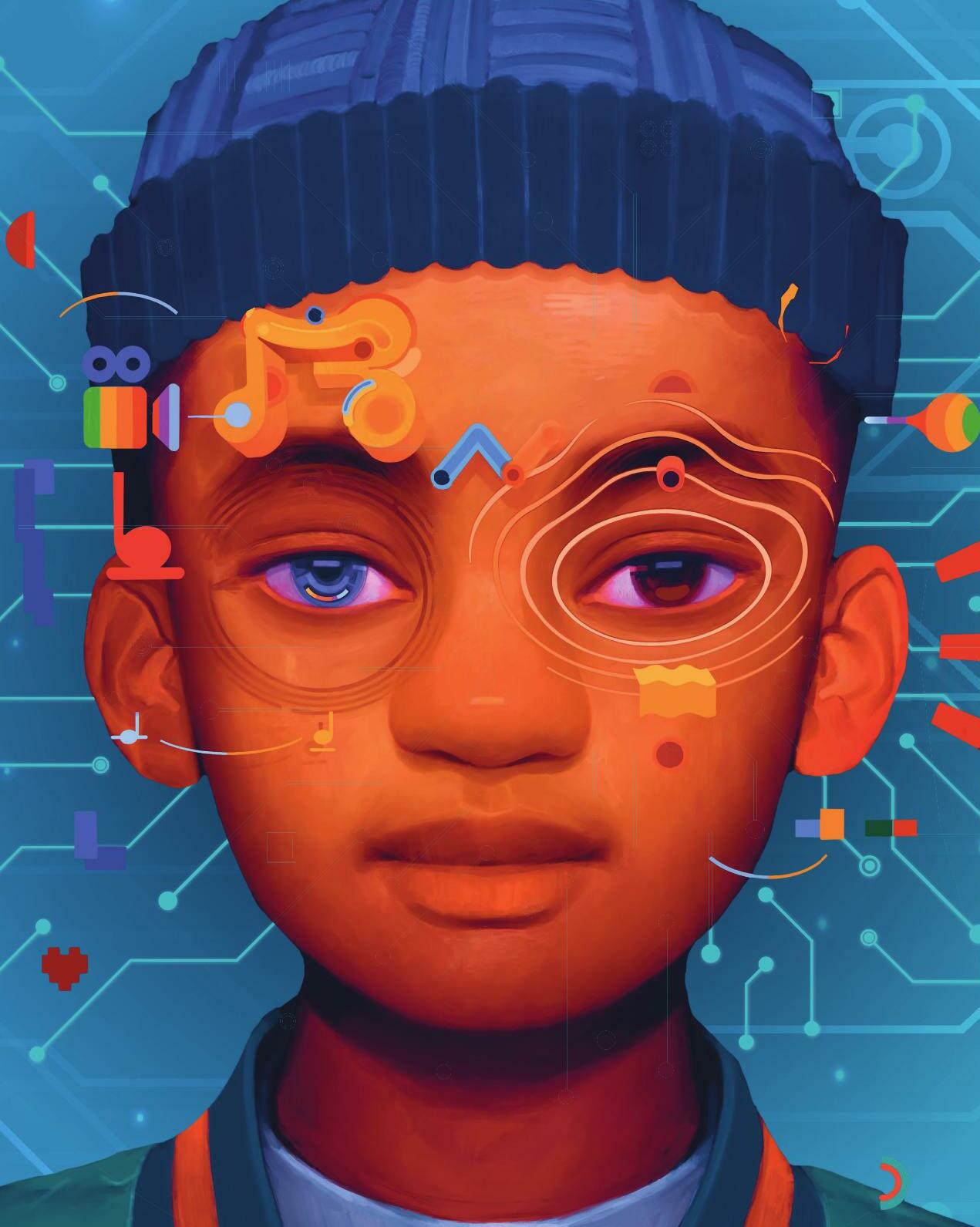
When you picture the future, what do you see? Do you see a world filled with robotic helpers that allow you to do anything you want? Or do you imagine a few clever little devices that make the everyday seem even more effortless? For example, wouldn't it be nice to never have to worry about forgetting your house keys because your front door recognises your body?
Some people imagine cyborgs (part human, part machine) that “hear” colours or communicate with friends using transmitters in their teeth. Others might imagine a future where people upgrade different parts of their bodies for different tasks. Those who are missing limbs could walk on legs made of metal and carbon fibre, while cameras in the eyes could be upgraded as soon as a newer version was available.
If your own version of the future contains any of those technological advances, then there is some exciting news. You are already living in the future and this world is already here, all around you - perhaps you just haven't noticed it yet.
There is a famous quote from sci-fi writer Arthur C. Clarke that says "any sufficiently advanced technology is indistinguishable from magic", and this article is about exploring the "magic" that goes into the bionic technology. The more you are aware of it, the more you can appreciate it and can help make tomorrow even better.
What are bionics?
The word bionics is a combination of the Greek word for life - “bios” - and the end bit of “electronics”. Putting those two together makes a broad term that refers to the transfer of energy between living organisms and artificial objects. In practice, bionic is used to describe a range of artificial body parts that can be controlled by the wearer - probably what you imagine when you think of a robotic arm.


यह कहानी The Week Junior Science+Nature UK के December 2025 संस्करण से ली गई है।
हजारों चुनिंदा प्रीमियम कहानियों और 10,000 से अधिक पत्रिकाओं और समाचार पत्रों तक पहुंचने के लिए मैगज़्टर गोल्ड की सदस्यता लें।
क्या आप पहले से ही ग्राहक हैं? साइन इन करें
The Week Junior Science+Nature UK से और कहानियाँ
The Week Junior Science+Nature UK
ANIMAL ISLANDS
Hop aboard as Daisy Dobrijevic sets sail to discover the world's most unusual beasts.

5 mins
March 2026

The Week Junior Science+Nature UK
Wildlife watch
Take a walk on the wild side with Jenny Ackland.
1 mins
March 2026

The Week Junior Science+Nature UK
Pushmeet Kohli
Meet the tech genius who trains the smart computers that are changing your world.
3 mins
March 2026

The Week Junior Science+Nature UK
New map reveals secrets hidden under Antarctic ice
A new map of Antarctica has A revealed thousands of hills Are revealed thousands of hills and valleys buried under its thick layers of ice.
1 min
March 2026

The Week Junior Science+Nature UK
Why do dolphins jump out of the water?
Discover what makes these graceful ocean mammals leap for joy.
2 mins
March 2026
The Week Junior Science+Nature UK
Ancient fish had four eves
Ancient vertebrates (animals that have backbones) had four eyes that worked a lot like ours, new research shows.
1 min
March 2026
The Week Junior Science+Nature UK
How? What? Why?
Set your curiosity free as Mike Rampton explains how asking questions changes the world.
5 mins
March 2026

The Week Junior Science+Nature UK
Bye-bye bitter grapefruits
Scientists have found a way to make grapefruits less bitter.
1 min
March 2026
The Week Junior Science+Nature UK
Spreading seeds of hope
Meet the scientists who are using drones to seed lost landscapes.
1 mins
March 2026
The Week Junior Science+Nature UK
Udderly brilliant cow seen using tools
A talented Austrian cow has shecked researchers by using both ends of a broom as a grooming tool.
1 min
March 2026
Listen
Translate
Change font size