
मैगज़्टर गोल्ड के साथ असीमित हो जाओ
10,000 से अधिक पत्रिकाओं, समाचार पत्रों और प्रीमियम कहानियों तक असीमित पहुंच प्राप्त करें सिर्फ
How Susceptible Are We to False Memories?
Scientific American
|July/August 2025
Recent studies underscore the difficulty of implanting entirely fictional events in a person's recollection
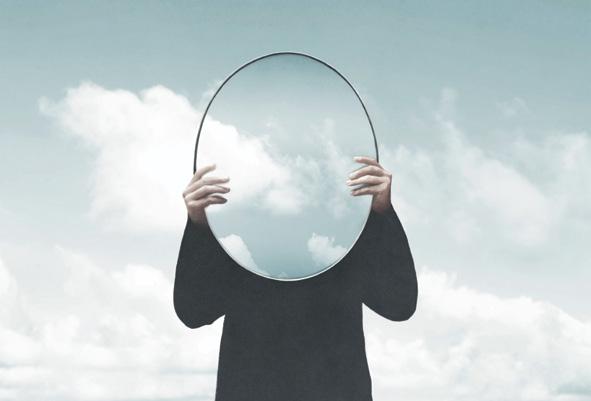
HOW MUCH CAN WE TRUST our memories? We know that our mind keeps an imperfect record of the past. We can forget or misremember details, with frustrating consequences. Our attention can be diverted in ways that make it all too easy to miss key events.
But a particularly disturbing idea is that we readily form false memories—that is, that we can become convinced we experienced something that never actually occurred. The suggestion that it is easy to create false memories of entire events is often used to cast doubt on the reliability of a plaintiff's testimony in a court case. For example, lawyers representing movie executive Harvey Weinstein cited this idea to raise questions about several women's allegations against him.
Recently we had the opportunity to take a closer look at this concept by analyzing data from a study designed to replicate one of the most iconic experiments on false memories to date.
This experiment, by American psychologists Elizabeth Loftus and Jacqueline Pickrell, was published in 1995. Loftus had demonstrated decades earlier that one can manipulate people's memories of visual details by posing questions that contain misinformation. She then wanted to learn whether it was possible to implant an entire false memory for a childhood event that had never happened. To that end, in the 1995 study, she and Pickrell misled participants into believing that, according to their parents or older sibling, when they were about five years old they had been lost in a shopping mall and then found by an older woman.

यह कहानी Scientific American के July/August 2025 संस्करण से ली गई है।
हजारों चुनिंदा प्रीमियम कहानियों और 10,000 से अधिक पत्रिकाओं और समाचार पत्रों तक पहुंचने के लिए मैगज़्टर गोल्ड की सदस्यता लें।
क्या आप पहले से ही ग्राहक हैं? साइन इन करें
Scientific American से और कहानियाँ

Scientific American
Probiotic Hope and Hype
Despite their popularity, supplements with billions of \"good\" microbes help only a few illnesses, research shows

3 mins
January 2026
Scientific American
Mondays Really Are More Stressful
The start of the workweek can be a biologically measurable stressor, with consequences for long-term health that can stretch into retirement
4 mins
January 2026
Scientific American
Tiny Display
An e-paper breakthrough brings extremely high-resolution color
2 mins
January 2026
Scientific American
Fine-Feathered Snack
A bat's tracker documents a dramatic midair hunt
2 mins
January 2026

Scientific American
OUR ROBOTIC PICTURE
Will mechanical helpers ever be commonplace at home, at work and beyond?
11 mins
January 2026

Scientific American
"Use Your Words" Can Be Good for Kids' Health
Writing or expressing feelings can help adults mentally and physically. Kids are no different
5 mins
January 2026

Scientific American
Distant Diplomacy
Unrelated species “talk” and understand one another to avoid threats
2 mins
January 2026
Scientific American
Behind the Nobel
A 2025 winner reflects on the mysterious T cells that won him the prize
5 mins
January 2026

Scientific American
A Suite of Killers
Heart ailments, kidney diseases and type 2 diabetes actually may be part of just one condition. It's called CKM syndrome
10 mins
January 2026
Scientific American
Static Launch
Tiny worms leap toward their fruit fly hosts with an electric “tractor beam”
3 mins
January 2026
Listen
Translate
Change font size