कोशिश गोल्ड - मुक्त
Coping with a Life- Altering Diagnosis
Scientific American
|September 2025
When a child has a major health issue, learning how to manage new routines and expectations can be the key to everyone’s happiness

WHAT AM I SUPPOSED TO DO NOW?" This question was the most common one from parents when I started my training in the quiet and solemn neonatal intensive care unit (NICU) of an otherwise welcoming, brightly lit, cheerful children’s hospital.
Ifelt the pain and loss of these critically ill infants’ parents, who were sometimes slumped and moving slowly in their worry. Their soft voices belied the anxiety about the future bouncing off every wall: How would they care for their child at home without the equipment and support of the hospital? How would they build the routines to help their child thrive under unimaginably hard circumstances?
More than 20 years later, at a different children’s hospital, I saw some of the same worries in parents of teenagers with chronic pain. Even though these parents were a decade or more into their caregiving routines, many were still not sure about what to do or how to care for their children as they approached adulthood. Without exception, they wanted their teens to strive for an independent adulthood, but they had trouble providing even small opportunities for independence out of fear of disruption to their child’s medical care plan. Just like the NICU parents from my training days, these families were struggling to be the best possible care providers and parents.
Raising a child with a chronic health condition changes the routines that shape everyday life. Meals, bathing and dressing might be different than planned; bedtime and playtime also shift. Parents still need to be patient, warm, responsive and encouraging; that doesn’t change. Being able to give praise and to provide structure and consistency remains important but might prove harder to prioritize. These caregiving demands can be extreme, and research tells us that parents can find it difficult to meet their own needs and the needs of their children, often sacrificing their own health care and well-being.
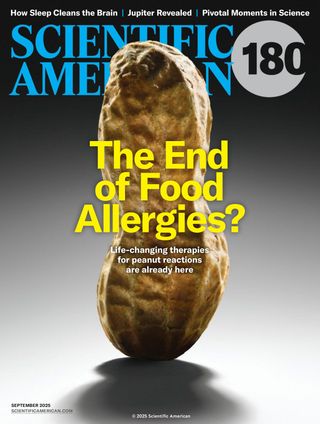

यह कहानी Scientific American के September 2025 संस्करण से ली गई है।
हजारों चुनिंदा प्रीमियम कहानियों और 10,000 से अधिक पत्रिकाओं और समाचार पत्रों तक पहुंचने के लिए मैगज़्टर गोल्ड की सदस्यता लें।
क्या आप पहले से ही ग्राहक हैं? साइन इन करें
Scientific American से और कहानियाँ

Scientific American
The Quiet Math Problem That Runs the Planet
How Diffie-Hellman key exchange secures everything from your text messages to government secrets

7 mins
May 2026

Scientific American
The Fog of Science
Did an adversary just invent a world-changing weapon, or are they making it up? DARPA is building an AI to instantly call their bluff
4 mins
May 2026

Scientific American
The Hubble Space Telescope Is Still Awesome
Hubble is going strong despite its decades in space and next-generation successors
4 mins
May 2026

Scientific American
Meet America's Native Bees
Scientists estimate there are about 4,000 species of native bees in the U.S.
5 mins
May 2026

Scientific American
The Chemistry of Desire
Inside the secretive laboratories where scientists build novel molecules to make luxury fragrance feel like pure emotion
5 mins
May 2026

Scientific American
Scanning the Stone
As ore gets harder to find, the mining industry is turning to subatomic-particle sensors to push deep underground
8 mins
May 2026

Scientific American
YOUR HEART IN FLAMES
Inflammation may be the true cause of cardiovascular diseaseand there's a drug to treat it
13 mins
May 2026

Scientific American
Ancient Lexicon
Stone Age art may reveal a 40,000-year-old precursor to writing
2 mins
May 2026

Scientific American
Thermal Breakthrough
A new super heat conductor challenges fundamental physics
2 mins
May 2026

Scientific American
How to Vacation in Space
Planned orbital hotels promise luxury, but can they deliver?
4 mins
May 2026
Listen
Translate
Change font size