कोशिश गोल्ड - मुक्त
TIRELESS CHRONICLERS
Down To Earth
|April 01, 2025
Every decade since 1974, scholars, activists, students and journalists have embarked on a unique 45-day journey on foot through the hinterlands of western Himalayas to revive and restore the lost ties RAJU SAJWAN
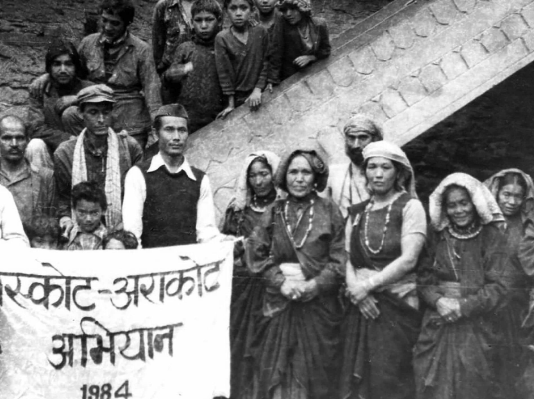
ON MAY 25, 2024, a group of 40 people began a march from Pangu village in Uttarakhand, bordering Nepal. After a quick walk to Askot village a short distance away, they began a long journey on foot to Arakot village in Uttarkashi district, all the way to the other end of the state that touches the border with Himachal Pradesh. This march or yatra was not about the destination but about a journey that began some five decades ago, and has come to be known as the Askot-Arakot Abhiyan.
Every decade since 1974, scholars, activists, students and journalists have embarked on a unique 45-day journey on foot through the hinterlands of western Himalayas to revive and restore the lost ties 750 km, the actual distance is far longer and usually continues for 45 days. Often, the participants veer off the central route and venture into remote villages, some tucked away in the rugged terrain of the high Himalayas and 80-90 km away from the nearest road (see 'A 1,000-km journey’). In each of these villages, they spend time with the local communities to understand if and how development in the state, the country and even globally, impact them.
“In 2024, we organised the sixth yatra,” says historian and author Shekhar Pathak, one of participants and organisers. Known for his books and writings on the socio-political history of the Himalayas, Pathak holds another distinction—to have participated in every Askot-Arakot Abhiyan since 1974, when he was a college student.
Now in his 70s, Pathak recalls that every Askot-Arakot Abhiyan has a central theme—a purpose—which guides the journey and its outcome. The 2024


यह कहानी Down To Earth के April 01, 2025 संस्करण से ली गई है।
हजारों चुनिंदा प्रीमियम कहानियों और 10,000 से अधिक पत्रिकाओं और समाचार पत्रों तक पहुंचने के लिए मैगज़्टर गोल्ड की सदस्यता लें।
क्या आप पहले से ही ग्राहक हैं? साइन इन करें
Down To Earth से और कहानियाँ

Down To Earth
KING OF BIRDS
Revered for centuries, western tragopan now needs protection as its forests shrink, human pressures mount

3 mins
December 16, 2025

Down To Earth
WHISKERS ALL AQUIVER
Climate change threatens creatures that have weathered extreme environments for thousands of years
2 mins
December 16, 2025

Down To Earth
GOLDEN SPIRIT
Survival of the shy primate is closely tied to the health of Western Ghats
3 mins
December 16, 2025

Down To Earth
RINGED EYES IN THE CANOPY
Rapid habitat destruction forces arboreal langur to alter habits
2 mins
December 16, 2025

Down To Earth
HANGING BY THE CLIFF
The Himalaya's rarest wild goat is on the brink of local extinction
2 mins
December 16, 2025

Down To Earth
ANGEL OF THE BEAS
Conservation reserves, citizen science, and habitat protection give the Indus River dolphin a fighting chance in India
2 mins
December 16, 2025

Down To Earth
UNDER MOONLIT SCRUB
Survival of this hidden guardian tells us whether our scrublands still breathe
2 mins
December 16, 2025

Down To Earth
SYMBOL OF SILENT VALLEY
Lion-tailed macaque remains vulnerable despite past victories
2 mins
December 16, 2025

Down To Earth
THE APE IN OUR STORIES
India's only non-human ape species is a cultural icon threatened by forest fragmentation
2 mins
December 16, 2025

Down To Earth
SENTINEL OF THE HIGH COLD DESERT
The bird's evocative call may not continue to roll across the cold desert valley for long
3 mins
December 16, 2025
Listen
Translate
Change font size