कोशिश गोल्ड - मुक्त
Silent spread
Down To Earth
|August 01, 2025
Unauthorised herbicide-tolerant cotton varieties circulate in Dhar district of Madhya Pradesh
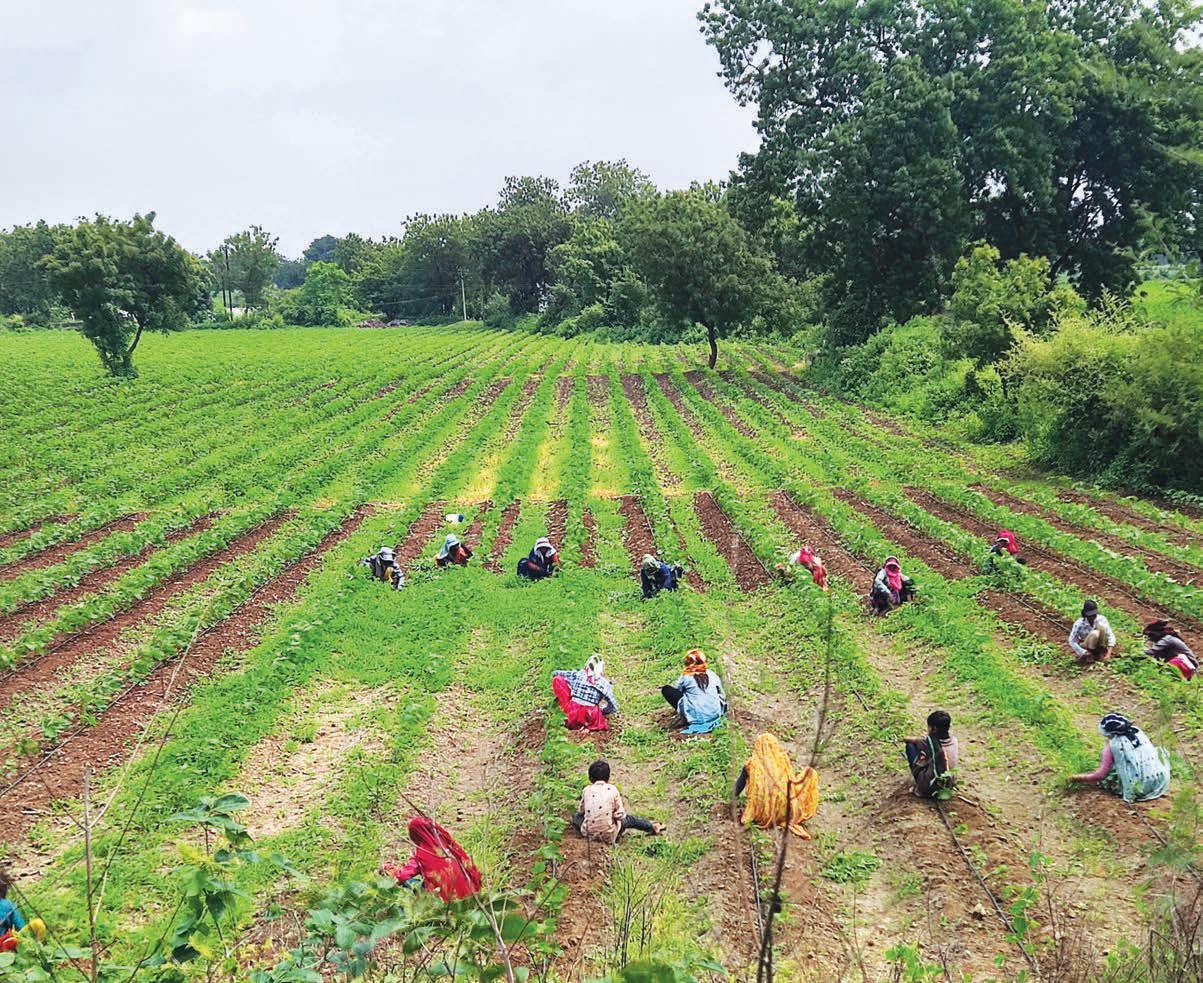
THIS MAY, during a visit to a seed and pesticide outlet in Kawathi village of Manawar tehsil, Dhar district, Madhya Pradesh, I saw neatly stacked bottles of herbicide glyphosate. Often used for weed control, glyphosate is infamous for its perceived impacts of human and environmental health—The World Health Organization’s International Agency for Research on Cancer classifies it as “probably carcinogenic to humans”, while studies believe it may contribute to soil microbial imbalances and emergence of herbicide-resistant “superweeds”. A conversation about glyphosate with the shop assistant led to the subject of herbicide-tolerant seeds. He showed me seed packets they had gotten from Gujarat, “Yugam 5G” and “Bahubali 4G”, saying they offer dual resistance to pink bollworm, a major pest of cotton, as well as glyphosate. The seeds were in high demand, he said. Our conversation was quickly interrupted by the shop owner, who admitted that the seeds were technically illegal to sell, and were only for use on his fields.
The “technically illegal” point came up because the fact that the seeds promised resistance against pink bollworm and herbicide tolerance suggested they were genetically modified (GM), although the packets did not mention so. GM herbicide-tolerant cotton is not yet approved for commercial cultivation in India. The Union government has approved only two GM cotton varieties—Bollgard I (BG) I and BG II—developed by US-based Monsanto and marketed through its Indian joint venture, Mahyco-Monsanto Biotech Ltd. These are called Bt cotton varieties, as they are modified to include a gene from the bacterium Bacillus thuringiensis that resists pink bollworm.

यह कहानी Down To Earth के August 01, 2025 संस्करण से ली गई है।
हजारों चुनिंदा प्रीमियम कहानियों और 10,000 से अधिक पत्रिकाओं और समाचार पत्रों तक पहुंचने के लिए मैगज़्टर गोल्ड की सदस्यता लें।
क्या आप पहले से ही ग्राहक हैं? साइन इन करें
Down To Earth से और कहानियाँ

Down To Earth
THINK TWICE BEFORE FELLING SAL TREES
Many trees considered to be affected by sal borer in the 1990s are still alive today

1 mins
February 16, 2026

Down To Earth
EDGE OF SURVIVAL
Caste divides deny marginalised communities land, resources and essential aid, leaving them more vulnerable to climate disasters
6 mins
February 16, 2026

Down To Earth
A WISH LIST?
Union Budget for 2026-27 conveys the impression of a roll-call of intentions and ambitious proposals, with little detail on their formulation
6 mins
February 16, 2026
Down To Earth
Break down the gender wall
THE RULING National Democratic Alliance (NDA) government has been heavily invested in the goal to make India a developed economy by 2047.
2 mins
February 16, 2026

Down To Earth
MENSTRUAL HEALTH, NOW A FUNDAMENTAL RIGHT
In a landmark judgement, the Supreme Court has recognised menstrual health and hygiene as a fundamental right under Article 21 of the Constitution of India, which guarantees the right to life and dignity.
8 mins
February 16, 2026

Down To Earth
Of devolution and new disasters
The 16th Finance Commission pushes for changes in view of new fiscal and climatic conditions
11 mins
February 16, 2026
Down To Earth
Rising risks of plastics
NEGATIVE IMPACTS on human health due to emissions linked to the plastic lifecycle could double by 2040, according to a study published in The Lancet Planetary Health in January.
1 min
February 16, 2026

Down To Earth
GAP BETWEEN EPIDEMICS NARROWING
A watershed-based and landscape-level approach is needed to address forest degradation
2 mins
February 16, 2026
Down To Earth
WAITING TO STRIKE
Sal heartwood borer is considered the biggest threat to forestry in India, especially to the sal tree, where it lives and breeds.
11 mins
February 16, 2026
Down To Earth
A SPRING DELIGHT
Mustard flowers are not meant only for the eyes. Invite them to your plate once in a while
3 mins
February 16, 2026
Listen
Translate
Change font size