
मैगज़्टर गोल्ड के साथ असीमित हो जाओ
10,000 से अधिक पत्रिकाओं, समाचार पत्रों और प्रीमियम कहानियों तक असीमित पहुंच प्राप्त करें सिर्फ
कोशिश गोल्ड - मुक्त
SCRAP THE DUMP
Down To Earth
|June 01, 2024
Disincentivise garbage dumping, invest in behavioural change

INDIAN CITIES have shown remarkable progress in waste management in the past decade. Programmes that have played a key role in this achievement are: Swachh Bharat Mission (SBM), a flagship programme initiated in 2014 to eliminate open defecation and improve the sanitation system, and Swachh Survekshan, an assessment tool to ensure sustainability in these development goals by urban local bodies (ULBS). The programmes have shifted the focus of waste management from just "visual cleanliness" to "waste to wealth", yet Indian cities continue to be behind the pollution curve. It is important that the new government relearns the art and science of waste management.
NO FALSE SOLUTION
On the face of it, waste to wealth seems to be a win-win situation for cities drowning in piles of refuse. For instance, biodegradable matter in municipal solid waste can be treated to produce biogas or compost, yet India does not have a single waste-to-energy plant that is financially viable and environmentally sustainable. One reason for this paradox is that cities still use mixed waste as feedstock. Unsegregated waste contains inert and hazardous materials and has low calorific value, which makes the plants polluting and unviable.
Similarly, when unsegregated, the recyclable waste, such as plastic, paper and metal, gets soiled and contaminated by the organic waste. This diminishes its market value. To recover wealth from waste, the government needs to adopt these measures.
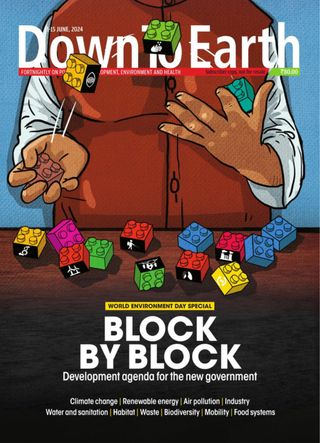

यह कहानी Down To Earth के June 01, 2024 संस्करण से ली गई है।
हजारों चुनिंदा प्रीमियम कहानियों और 10,000 से अधिक पत्रिकाओं और समाचार पत्रों तक पहुंचने के लिए मैगज़्टर गोल्ड की सदस्यता लें।
क्या आप पहले से ही ग्राहक हैं? साइन इन करें
Down To Earth से और कहानियाँ

Down To Earth
THINK TWICE BEFORE FELLING SAL TREES
Many trees considered to be affected by sal borer in the 1990s are still alive today

1 mins
February 16, 2026

Down To Earth
EDGE OF SURVIVAL
Caste divides deny marginalised communities land, resources and essential aid, leaving them more vulnerable to climate disasters
6 mins
February 16, 2026

Down To Earth
A WISH LIST?
Union Budget for 2026-27 conveys the impression of a roll-call of intentions and ambitious proposals, with little detail on their formulation
6 mins
February 16, 2026
Down To Earth
Break down the gender wall
THE RULING National Democratic Alliance (NDA) government has been heavily invested in the goal to make India a developed economy by 2047.
2 mins
February 16, 2026

Down To Earth
MENSTRUAL HEALTH, NOW A FUNDAMENTAL RIGHT
In a landmark judgement, the Supreme Court has recognised menstrual health and hygiene as a fundamental right under Article 21 of the Constitution of India, which guarantees the right to life and dignity.
8 mins
February 16, 2026

Down To Earth
Of devolution and new disasters
The 16th Finance Commission pushes for changes in view of new fiscal and climatic conditions
11 mins
February 16, 2026
Down To Earth
Rising risks of plastics
NEGATIVE IMPACTS on human health due to emissions linked to the plastic lifecycle could double by 2040, according to a study published in The Lancet Planetary Health in January.
1 min
February 16, 2026

Down To Earth
GAP BETWEEN EPIDEMICS NARROWING
A watershed-based and landscape-level approach is needed to address forest degradation
2 mins
February 16, 2026
Down To Earth
WAITING TO STRIKE
Sal heartwood borer is considered the biggest threat to forestry in India, especially to the sal tree, where it lives and breeds.
11 mins
February 16, 2026

Down To Earth
A SPRING DELIGHT
Mustard flowers are not meant only for the eyes. Invite them to your plate once in a while
3 mins
February 16, 2026
Listen
Translate
Change font size