कोशिश गोल्ड - मुक्त
GAME CHANGERS
Down To Earth
|August 01, 2025
Improving energy efficiency of appliances—equipment of everyday use—is one of the quickest and most cost-effective ways to enhance energy security and avoid carbon dioxide emissions.
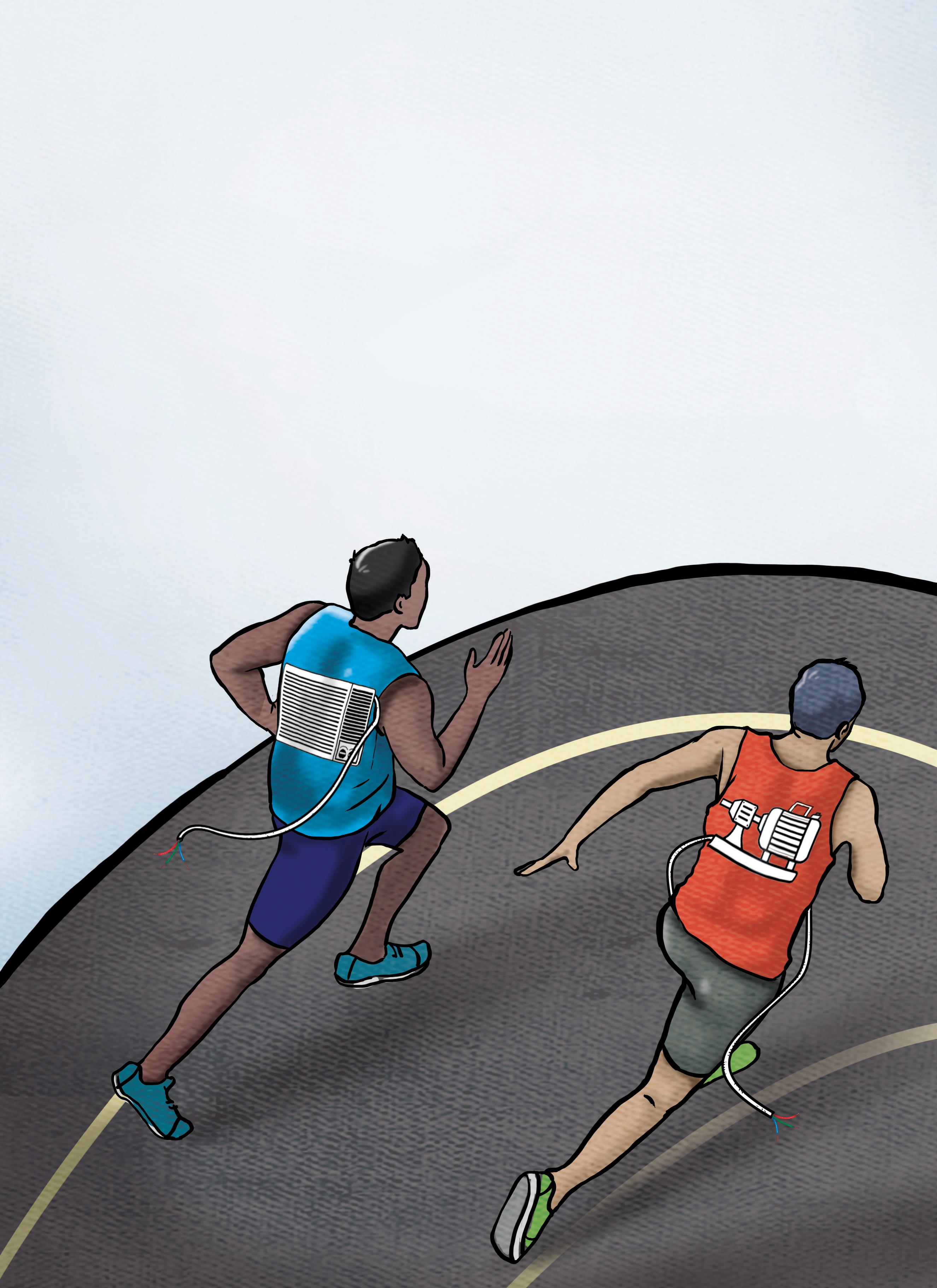
Estimates suggest that just two appliances—air conditioners and water pumps—will account for more than one-third of India’s total energy consumption by 2030. Raising their efficiency to global standards could result in potential energy savings, and support the country’s net-zero emission targets. Is India positioned to tap into this opportunity?
STAY COOL." "Pump out the water." Phrases like these are quite familiar in a country like India that heavily depends on two appliances: room air conditioners (ACs) and water pumps. In today's warming world, cooling is no longer a luxury but an urgent adaptation. In a land of erratic monsoons and prolonged dry spells, pumping water is no longer just a routine part of farming— it is a vital strategy for climate resilience.
India is already the largest extractor of groundwater in the world. It pumps out more water annually than what the monsoon rains can replenish. It is estimated that around 32 million irrigation pumps are currently in use across Indian farms. Simultaneously, ACs have become a symbol of comfort and aspiration; nearly one in 10 Indian households owns an AC today—a figure on par with car ownership. And this is just the beginning. According to the International Energy Agency (IEA), India is expected to have over one billion ACs in operation by 2050—increasing heat levels in cities, partly because of climate change, will add to the demand for cooling. This will in turn add to energy demand and its resultant emissions.
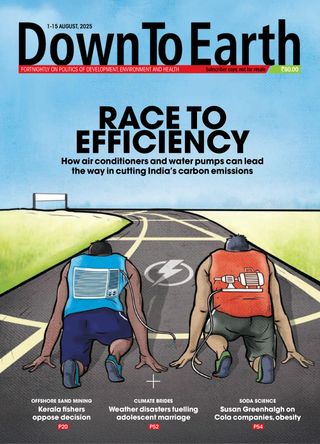

यह कहानी Down To Earth के August 01, 2025 संस्करण से ली गई है।
हजारों चुनिंदा प्रीमियम कहानियों और 10,000 से अधिक पत्रिकाओं और समाचार पत्रों तक पहुंचने के लिए मैगज़्टर गोल्ड की सदस्यता लें।
क्या आप पहले से ही ग्राहक हैं? साइन इन करें
Down To Earth से और कहानियाँ

Down To Earth
JINALI MODY - ENTREPRENEUR
In September 2025, UN Environment Programme announced Mumbai-based Jinali Mody, founder of material-science startup Banofi Leather, as a Young Champion of the Earth.

2 mins
January 01, 2026

Down To Earth
IT'S AN ENDLESS BATTLE
A decade spent tackling waste still feels vanishingly small
2 mins
January 01, 2026

Down To Earth
'NUMB, AND UNABLE TO ACT
As disasters grow more frequent, I find myself wondering how long I can continue living here, waiting for the next storm
2 mins
January 01, 2026

Down To Earth
SAJANA SAJEEVAN - CRICKETER
In April 2024, Sajana Sajeevan got her maiden call up to the national women's cricket team on the back of a 12-year domestic career that began in the paddy fields of Wayanad, Kerala.
4 mins
January 01, 2026

Down To Earth
NILA MADHAB PANDA - FILMMAKER
Few storytellers bring dramatic despair of ecological loss to the big screen like Nila Madhab Panda. The national-award winning filmmaker often makes nature his central character, be it in his 2017 film Kadvi Hawa or in the 2023 web series The Jengaburu Curse.
4 mins
January 01, 2026

Down To Earth
CHETAN SINGH SOLANKI: SCIENTIST | SOCIAL ENTREPRENEUR
For the past five years, Chetan Singh Solanki has been on a singular journey.
2 mins
January 01, 2026

Down To Earth
ʻLIVING SLOWLY, RELUCTANTLY
The pleasures and burdens of attempting a sustainable life in a fast-moving world
2 mins
January 01, 2026

Down To Earth
KIRAN RAO
Filmmaker and producer Kiran Rao has mastered the art of mainstreaming social commentary, as seen in her early films like Dhobi Ghat and more recently in Laapataa Ladies and Humans in the Loop.
4 mins
January 01, 2026

Down To Earth
I SEE THE RISE OF DEFENDERS
When a species disappears from a land, the loss extends far beyond the species itself.
2 mins
January 01, 2026

Down To Earth
MANISH MEHROTRA - CHEF | RESTAURATEUR
Manish Mehrotra is globally recognised for his innovative approach to preserving India's culinary heritage.
4 mins
January 01, 2026
Listen
Translate
Change font size