
मैगज़्टर गोल्ड के साथ असीमित हो जाओ
10,000 से अधिक पत्रिकाओं, समाचार पत्रों और प्रीमियम कहानियों तक असीमित पहुंच प्राप्त करें सिर्फ
The Columbia Space Shuttle disaster
BBC Sky at Night Magazine
|February 2023
Twenty years on, Amy Arthur looks back at fateful flight STS-107
-

NASA's Space Shuttle programme ran from 1972 to 2011, its successes including the launch of the Hubble Space Telescope, Spacelab and the construction of the International N Space Station.
But the programme had its problems. Schedule pressures and tight budgets had been blamed for the loss of one of its five orbiters, Challenger, and its seven-person crew in 1986. Organizational changes were made, but by the launch of Columbia's flight STS-107 on 16 January 2003, problems had returned. Initial reports after launch were positive, and the crew looked forward to the 16 days of scientific research ahead of them. On the ground, a team reviewing launch footage noticed that something had fallen from Columbia's fuel tank and struck the underside of its left wing, where reinforced carbon-carbon panels would act as a heat shield against the 1,600°C endured during re-entry to Earth.
The object was a piece of insulating foam, roughly 60cm by 38cm, with an impact speed of 877km/h. Smaller foam strikes were common on Shuttle missions, but to assess whether the damage posed a real threat, the team requested high-resolution images from the US Department of Defense. This request, and the two more submitted in the week following, were denied.


यह कहानी BBC Sky at Night Magazine के February 2023 संस्करण से ली गई है।
हजारों चुनिंदा प्रीमियम कहानियों और 10,000 से अधिक पत्रिकाओं और समाचार पत्रों तक पहुंचने के लिए मैगज़्टर गोल्ड की सदस्यता लें।
क्या आप पहले से ही ग्राहक हैं? साइन इन करें
BBC Sky at Night Magazine से और कहानियाँ
BBC Sky at Night Magazine
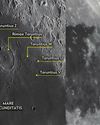
MOONWATCH
January's top lunar feature to observe

2 mins
January 2026
BBC Sky at Night Magazine
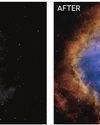
Speed up your processing workflow
How to use Photoshop's Actions tool to drastically cut your processing time
3 mins
January 2026
BBC Sky at Night Magazine
Chasing Canada's polar lights
With solar maximum peaking and a new Moon promising dark skies, Jamie Carter travels to Churchill, Manitoba to hunt the Northern Lights - and dodge polar bears – in Canada's far north
7 mins
January 2026
BBC Sky at Night Magazine
Beyond Pluto: The search for the hidden planets
Could one – or even two - undiscovered planets lurk at the edges of our Solar System? Nicky Jenner explores how close we are to finding the elusive 'Planet 9'
6 mins
January 2026
BBC Sky at Night Magazine
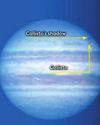
Jupiter moon events
Jupiter is a magnificent planet to observe.
2 mins
January 2026

BBC Sky at Night Magazine
What samples from space have taught us
Alastair Gunn explains what scientists have learnt in the 20 years since the first unmanned mission brought materials back from alien worlds
3 mins
January 2026
BBC Sky at Night Magazine
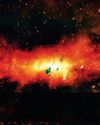
The Milky Way as you've never seen it before
This is the largest low-frequency radio colour image of our Galaxy ever assembled
1 min
January 2026
BBC Sky at Night Magazine
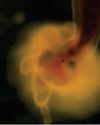
Merger of ‘impossibly' massive black holes explained
Scientists discover how enormous, fast-spinning black holes can exist after all
1 mins
January 2026
BBC Sky at Night Magazine
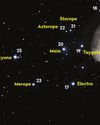
Lunar occultation of the Pleiades
BEST TIME TO SEE: 27 January from 20:30 UT
1 min
January 2026
BBC Sky at Night Magazine
The Universe's expansion may be slowing down
New study suggests current theories of dark energy could be wrong
1 mins
January 2026
Translate
Change font size