
मैगज़्टर गोल्ड के साथ असीमित हो जाओ
10,000 से अधिक पत्रिकाओं, समाचार पत्रों और प्रीमियम कहानियों तक असीमित पहुंच प्राप्त करें सिर्फ
Cosmic rays
BBC Sky at Night Magazine
|June 2024
In part two of our series, Govert Schilling looks at cosmic rays, the high-energy particles that bombard Earth from space
-

Like a metal roof being struck during a heavy hailstorm, Earth is under constant bombardment by energetic subatomic particles from outer space. They travel at almost the speed of light, pack more energy than terrestrial particle laboratories can ever achieve, and their origin is largely unknown. Studying these cosmic rays, as they are called, is an active field of research and a prime example of the meeting-point between astronomy and particle physics.
Cosmic rays were discovered way back in 1912. Austrian physicist Victor Hess wanted to know why air molecules become ionised - that is, how over time some oxygen and nitrogen atoms lose one or more of their electrons, leaving them with an electrical charge. At first, scientists thought natural radioactivity from terrestrial rocks was the culprit, but balloon experiments by Hess revealed that the ionisation source had to be extraterrestrial.
It took more than two decades for scientists to understand the true nature of these cosmic rays. Famed American physicist Robert Millikan, who coined the term, believed them to be highenergy photons, a form of light. But experiments by his younger colleague Arthur Compton and other researchers revealed that the 'rays' are influenced by Earth's magnetic field, indicating that they consist of electrically charged particles.
Where are they from?

यह कहानी BBC Sky at Night Magazine के June 2024 संस्करण से ली गई है।
हजारों चुनिंदा प्रीमियम कहानियों और 10,000 से अधिक पत्रिकाओं और समाचार पत्रों तक पहुंचने के लिए मैगज़्टर गोल्ड की सदस्यता लें।
क्या आप पहले से ही ग्राहक हैं? साइन इन करें
BBC Sky at Night Magazine से और कहानियाँ
BBC Sky at Night Magazine
MOONWATCH
January's top lunar feature to observe

2 mins
January 2026
BBC Sky at Night Magazine
Speed up your processing workflow
How to use Photoshop's Actions tool to drastically cut your processing time
3 mins
January 2026
BBC Sky at Night Magazine
Chasing Canada's polar lights
With solar maximum peaking and a new Moon promising dark skies, Jamie Carter travels to Churchill, Manitoba to hunt the Northern Lights - and dodge polar bears – in Canada's far north
7 mins
January 2026
BBC Sky at Night Magazine
Beyond Pluto: The search for the hidden planets
Could one – or even two - undiscovered planets lurk at the edges of our Solar System? Nicky Jenner explores how close we are to finding the elusive 'Planet 9'
6 mins
January 2026
BBC Sky at Night Magazine
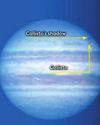
Jupiter moon events
Jupiter is a magnificent planet to observe.
2 mins
January 2026
BBC Sky at Night Magazine
What samples from space have taught us
Alastair Gunn explains what scientists have learnt in the 20 years since the first unmanned mission brought materials back from alien worlds
3 mins
January 2026
BBC Sky at Night Magazine
The Milky Way as you've never seen it before
This is the largest low-frequency radio colour image of our Galaxy ever assembled
1 min
January 2026
BBC Sky at Night Magazine
Merger of ‘impossibly' massive black holes explained
Scientists discover how enormous, fast-spinning black holes can exist after all
1 mins
January 2026
BBC Sky at Night Magazine
Lunar occultation of the Pleiades
BEST TIME TO SEE: 27 January from 20:30 UT
1 min
January 2026
BBC Sky at Night Magazine
The Universe's expansion may be slowing down
New study suggests current theories of dark energy could be wrong
1 mins
January 2026
Listen
Translate
Change font size