
मैगज़्टर गोल्ड के साथ असीमित हो जाओ
10,000 से अधिक पत्रिकाओं, समाचार पत्रों और प्रीमियम कहानियों तक असीमित पहुंच प्राप्त करें सिर्फ
कोशिश गोल्ड - मुक्त
WELCOME TO THE DREAM WORLD
BBC Science Focus
|October 2025
New technology aims to help you induce a lucid dream at will, enabling you to enter a state of consciousness where anything is possible. Dare you close your eyes?
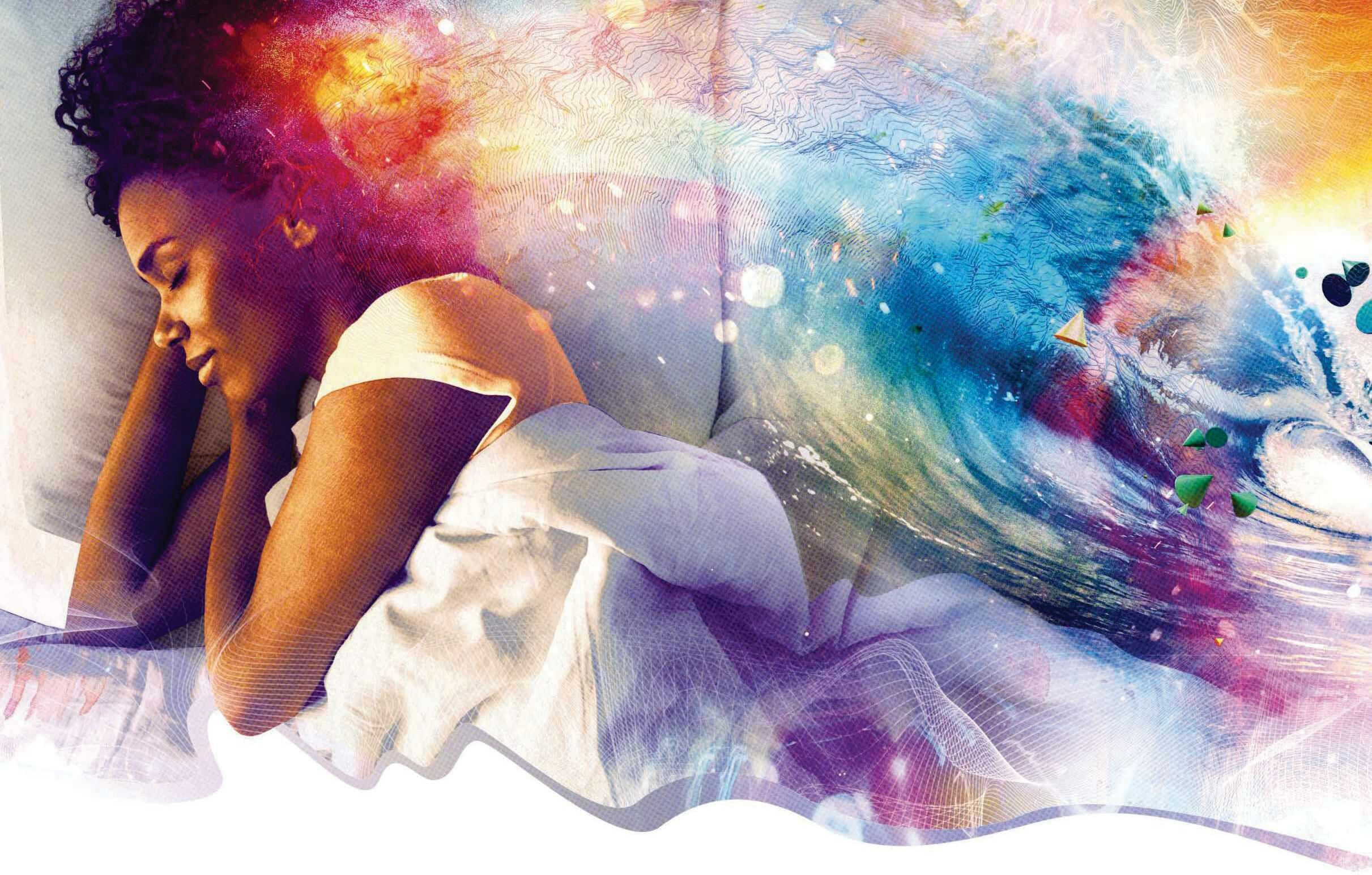
Imagine waking up to find that you're not awake at all. Your body is asleep, but your mind is running free in a dream where everything feels vivid and real and – because you know you're dreaming – you can control what happens.
In this hybrid state of consciousness, known as lucid dreaming, you can go where you want, see who you please and do the impossible. And you can feel the sensations of it, too: the wind in your hair as you fly over a city; the sun on your skin as you land on a desert island of your own design. You can sit down on the sand and smile, knowing you can do it all again tomorrow night at the simple touch of a button. If all that sounds like... well, a dream, it's one that might come true in the near future. It's certainly what a group of researchers and technologists are working towards. They're building high-tech sleep masks and other trippy brain-interface technology in the hopes of transforming lucid dreaming from a niche interest into something that all of us can do.
For the majority of people who can do it, lucid dreaming is something that happens by accident or after months, possibly years, of practice. Dream tech companies like REMspace and Prophetic are exploring ways to induce lucid dreaming at will.
Most methods of doing this involve stimulating the prefrontal cortex. That's the region of the brain found to be active during lucid dreaming and which is associated with higher-level conscious thought in the waking world. Most dream tech achieves this using some kind of signal, from simple sounds and alerts, to more complex methods using electricity, ultrasound or magnets to stimulate areas of the brain.

यह कहानी BBC Science Focus के October 2025 संस्करण से ली गई है।
हजारों चुनिंदा प्रीमियम कहानियों और 10,000 से अधिक पत्रिकाओं और समाचार पत्रों तक पहुंचने के लिए मैगज़्टर गोल्ड की सदस्यता लें।
क्या आप पहले से ही ग्राहक हैं? साइन इन करें
BBC Science Focus से और कहानियाँ

BBC Science Focus
WHAT’S THE BEST TEMPERATURE TO WASH LAUNDRY AT?
Although it was once true that washing laundry at high temperatures was more effective, that’s no longer the case.

1 mins
June 2026
BBC Science Focus
WHAT IS HISTAMINE FLUSHING AND WHAT CAN IT TELL YOU?
If you've ever experienced a sudden, warm, red bloom spreading across your face, neck or chest after a glass of wine or a spicy curry, that's likely to be the feeling of histamine flushing. While often harmless, it can sometimes serve as a useful warning sign for bigger problems.
2 mins
June 2026

BBC Science Focus
HOW TO SEE NOCTILUCENT CLOUDS
HOW TO SEE NOCTILUCENT CLOUDS
1 mins
June 2026
BBC Science Focus
HOW DO FEMALE ANIMALS STORE SPERM LONG TERM?
Female little brown bats mate in the autumn, but don't fertilise their eggs or become pregnant until spring.
2 mins
June 2026

BBC Science Focus
BEYOND THE EVENT HORIZON
How do you map something you can’t see? Scientists may have found a way
8 mins
June 2026

BBC Science Focus
The real reason America wants to return to the Moon
Artemis II was a triumph, but there was some sinister reasoning behind our latest Moon mission
5 mins
June 2026
BBC Science Focus
SHOULD I START EFT TAPPING?
A study at the University of Michigan in 2021 found that eating a hot dog carried a health burden equivalent to losing 36 minutes of life.
1 min
June 2026

BBC Science Focus
WHAT DOES NARCISSISTIC BAITING LOOK LIKE?
The narcissists in your life believe the world ought to see them and treat them as if they are special.
2 mins
June 2026
BBC Science Focus
ARE WE ADDICTED TO ULTRA-PROCESSED FOODS?
There could be a reason willpower often wilts in the face of junk foods — their addictive qualities might be overriding our resolve
9 mins
June 2026

BBC Science Focus
LACK OF TOUCH IS HARMING OUR HEALTH
Studies in this field, exploring the nature of ‘touch hunger’ or ‘touch deprivation,’ had previously focused on isolated older adults, but after COVID-19, they expanded to cover all age groups.
8 mins
June 2026
Listen
Translate
Change font size