
मैगज़्टर गोल्ड के साथ असीमित हो जाओ
10,000 से अधिक पत्रिकाओं, समाचार पत्रों और प्रीमियम कहानियों तक असीमित पहुंच प्राप्त करें सिर्फ
कोशिश गोल्ड - मुक्त
THE WORST IDEAS OF THE 21ST CENTURY
BBC Science Focus
|January 2025
NOT ALL IDEAS CAN BE HITS. ALONGSIDE GROUND-BREAKING INNOVATIONS, 21ST-CENTURY SCIENTISTS HAVE HELMED THEIR SHARE OF WILD TECH FLOPS, DUBIOUS THEORIES AND OVERHYPED BREAKTHROUGHS. HERE ARE THE BIGGEST TO FORGET

THE METAVERSE
If you don't know what the metaverse is (no judgment because it was horribly sold), it was a word that Mark Zuckerberg and roughly four other people used to describe loosely connected immersive technologies such as virtual reality (VR), augmented reality (AR), open-world gaming, digital avatars and nonfungible tokens (NFTs). The internet 3.0, if you will.
Zuckerberg imagined a terribly animated dystopia where we could work and socialise on a hybrid plane of semi-digital existence. We would have avatars to attend meetings for us, but for some reason, they wouldn't have legs. You could buy a mansion made of pixels, not bricks. Pop-up notifications would bombard our retinas via AR glasses that superimposed online content over the real world. And thanks to VR, we could do anything or go anywhere simply by strapping a heavy, sweat-inducing computer to our faces.
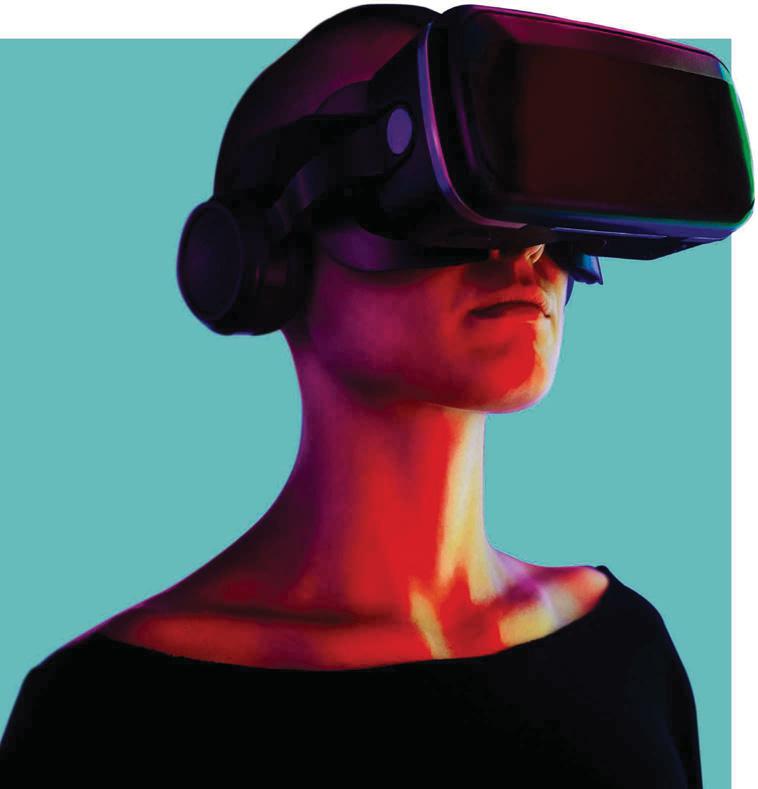 Some of these technologies are still fighting for life, but many have faded from relevance or completely stalled.
Zuckerberg's VR branch has now lost a staggering $58bn (£46bn) since 2020. Don't expect those losses to be a blip - a survey of 624 tech experts found that nearly half believe the metaverse won't play a major role in our lives, even by 2040.
HYPERLOOP
From an engineering perspective, hyperloop is a bold, world-changing form of transport - if only someone could get it to work. The idea is to encase people and cargo in a steel tube, then propel them with magnets through a near-vacuum at 1,000km/h (about 600mph), hopefully without rearranging anyone's internal organs.


यह कहानी BBC Science Focus के January 2025 संस्करण से ली गई है।
हजारों चुनिंदा प्रीमियम कहानियों और 10,000 से अधिक पत्रिकाओं और समाचार पत्रों तक पहुंचने के लिए मैगज़्टर गोल्ड की सदस्यता लें।
क्या आप पहले से ही ग्राहक हैं? साइन इन करें
BBC Science Focus से और कहानियाँ
BBC Science Focus
Cryosleep vs hibernation: What's the difference?
When hibernating animals, such as hedgehogs and dormice, disappear for winter, they don't freeze like the Siberian salamander.

1 mins
May 2026

BBC Science Focus
Space brain
The greatest names in science are often said to be 'big-brained', but this cosmic wonder puts them all to shame. Nebula PMR 1 - otherwise known as the 'Exposed Cranium' nebula for its distinctive shape - measures around 3.2 light-years across.
1 min
May 2026

BBC Science Focus
Your most draining relationships are taking years off your life, study suggests
Difficult people don't just zap your energy - they may also accelerate your biological ageing
4 mins
May 2026

BBC Science Focus
We're closer than ever to bringing back life from cryogenic freezing
Astronauts in cryosleep is a sci-fi staple. But a new study suggests the gap between fiction and reality just got a little smaller
3 mins
May 2026
BBC Science Focus
Bizarre alien magma planet found surprisingly close to Earth
'Magma oceans' might be more common in space than previously thought
4 mins
May 2026

BBC Science Focus
The rest of the world is driving a $6 trillion climate cost for the US
Despite being the biggest emitter of carbon, America is already paying a disproportionate price for the climate crisis
1 mins
May 2026

BBC Science Focus
It absolutely will not stop
No, your eyes aren't deceiving you — this odd-looking sculpture is moving.
1 min
May 2026

BBC Science Focus
Not a black and white issue
This image of Mähina, an all-white humpback whale, won the 2026 World Nature Photographer of the Year competition.
1 min
May 2026

BBC Science Focus
HEALTH: Eating oats could lower your cholesterol in just two days
The health benefits of a two-day porridge diet lasted for weeks afterwards
1 mins
April 2026

BBC Science Focus
Most people are too sure they can identify fake human faces
Even 'super recognisers' struggle with the challenge. Can you do better?
1 min
April 2026
Listen
Translate
Change font size