कोशिश गोल्ड - मुक्त
THE COUNTERINTUITIVE COSMOS
BBC Science Focus
|February 2024
THE WORLD ISN'T WHAT IT SEEMS. HERE'S HOW SCIENCE HAS EXPOSED THE FALLACIES AND MISCONCEIVED IDEAS OF EARTH AND THE HEAVENS THROUGHOUT HISTORY

Our view of reality is severely limited. The reason for this is simple: we evolved on an African plain three million years ago. And so we have the senses necessary to survive on an African plain: eyes that can see far enough to spot a predator approaching, ears sensitive enough to hear a rustling in the long grass… Those senses have revealed only an infinitesimal fraction of the world and provided us with a certain ‘common sense’. But, at every level, we’re deceived by our ape-like intuition. Most of nature is deeply hidden from us and the world isn’t what it seems. So many things that seem obviously true are not. And here are just a few…
1 EARTH IS FLAT
Apart from the lumps and bumps of mountains, Earth certainly seems flat. But there are several clues that not only is it curved, but in fact it’s a large ball. For one thing, receding ships drop below the horizon before dwindling to a dot. Also, during an eclipse of the Moon, when Earth passes between the Moon and the Sun, the shadow of Earth on the Moon is clearly curved.
Even stronger evidence that Earth is round came from the first circumnavigation of the world in a ship sailed by the Portuguese navigator Ferdinand Magellan. Though he was killed in the Philippines, the voyage was completed by the Basque navigator Juan Sebastián del Cano in 1521. But, of course, the easiest way to see that Earth is a sphere is from space. And there’s no doubt that what the Apollo 8 astronauts photographed rising above the grey desolation of the Moon half a century ago was a sphere.

यह कहानी BBC Science Focus के February 2024 संस्करण से ली गई है।
हजारों चुनिंदा प्रीमियम कहानियों और 10,000 से अधिक पत्रिकाओं और समाचार पत्रों तक पहुंचने के लिए मैगज़्टर गोल्ड की सदस्यता लें।
क्या आप पहले से ही ग्राहक हैं? साइन इन करें
BBC Science Focus से और कहानियाँ

BBC Science Focus
DOES MY DOG HAVE ADHD?
Officially, Attention-Deficit Hyperactivity Disorder (ADHD) is a human condition. People are diagnosed with it. Dogs are not. Yet many of its core features, including hyperactivity, impulsivity and distractibility, can be found in dogs.

1 min
March 2026

BBC Science Focus
DOES MY BRAIN LIVE A LITTLE IN THE PAST?
Yes, your brain does live a little in the past. It can't help it. The information it receives via your senses is always a little out of date. Whether it's light entering the retinas in your eyes, or sounds vibrating the hairs in your ears, it not only takes time for the data to arrive, but your brain then has to process it.
2 mins
March 2026
BBC Science Focus
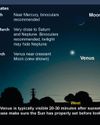
ASTRONOMY FOR BEGINNERS
RETURN OF THE EVENING STAR (VENUS)
1 mins
March 2026

BBC Science Focus
CAN YOU STOP YOUR SENSE OF TASTE DULLING AS YOU AGE?
Sometimes I hear people say that food just doesn't taste the same as they get older. It's tempting to blame this on age, but there are other factors at play, too.
1 mins
March 2026
BBC Science Focus
MICROBIOMES OF THE SUPERAGERS
BY STUDYING THE INCREASING NUMBER OF PEOPLE WHO ARE LIVING BEYOND THEIR 100TH BIRTHDAYS, SCIENTISTS ARE DISCOVERING THAT THE SECRET TO REACHING A RIPE OLD AGE IN RUDE HEALTH MIGHT LIE IN OUR GUTS
8 mins
March 2026

BBC Science Focus
HOW BIG WERE MEDIEVAL WAR HORSES?
You might picture knights charging into battle on towering steeds, but medieval horses were typically no bigger than modern-day ponies.
1 min
March 2026
BBC Science Focus
FORCES OF HABIT
Could new research on setting up healthy habits resuscitate those stuttering New Year resolutions?
3 mins
March 2026

BBC Science Focus
5 DANGERS HIDING IN YOUR PROCESSED FOOD
We all know that ultra-processed foods are bad for us, but what ingredients should we particularly try to avoid? And what are they doing to our bodies?
9 mins
March 2026
BBC Science Focus
Mosquitoes are becoming thirstier for human blood
Habitat loss may be pushing mosquitoes towards human hosts with deadly consequences
1 mins
March 2026

BBC Science Focus
HOW CAN I GET OVER MY EX?
Relationship breakups can be brutal, just look at the popularity of songs like 'Someone Like You' by Adele, or all the covers of 'Cry Me a River' by Julie London.
1 mins
March 2026
Listen
Translate
Change font size