कोशिश गोल्ड - मुक्त
How global economic governance entrenches dependence for countries like Bangladesh
The Island
|July 18, 2025
From Latin America to subSaharan Africa, IMF stabilisation packages in the 1980s and 1990s ushered in waves of austerity, liberalisation, and deregulation. These policies decimated public services, weakened state capacity, and widened inequality. Bangladesh now treads a similar path. In June 2025, the IMF disbursed an additional SDR 567 million (equivalent to around $884 million under the extended credit facility and extended fund facility) and $453 million via the rapid financing instrument, totalling $4.1 billion in support-a sum that, ironically, is dwarfed by the record $30 billion remitted by Bangladeshi migrant workers in FY24-25.
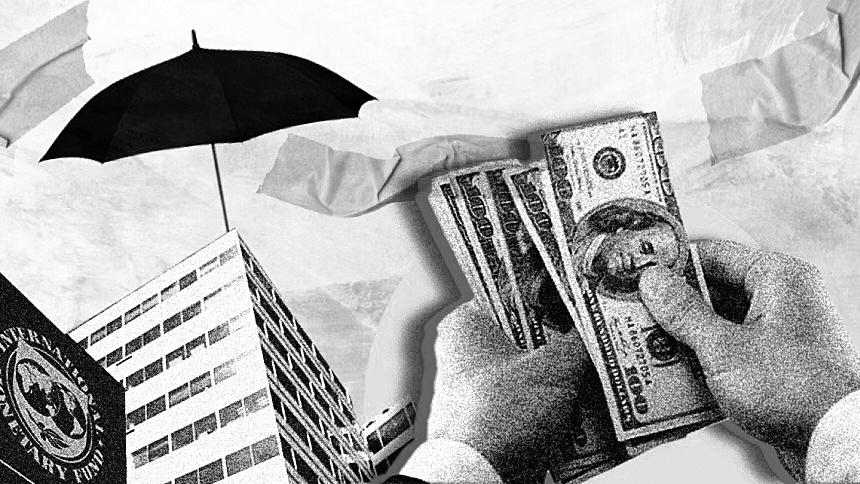
In the first half of 2025, Bangladesh's economic headlines have swung between cautious optimism and deepening alarm: an IMF bailout, renewed negotiations with the World Bank, calls for foreign direct investment (FDI), and an unrelenting cost-of-living crisis. Beneath these surface-level developments lies a deeper structural entrapment—an architecture of global economic governance that continues to bind Bangladesh's future to externally scripted imperatives.
At the core of this system are the Bretton Woods institutions—the International Monetary Fund (IMF) and the World Bank—established in 1944 to help stabilise the post-Second World War economic order. Add to them the World Trade Organization (WTO), created in 1995. Together, these institutions are now acting as enforcers of the Washington Consensus: policy prescriptions promoting austerity, liberalisation, and privatisation, often at the expense of national sovereignty and social equity. Today, this "Unholy Trinity" operates in concert with powerful actors such as the G7, World Economic Forum (WEF), and transnational corporations (TNCs), colluding closely with domestic enablers from Bangladesh's political, business, and bureaucratic elites.
This ensemble—let's call them the Unholy Trinity Plus—sustains a neo-colonial economic order couched in the language of development, reform, and global integration, essentially reproducing dependence in the Global South.
Despite Bangladesh's impressive socioeconomic resilience, it remains ensnared in this ill-conceived global architecture, its sovereignty gradually mortgaged for short-term liquidity and long-term indebtedness.
The mirage of development

यह कहानी The Island के July 18, 2025 संस्करण से ली गई है।
हजारों चुनिंदा प्रीमियम कहानियों और 10,000 से अधिक पत्रिकाओं और समाचार पत्रों तक पहुंचने के लिए मैगज़्टर गोल्ड की सदस्यता लें।
क्या आप पहले से ही ग्राहक हैं? साइन इन करें
The Island से और कहानियाँ
The Island
Freedom is South Africa's biggest asset as India look to extend proud record
If this tour followed the points system from the women's Ashes four points for a Test win and two for winning limited-overs games - South Africa would be leading India by 12 points to eight.

1 min
December 17, 2025
The Island
Colombo Port facing strategic neglect
The Colombo Port is always in the news for the wrong reasons. More than 300 container trucks loaded with cargo are waiting within its premises due to a clearance delay, according to a report we published yesterday.
2 mins
December 17, 2025

The Island
Acquisition of assets exceeding Rs 57 mn: Ex-Minister granted bail
Former Minister C.B. Rathnayake, remanded on 02 December, following his arrest by the Commission to Investigate Allegations of Bribery or Corruption (CIABOC), was granted bail yesterday (16).
1 min
December 17, 2025
The Island
Sri Lanka, Romania discuss illegal recruitment, etc.
The government is making an effort to streamline Sri Lankans employed in Romania.
1 mins
December 17, 2025
The Island
Nuclear device lost in the Himalayas 60 years ago threatens Ganga today
In 1965, at the height of Cold War anxieties over China's nascent nuclear programme, the United States’ CIA (Central Intelligence Agency) and India's Intelligence Bureau (IB) launched a covert mission to install a nuclearpowered listening device high on Nanda Devi, the tallest (25,634 feet) mountain entirely located in India.
2 mins
December 17, 2025
The Island
Post-Ditwah recovery efforts: Rs. 190 bn needed to restore roads and bridges countrywide
Officials of the Ministry of Transport and Highways and Urban Development yesterday said that due to the destruction of roads and bridges across the country by Cyclone Ditwah, the Road Development Authority alone had incurred a loss of approximately Rs. 75 billion.
2 mins
December 17, 2025

The Island
Former Sri Lanka captain D. S. de Silva passes away at 83
Former Sri Lanka cricketer D. S. de Silva has passed away in London on Monday following a brief illness.
1 mins
December 17, 2025
The Island
The “Dutch golden age” and slavery in Suriname
Slavery was abolished in Suriname in July 1863. However, once again, as De Kom eloquently explains, it was the ex-slaveholders who benefited monetarily from this change.
10 mins
December 17, 2025
The Island
When water becomes the weapon
On the morning of November 28, 2025, Cyclone Ditwah made an unremarkable entrance, meteorologically speaking.
5 mins
December 17, 2025

The Island
Delhi court throws out ED chargesheet against Sonia Gandhi, her son Rahul Gandhi in the National Herald case
In a major relief to senior Congress Party leader Sonia Ganddhi and her son Rahul Gandhi in the national Herald case, a Delhi court on Tuesday refused to take cognisance of the National Herald money laundering chargesheet against the Congress leaders.
2 mins
December 17, 2025
Listen
Translate
Change font size