
मैगज़्टर गोल्ड के साथ असीमित हो जाओ
10,000 से अधिक पत्रिकाओं, समाचार पत्रों और प्रीमियम कहानियों तक असीमित पहुंच प्राप्त करें सिर्फ
कोशिश गोल्ड - मुक्त
THE DOMESTIC PROFITS OF WAR
The Caravan
|June 2025
The India-Pakistan conflict is sustaining the political projects of their leaders
-
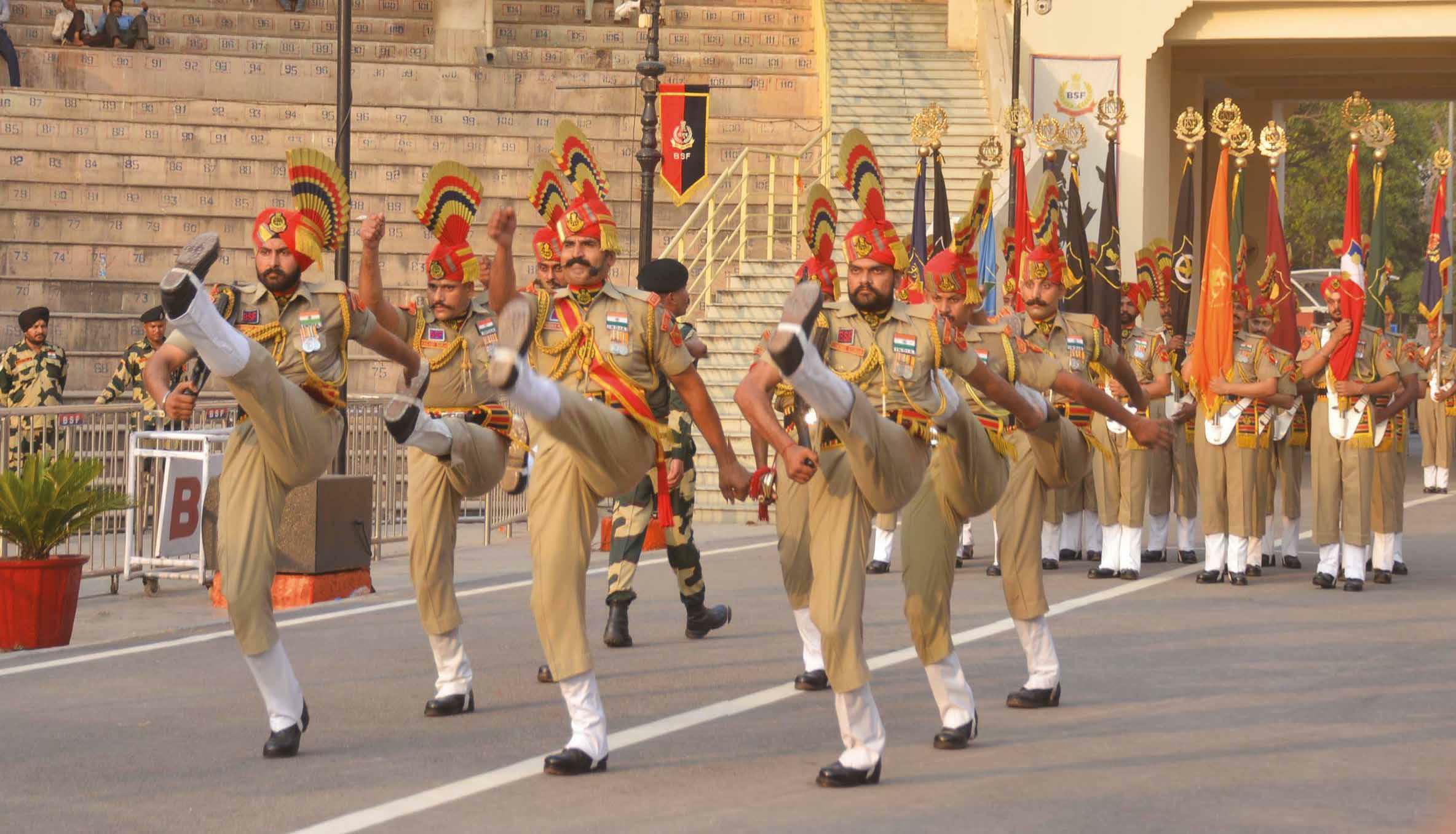
A CEASEFIRE WAS DECLARED between India and Pakistan on 10 May. It came after a tense four days of military conflict—involving missile strikes, heavy shelling along the Line of Control and drone battles—that resulted in nearly two hundred deaths. The Narendra Modi government declared on the day of the ceasefire that any future acts of terror would be considered an “act of war” and would be dealt with accordingly. In his address to the nation, the prime minister described this doctrine as the “new normal.” On 13 May, security forces reportedly killed three “terrorists” in an encounter near Shopian. Two days after that, the media reported another encounter in which security forces killed three men near Awantipora in south Kashmir.
This sequence of events exposes the contradictions in the government’s logic. If these encounters were with “terrorists,” why were they not read as acts of war? Would it count as an act of terror only if members of the security forces were killed? Or would it be so if the militants succeeded in attacking civilians? All of this implies that war with Pakistan is justified not by acts of terrorism but by security forces failing to prevent them.
This is what happened with the Pahalgam attack, in which 26 people died—a brutal act, not least because civilians were segregated based on religion and killed selectively. We still only have the Indian government’s word for the identity of the militants, none of whom have been apprehended. The attack took place in a busy tourist destination, and security forces in the world’s most militarised zone could not stop it. But we will not get answers about how such a security lapse occurred, because we have been too busy cheering a government that designed a conflict that cannot stand the scrutiny of its own logic.
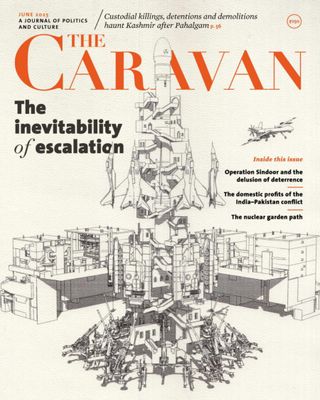

यह कहानी The Caravan के June 2025 संस्करण से ली गई है।
हजारों चुनिंदा प्रीमियम कहानियों और 10,000 से अधिक पत्रिकाओं और समाचार पत्रों तक पहुंचने के लिए मैगज़्टर गोल्ड की सदस्यता लें।
क्या आप पहले से ही ग्राहक हैं? साइन इन करें
The Caravan से और कहानियाँ

The Caravan
Dim Views
Punjab's new media suffers from old problems

22 mins
February 2026

The Caravan
ON FIRM GROUND
The civic struggle against uranium mining in the West Khasi Hills
6 mins
February 2026

The Caravan
DANGEROUS LIAISON
Why India enabled Israel's genocide in Gaza
44 mins
February 2026

The Caravan
Platform for Change
A women-led union gives voice to India's gig workers
6 mins
February 2026

The Caravan
NARAVANE'S Moment of Truth
An army chief's unpublished memoir exposes how the Modi government spun the China border crisis
44 mins
February 2026

The Caravan
A Brief History of the Slap
How Telugu cinema's heroes turn violence against women into romance
9 mins
February 2026

The Caravan
FACE PALM
Why the Congress keeps losing elections
33 mins
January 2025

The Caravan
The Great Transformation
Challenges facing independent news outlets in the digital age/Media
6 mins
January 2025

The Caravan
The Mob Comes for Film Critics
Dhurandhar and the manufacture of a national consensus
11 mins
January 2025

The Caravan
Memories Are Made of This
FOOD IN DALIT AND ADIVASI WRITING
15 mins
January 2025
Listen
Translate
Change font size