कोशिश गोल्ड - मुक्त
No rest for the songs of Wicked
TIME Magazine
|November 25, 2024
THE WICKED WITCH OF THE WEST HAS BEEN A FIXTURE in American culture for nearly 125 years. After coming to life in 1900 with L. Frank Baum's novel The Wonderful Wizard of Oz, she rose to prominence onscreen in 1939, portrayed by Margaret Hamilton as a sinister old lady intent on ruining an innocent girl's wish to go home.
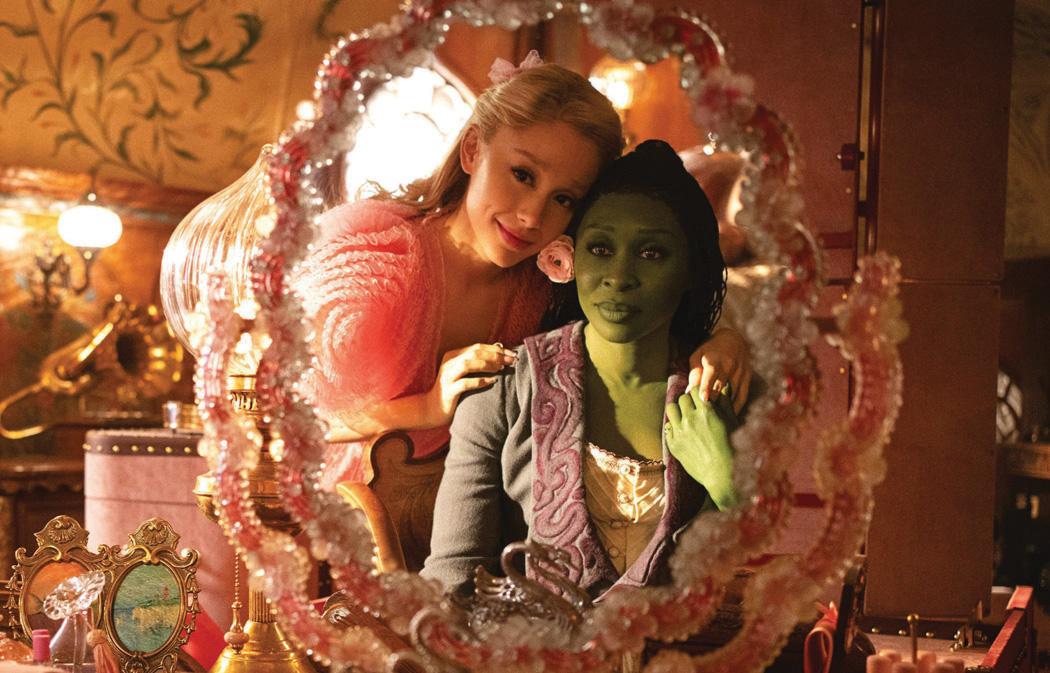
Decades later, Gregory Maguire gave her an origin story, introducing her as Elphaba in his 1995 novel Wicked. That, in turn, was adapted into a hit Broadway musical in 2003-one of the most lucrative and longest running. Now, Elphaba's story is coming to the big screen with director Jon M. Chu's two-part adaptation, starring Cynthia Erivo as Elphaba and Ariana Grande as her perkier counterpart Glinda. The first installment arrives in theaters on Nov. 22.
Wicked is much more than a simple origin story. Told through music and lyrics by the Oscar-winning composer Stephen Schwartz, it explores love, betrayal, and heartbreak as Elphaba navigates her complex relationship with the future Glinda the Good. Schwartz, whose other musical credits include Godspell and Pippin, has been involved with Wicked since its inception onstage. Countless vocalists have interpreted these songs, on Broadway and on tours around the world, but the film brings new opportunities to dive even deeper into the world of Oz. That meant some songs were expanded or restructured-a challenge that Schwartz was excited to tackle with his collaborators.
TIME spoke to Schwartz about key songs in Wicked, from Elphaba's first big number to the dramatic cliffhanger, from their origins to how they translate onscreen.
"The Wizard and I"
Wicked's third song follows Elphaba as she realizes her life is about to change. Madame Morrible (Oscar winner Michelle Yeoh in the movie), the headmistress of Shiz University, has seen Elphaba's magical talents, and announces that she will write to the Wizard so the two can meet. This is perhaps the first time Elphaba is noticed for something that doesn't have to do with the electric green color of her skin. It's one of the most emotional moments in the show as Elphaba stands alone in the middle of the stage and sings.

यह कहानी TIME Magazine के November 25, 2024 संस्करण से ली गई है।
हजारों चुनिंदा प्रीमियम कहानियों और 10,000 से अधिक पत्रिकाओं और समाचार पत्रों तक पहुंचने के लिए मैगज़्टर गोल्ड की सदस्यता लें।
क्या आप पहले से ही ग्राहक हैं? साइन इन करें
Listen
Translate
Change font size