
मैगज़्टर गोल्ड के साथ असीमित हो जाओ
10,000 से अधिक पत्रिकाओं, समाचार पत्रों और प्रीमियम कहानियों तक असीमित पहुंच प्राप्त करें सिर्फ
Race to the door
THE WEEK India
|March 26, 2023
Student migration has seen a sharp increase in recent years because of better options abroad and the increased availability of loans. But, the number of traps, too, has shot up

Do you dream of studying in Moldova? Er... not really.
What about Afghanistan, Mozambique or Somalia? Eh? No, not at all.
That seems about right. Except, it is not.
According to data shared by the ministry of external affairs in Parliament in August 2022, Indians who travelled abroad for education between 2019 and 2022 ended up in 228 countries/dependent islands. While a majority of students from India continue to go to the developed world, a few of them are even going to countries that are less developed than India, like Afghanistan (at least 60), Mozambique (15) and Somalia (one) in Africa, and Nauru (seven), an island country in Oceania.
Why? According to D. Dhanuraj, chairman, Centre for Public Policy Research, such choices reflect the “anxiety” of an aspirational generation. “They feel that educated Indians in less developed countries have an advantage,” he says. “There is less competition and if they stay on after their studies, they can build successful businesses and make good money. We hear many such stories, especially from African countries.”
Another reason for choosing smaller countries is the fee. Mohammed Abdul Raheem, who is studying medicine in Moldova (one of Europe’s poorest countries), says the tuition fee he has to pay over six years at the Nicolae Testemiţanu State University of Medicine and Pharmacy, the country’s only staterun medical university, is less than the fees charged by private universities in India. This is not indicative of low standards, says Joe Sharon, another student at the university.
“The government places great emphasis on developing and upgrading infrastructure and facilities,” he says. Indian students now occupy more than 40 per cent of the seats at Nicolae Testemiţanu State.
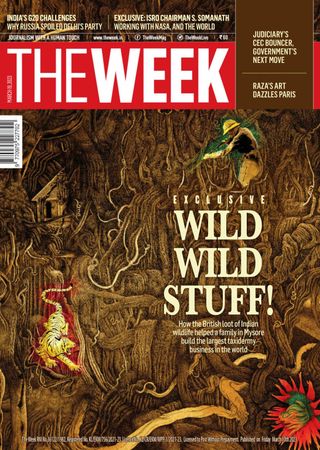

यह कहानी THE WEEK India के March 26, 2023 संस्करण से ली गई है।
हजारों चुनिंदा प्रीमियम कहानियों और 10,000 से अधिक पत्रिकाओं और समाचार पत्रों तक पहुंचने के लिए मैगज़्टर गोल्ड की सदस्यता लें।
क्या आप पहले से ही ग्राहक हैं? साइन इन करें
THE WEEK India से और कहानियाँ

THE WEEK India
WHERE THE STORM NEVER REALLY PASSES
Guantánamo Bay, once a symbol of the ‘war on terror’, has emerged as a flashpoint in Donald Trump’s immigration battles, exposing deep tensions between America’s security, legality and moral commitments

10 mins
December 21, 2025

THE WEEK India
Moderation is the key
Most people do not believe me, but I am a moderate man.
3 mins
December 21, 2025

THE WEEK India
OCEAN THERAPY
The Modi-Putin summit unveils a cooperation strategy that will rewire sea trade routes and expand India's maritime connect to the Arctic
3 mins
December 21, 2025

THE WEEK India
Indian Army men fighting for the British against the Japanese were also patriots
Readers in India may be misled by the title of Gautam Hazarika's new book, The Forgotten Indian Prisoners of World War II: Surrender, Loyalty, Betrayal and Hell. It is not about the INA prisoners who were put on trial in the Red Fort by the British. This book is about those Indian soldiers who fought the Japanese in Singapore, Malaya and Burma alongside the British, and who had to surrender, were taken prisoner, put to torture and hard labour by the Japanese, refused to join the INA, and faced death or managed to escape. While recounting their stories, Hazarika also gives an insight into the INA movement. Edited excerpts from an interview with the author:
4 mins
December 21, 2025

THE WEEK India
CHAT WITH NEHRU, QUERY KALAM...
The Prime Ministers' Museum & Library showcases the life and contributions of prime ministers and nation-builders
3 mins
December 21, 2025

THE WEEK India
The art of shifting gears in investing
“Hope is not a strategy,” Hayes growls in one memorable scene, dismissing a teammate’s starry-eyed optimism.
3 mins
December 21, 2025
THE WEEK India
Trouble on the tarmac
It is not IndiGo but Indian aviation that has become too big to fail
4 mins
December 21, 2025

THE WEEK India
SHUX AND BLUE MARBLE
THE 18 DAYS IN SPACE MIGHT HAVE MADE HIM A HOUSEHOLD NAME, BUT GROUP CAPTAIN SHUBHANSHU SHUKLA IS AS GROUNDED AS EVER. AND BEFORE HE SUITS UP FOR HIS NEXT MISSION, THE WEEK'S MAN OF THE YEAR SHARES STORIES FROM HIS LIFE AND SPACE, INCLUDING HOW HE BECAME A 'WATER BENDER'
9 mins
December 21, 2025
THE WEEK India
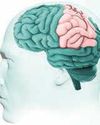
The parietal lobe
If the frontal lobe is where we decide what to do, the parietal lobe is where we understand where we are. It is the brain's internal GPS, the quiet navigator that lets you put your hand exactly where your teacup is, find the edge of a staircase without staring at it, or scratch the correct side of your head when it itches. When it works well, we move through life gracefully. When it falters, life becomes slapstick comedy.
2 mins
December 21, 2025

THE WEEK India
Area of the globe? Pie is cubed
Floating in his private pool, China's helmsman Mao Zedong shared his strategic vision with visiting Soviet strongman Nikita Khrushchev in 1958: \"You look after Europe, and leave Asia to us.\" Obviously, he expected the US to withdraw into its prewar Monroe world of the Americas, thus making the world tripolar.
2 mins
December 21, 2025
Translate
Change font size