कोशिश गोल्ड - मुक्त
MIGHT IS RIGHT
THE WEEK India
|January 25, 2026
From Tripoli in 1801 to Caracas in 2026, American interventionism reveals a consistent exercise of raw power, unburdened by global legal constraints
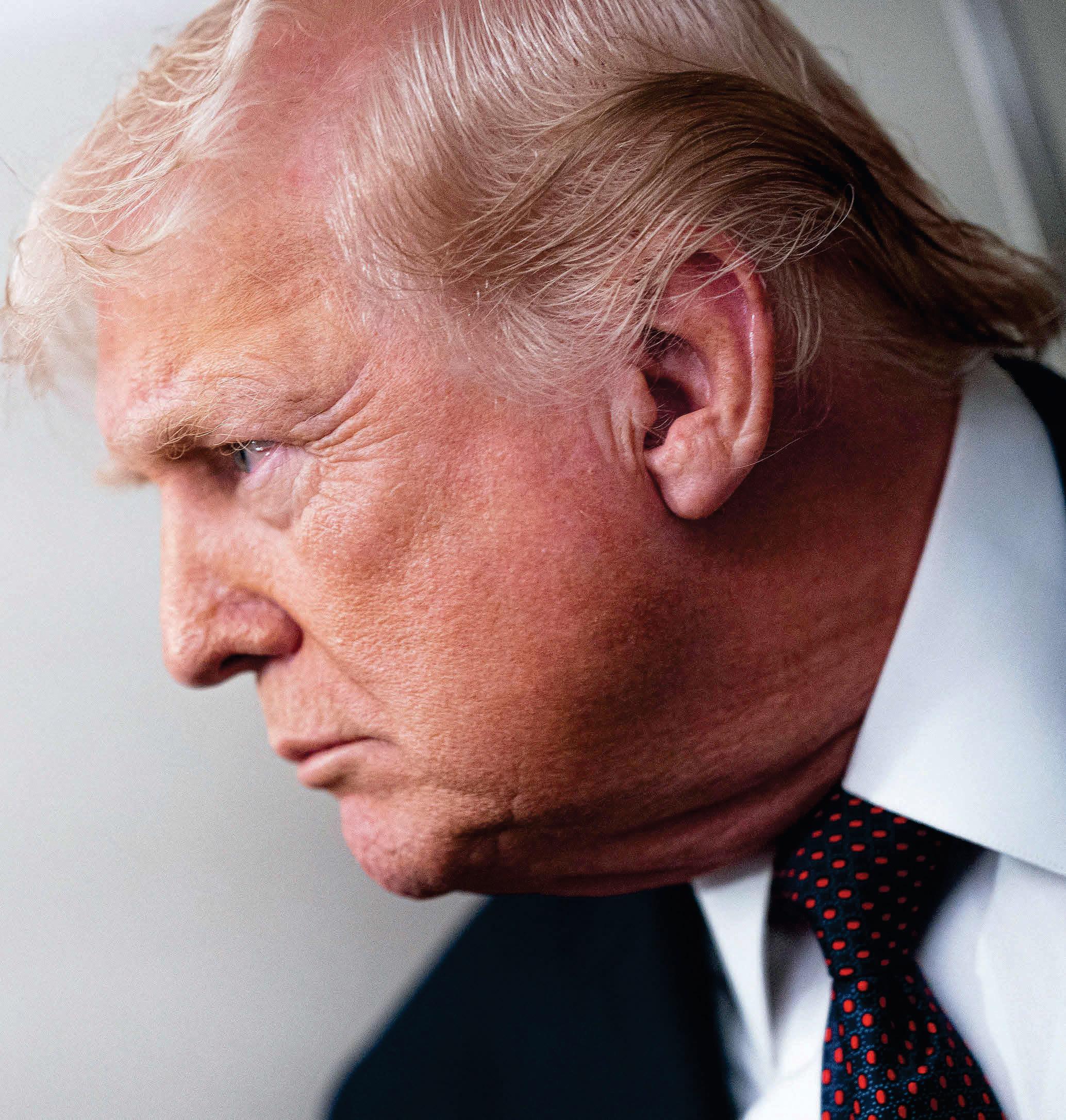
When the United States launched its first major military intervention abroad, it was a fledgling republic barely 25 years old.
In 1801, president Thomas Jefferson decided that America would no longer follow the European custom of paying protection money to North African Barbary states to keep Mediterranean trade routes safe. Instead, he sent the US Marines to war.
The campaign against Tripoli also included an ultimately unsuccessful covert expedition led by William Eaton, the US consul general in Tunis, aimed at overthrowing Tripoli's ruler and installing a more pliant alternative. Jefferson's cabinet defended the operation by arguing that the president required “no specific statutory authority” to do so. More than two centuries later, the same logic propels Washington's justification for the dramatic capture of Venezuelan president Nicolás Maduro. Many described the January 3 operation as shocking and unprecedented. The brazenness of the Maduro operation and its openly transactional character, particularly the emphasis on oil, may appear new. But the underlying logic is not. For more than 200 years, the US has repeatedly acted alone, used force without international approval and justified intervention as necessary to protect its interests.
The broader framework for intervention in the Americas emerged in 1823 with the Monroe Doctrine declaring that the western hemisphere would be treated as a US sphere of influence. Over time, it became a licence for intervention. In 1904, president Theodore Roosevelt made this explicit through his 'Corollary to the Monroe Doctrine,' claiming the right for the US to act as an international police force in Latin America when governments were deemed corrupt, unstable or incapable.

यह कहानी THE WEEK India के January 25, 2026 संस्करण से ली गई है।
हजारों चुनिंदा प्रीमियम कहानियों और 10,000 से अधिक पत्रिकाओं और समाचार पत्रों तक पहुंचने के लिए मैगज़्टर गोल्ड की सदस्यता लें।
क्या आप पहले से ही ग्राहक हैं? साइन इन करें
THE WEEK India से और कहानियाँ

THE WEEK India
Fire, smoke and soaring worries
The PSLV C-62 fiasco is a stress test of ISRO's technical systems, organisational processes and market credibility

7 mins
January 25, 2026

THE WEEK India
The dinosaur and the dictator
Dictators have a few things in common with T. rex, the king of dinosaurs. Both dominate their sphere of influence through brute force.
2 mins
January 25, 2026
THE WEEK India
We are developing master plans for tourism destinations
Across the world, the tourism development is more about providing seamless connection and basic infra like transportation, lodging and boarding.
2 mins
January 25, 2026

THE WEEK India
A TIGHTROPE WALK
As small-caps are yet to find valuation comfort, 2026 would be a challenging year for them
4 mins
January 25, 2026

THE WEEK India
ON THIN ICE
With the intensification of great-power rivalries in the region, Greenland's strategic and resource potential has become salient
5 mins
January 25, 2026

THE WEEK India
Elgin, Ephesus and Erdogan
Lord Elgin was wrong. Not the eighth earl whom we know as a viceroy of India, but his more famous father, the seventh who had carted away the Parthenon Marbles from Athens during 1802-1812. Elgin feared the Ottoman Turks, who had occupied Greece, might vandalise them.
2 mins
January 25, 2026

THE WEEK India
Art at the heart
The sixth edition of the Kochi-Muziris Biennale reclaims its legacy
6 mins
January 25, 2026

THE WEEK India
BENIGN PROSTATIC HYPERPLASIA (BPH): Understanding Symptoms, Diagnosis & Modern Treatment Options
Benign Prostatic Hyperplasia (BPH) is a very common medical condition affecting aging men, particularly those above 50 years.
2 mins
January 25, 2026

THE WEEK India
ERA OF THE NEW NORMAL
The confrontations with China and Pakistan have added another dimension to the ever-evolving nature of the Indian military
5 mins
January 25, 2026

THE WEEK India
Affordable CAR-T Therapy Brings New Hope for Blood Cancer Patients in India
For thousands of Indians battling blood cancers, a once-unimaginable dream is fast becoming reality. Cutting-edge CART cell therapy a breakthrough treatment that uses a patient's own immune system to fight cancer is now available in India at a fraction of global costs, offering renewed hope to patients with advanced disease.
1 mins
January 25, 2026
Listen
Translate
Change font size