कोशिश गोल्ड - मुक्त
ART THAT BREATHES
THE WEEK India
|February 22, 2026
Celebrating the many detours of artist Satish Gujral
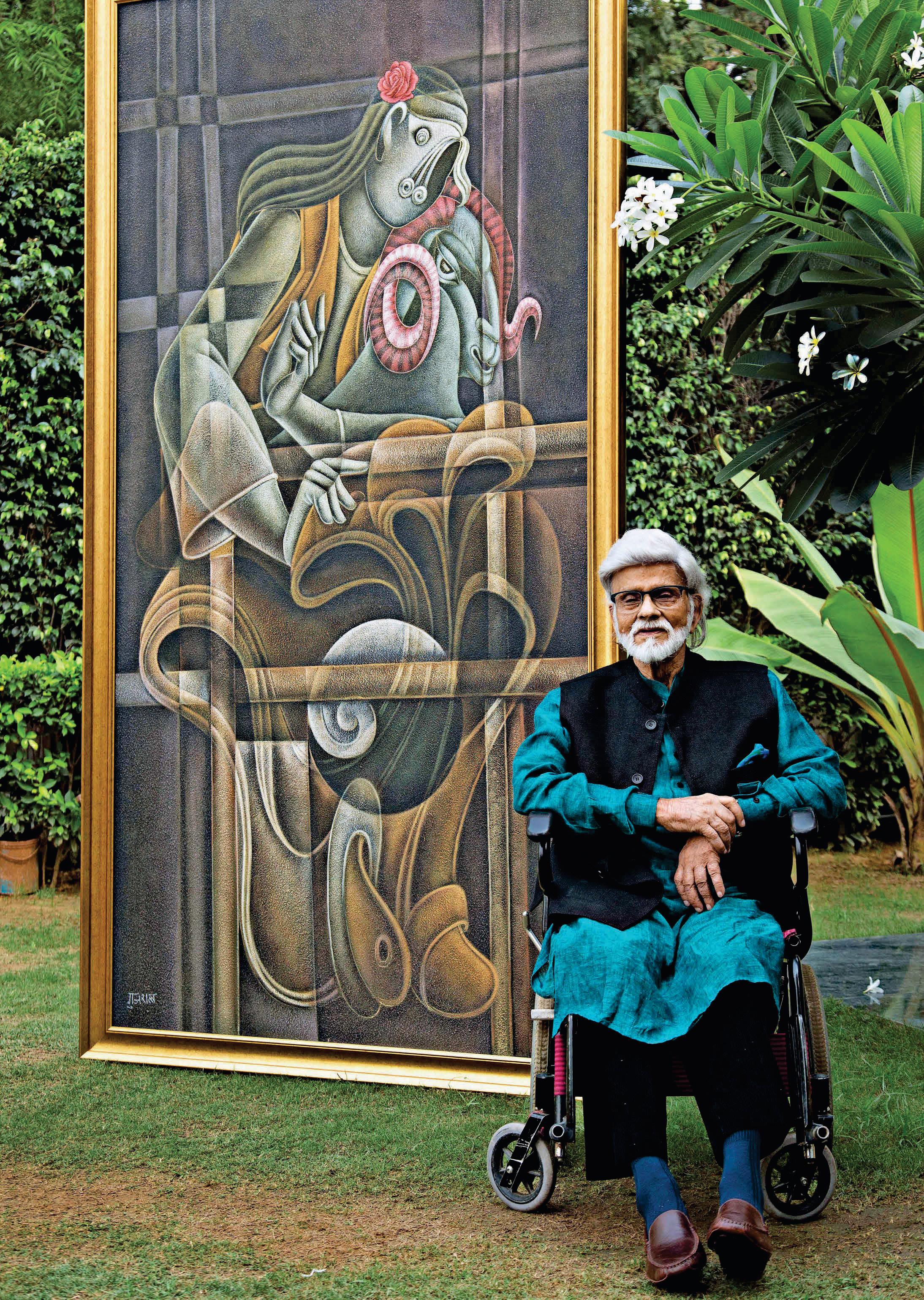
After a swimming accident on the river Lidder in Kashmir left an eight-year-old Satish Gujral deaf, he was taken to a school for the disabled.
He refused to enrol. It was the first of many conventional paths Gujral would later reject. With formal learning difficult, his father handed him a pencil and paper to see if art might be something he could take to. He did, resulting in a legendary career that progressed from painting and sculpture to murals and, eventually, architecture.
Born in Jhelum, now in Pakistan, on December 25, 1925, Gujral would have turned 100 last December (he died in 2020). His centenary is being marked by a major retrospective at Delhi's National Gallery of Modern Art, talks and shows across platforms like the Jaipur Literature Festival and India Art Fair, the reissue of his autobiography, and, most significantly, the opening of the iconic Gujral House in Delhi to the public.
A LIVING STUDIO
The house Gujral built for himself in Lajpat Nagar rejects conventional spatial logic, the shifts in level and structure rendering it a crafted, living form. When he began building it with architect Raj Rewal in the late 1960s, Gujral envisioned it as a living studio. “He wanted to show people how art should be displayed and perceived,” says his son, architect Mohit Gujral. “That required volume and scale.”
The house remained both his residence and studio for the rest of his life. Its rooms were never fixed. “They kept changing according to his moods and needs,” says Mohit. The Gujral House, Mohit says, will be part museum, housing his works, but also “a space with rotating displays and conversations aligned with his beliefs, constantly evolving and speaking to future generations”.
THE PARTITION SERIES

यह कहानी THE WEEK India के February 22, 2026 संस्करण से ली गई है।
हजारों चुनिंदा प्रीमियम कहानियों और 10,000 से अधिक पत्रिकाओं और समाचार पत्रों तक पहुंचने के लिए मैगज़्टर गोल्ड की सदस्यता लें।
क्या आप पहले से ही ग्राहक हैं? साइन इन करें
THE WEEK India से और कहानियाँ

THE WEEK India
Redefining care through robotics
For a patient preparing for surgery, the central concern is rarely the sophistication of technology in the operating room.

2 mins
May 03, 2026

THE WEEK India
MOTHER LODE
Why Mother Mary is having a moment in pop culture
4 mins
May 03, 2026

THE WEEK India
LECTURES OVER LAGER
What happens when a professor walks into a bar?
4 mins
May 03, 2026

THE WEEK India
Violence has almost disappeared; ideology hasn't vanished
INTERVIEW - B. Shivadhar Reddy director general of police, Telangana
2 mins
May 03, 2026

THE WEEK India
Reserved, yet deferred
The constitutional amendment bill might have given the BJP an immediate campaign issue, but the government will be under pressure. The opposition has tasted blood
5 mins
May 03, 2026

THE WEEK India
PoSH, a question
Serious concerns over corporate India's workplace harassment framework
4 mins
May 03, 2026

THE WEEK India
Her seat at the table
To understand why the women's reservation bill took so long-and why its passage, even in this form, carries genuine weight-one has to begin in 1975
7 mins
May 03, 2026

THE WEEK India
Ladies' seats? Why not from 543?
Sigmund Freud died without answering it.
2 mins
May 03, 2026

THE WEEK India
Healing beyond medicine
At THE WEEK's Ayush conclave, conversations brought about a layered understanding of the opportunities and challenges in integrating traditional knowledge with modern science
10 mins
May 03, 2026

THE WEEK India
Tehran to Delhi—echoes of defiance
Ironic—should I say Iranic—that a country whose language is so sophisticated that it does not even bother with gendered pronouns, referring to everyone (and everything) with the same universal “oo” has become the site of an invasion ostensibly to “save” its women from oppression by the boorish and bumbling west.
2 mins
May 03, 2026
Listen
Translate
Change font size