कोशिश गोल्ड - मुक्त
A FOND DREAM: GOING TO MECCA WITH THE POPE
THE WEEK India
|July 13, 2025
The audacity of that dream still lingers. At an event in Oslo, soon after he received the Nobel Peace Prize, the Dalai Lama turned to me and whispered, “Wouldn't it be wonderful if the Pope, the Shankaracharya, a few others and I could travel together to Mecca and pray there for world peace?” It wasn’t for the cameras. It was a quiet longing, improbable, tender and heartfelt—a pilgrimage not to convert, but to honour sacred reverence.
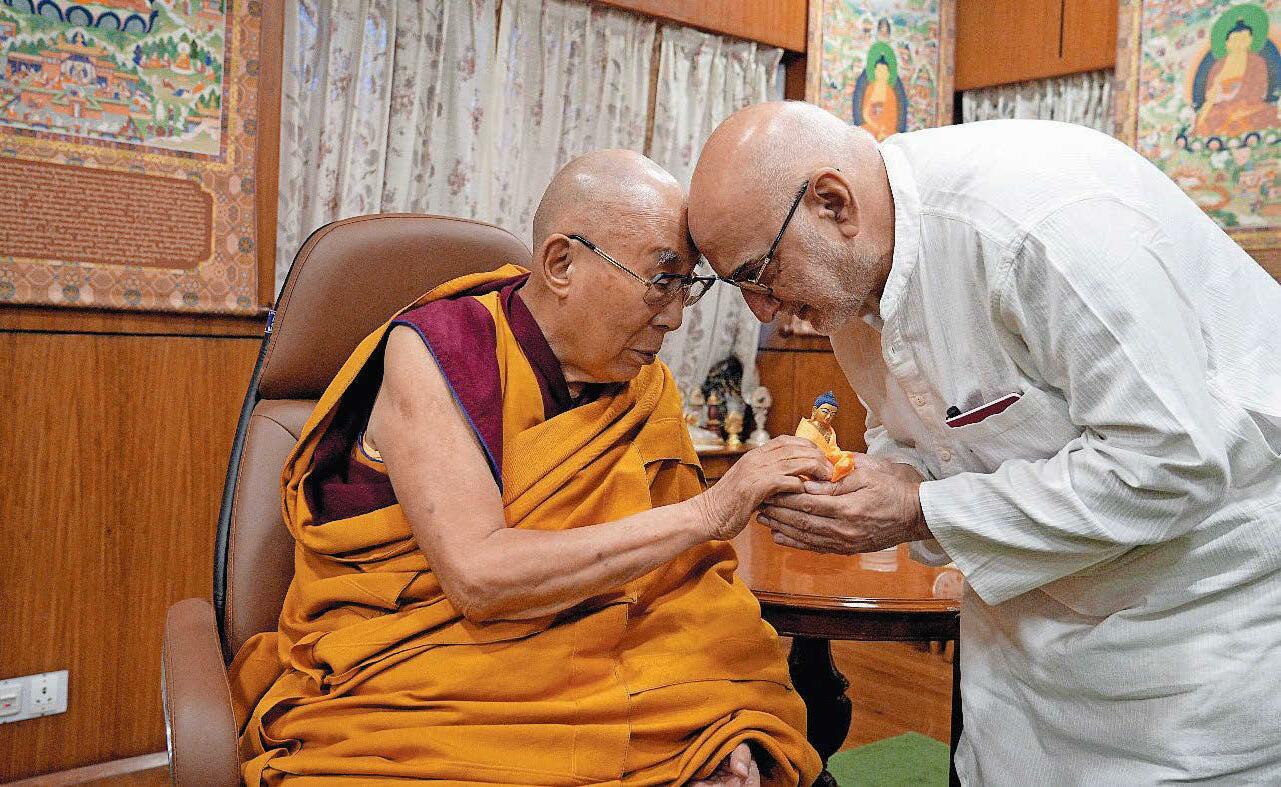
The measure of that dream lies not in its fulfilment, but in how he embodies it.
He claims no mystical powers. He has no divine pretensions. Though revered by millions as the embodiment of Avalokiteshvara—the Buddha of compassion—he describes himself, with disarming humility, as “a Buddhist monk, nothing more”. His aspiration is not for elevation, but for a vow: to live as a Bodhisattva, one who returns, life after life, not to escape suffering, but to serve.
“For as long as space endures, and for as long as living beings remain, Until then, may I too abide, to dispel the misery of the world.”
This is not just a line of poetry for him—it is his daily prayer, drawn from Shantideva’s Bodhicharyāvatāra. A vow he renews each morning. It embodies the essence of his life's purpose: to return, again and again, not for liberation alone, but to serve all beings.
He believes the mind is as unique as a fingerprint. No single religion or method can serve all. Some minds are drawn to reason, while others are drawn to devotion or ritual. What matters is not uniformity, but inner transformation. That, he says, is the true purpose of faith.
His openness is not performance. It is practice.
In 2008, eminent surgeon Dr Pradeep Chowbey and his team prepared to remove hundreds of gallstones from the Dalai Lama’s gallbladder in a high-tech laparoscopic procedure. The operation theatre was calm, focused and clinical.
While we waited outside, prayer beads in hand, murmuring silent mantras, something inexplicable unfolded inside. Just as the surgery began, all the equipment suddenly shut down. Monitors went blank. Machines fell silent. For a few long seconds, the theatre was suspended in an eerie hush.
No technical fault. No power failure. Just complete stillness.

यह कहानी THE WEEK India के July 13, 2025 संस्करण से ली गई है।
हजारों चुनिंदा प्रीमियम कहानियों और 10,000 से अधिक पत्रिकाओं और समाचार पत्रों तक पहुंचने के लिए मैगज़्टर गोल्ड की सदस्यता लें।
क्या आप पहले से ही ग्राहक हैं? साइन इन करें
THE WEEK India से और कहानियाँ
THE WEEK India
WHERE THE STORM NEVER REALLY PASSES
Guantánamo Bay, once a symbol of the ‘war on terror’, has emerged as a flashpoint in Donald Trump’s immigration battles, exposing deep tensions between America’s security, legality and moral commitments

10 mins
December 21, 2025
THE WEEK India
Moderation is the key
Most people do not believe me, but I am a moderate man.
3 mins
December 21, 2025

THE WEEK India
OCEAN THERAPY
The Modi-Putin summit unveils a cooperation strategy that will rewire sea trade routes and expand India's maritime connect to the Arctic
3 mins
December 21, 2025
THE WEEK India
Indian Army men fighting for the British against the Japanese were also patriots
Readers in India may be misled by the title of Gautam Hazarika's new book, The Forgotten Indian Prisoners of World War II: Surrender, Loyalty, Betrayal and Hell. It is not about the INA prisoners who were put on trial in the Red Fort by the British. This book is about those Indian soldiers who fought the Japanese in Singapore, Malaya and Burma alongside the British, and who had to surrender, were taken prisoner, put to torture and hard labour by the Japanese, refused to join the INA, and faced death or managed to escape. While recounting their stories, Hazarika also gives an insight into the INA movement. Edited excerpts from an interview with the author:
4 mins
December 21, 2025

THE WEEK India
CHAT WITH NEHRU, QUERY KALAM...
The Prime Ministers' Museum & Library showcases the life and contributions of prime ministers and nation-builders
3 mins
December 21, 2025

THE WEEK India
The art of shifting gears in investing
“Hope is not a strategy,” Hayes growls in one memorable scene, dismissing a teammate’s starry-eyed optimism.
3 mins
December 21, 2025

THE WEEK India
Trouble on the tarmac
It is not IndiGo but Indian aviation that has become too big to fail
4 mins
December 21, 2025

THE WEEK India
SHUX AND BLUE MARBLE
THE 18 DAYS IN SPACE MIGHT HAVE MADE HIM A HOUSEHOLD NAME, BUT GROUP CAPTAIN SHUBHANSHU SHUKLA IS AS GROUNDED AS EVER. AND BEFORE HE SUITS UP FOR HIS NEXT MISSION, THE WEEK'S MAN OF THE YEAR SHARES STORIES FROM HIS LIFE AND SPACE, INCLUDING HOW HE BECAME A 'WATER BENDER'
9 mins
December 21, 2025
THE WEEK India
The parietal lobe
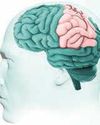
If the frontal lobe is where we decide what to do, the parietal lobe is where we understand where we are. It is the brain's internal GPS, the quiet navigator that lets you put your hand exactly where your teacup is, find the edge of a staircase without staring at it, or scratch the correct side of your head when it itches. When it works well, we move through life gracefully. When it falters, life becomes slapstick comedy.
2 mins
December 21, 2025

THE WEEK India
Area of the globe? Pie is cubed
Floating in his private pool, China's helmsman Mao Zedong shared his strategic vision with visiting Soviet strongman Nikita Khrushchev in 1958: \"You look after Europe, and leave Asia to us.\" Obviously, he expected the US to withdraw into its prewar Monroe world of the Americas, thus making the world tripolar.
2 mins
December 21, 2025
Listen
Translate
Change font size