कोशिश गोल्ड - मुक्त
The 'Invisible' Dalits
Outlook
|September 21, 2024
The debate over sub-categorisation of castes is likely to shape the political discourse in the upcoming state elections

VEERAN, a boy from the Arunthathiyar community Vi in Tamil Nadu-considered the lowest rung among Dalits never knew what his 'offence' was. He fell in love with a Paraiyar girl-a dominant caste among Dalits named Parimala-and eloped. Her family never accepted the marriage. The consequences were gruesome. The entire Paraiyar village attacked Veeran's family, allegedly violated their women and hurled abuses like: "keeljathi Sakkili payan" (lower-caste Sakkili boy), "Keeljathi naaye" (lowercaste dog) and "Sakiliveetu pengala karpa-lika vendum" (we should rape women living in Sakkili households).
Arunthathiyars are also called Sakkili. This incident from 2003, which was barely reported in the mainstream media, was neither an isolated incident nor the last one that showcases the impossibility of inter-caste marriages among Dalits. It also highlighted social cleavages that make dominant Dalit castes perpetuate similar violence that they have been fighting against. The internal caste divisions among Dalits came up again in the political discourse recently when a seven-judge bench of the Supreme Court overturned the E.V. Chinnaiah v. State of Andhra Pradesh (2005) ruling that considered all the Scheduled Caste groups under Article 341 as homogenous. The CJI-led bench permitted the states to subcategorise SCs and STs (following empirical data and other relevant yardsticks), paving the way for sub-classification in reservations. Citing varied levels of discrimination faced by different groups within the SC communities, the bench said: "There is heterogeneity in terms of past occupation... social status and other indicators may be different for different castes inside the Scheduled Castes. So, the degree of social and economic backwardness may vary from one person or caste to another."
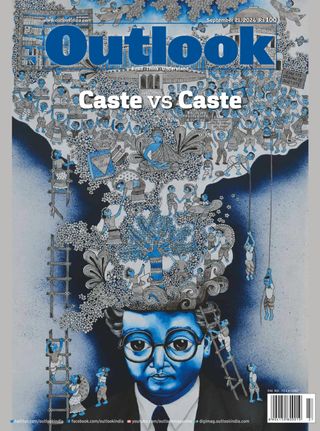

यह कहानी Outlook के September 21, 2024 संस्करण से ली गई है।
हजारों चुनिंदा प्रीमियम कहानियों और 10,000 से अधिक पत्रिकाओं और समाचार पत्रों तक पहुंचने के लिए मैगज़्टर गोल्ड की सदस्यता लें।
क्या आप पहले से ही ग्राहक हैं? साइन इन करें
Outlook से और कहानियाँ
Outlook
'Why GDP Growth Doesn't Always Translate Into Votes'
The recent election results have once again shown that economic growth alone does not guarantee electoral victory.

3 mins
June 06, 2026

Outlook
Lights, Camera, Othering
The establishment of Israel has been accompanied by a national cinema devoted to negating and erasing the Palestinian Other
5 mins
June 06, 2026

Outlook
Goodbye to All That
Booker-winning British author Julian Barnes' Departure(s) is a unique hybrid work: playful, philosophical, whimsical
4 mins
June 06, 2026

Outlook
Collapse of Trust
As the NEET-UG 2026 paper leak forced the cancellation of India’s biggest medical entrance exam, more than 22 lakh aspirants find themselves trapped in uncertainty
11 mins
June 06, 2026

Outlook
NO LONGER A TWELFTH MAN
Bihar cricket, which has languished in the shadows for long, is all set to improve its strike rate, thanks to Vaibhav Sooryavanshi, the new Bihari kid on the block
5 mins
June 06, 2026
Outlook
BLAZE OF GLORY
The challenges of being a celebrity cricketer at a young age can be tough to handle
5 mins
June 06, 2026

Outlook
THE SWASHBUCKLERS
A new generation of fearless stars is emerging and finding its feet at the very top of an extremely competitive cricketing environment
5 mins
June 06, 2026

Outlook
THE TEEN TORNAD
At the age of 15, Vaibhav Sooryavanshi is already a cricketing legend
10 mins
June 06, 2026
Outlook
A Journey to Remember
The prerecorded message crackled over the din in the compartment: ‘Welcome to the Shatabdi Express.
4 mins
June 06, 2026

Outlook
Crossing Borders
Ruth Martin is the translator of German-Iranian author Shida Bazyar’s novel The Nights are Quiet in Tehran (originally written in German), which has been shortlisted for the 2026 International Booker Prize.
4 mins
June 06, 2026
Listen
Translate
Change font size