कोशिश गोल्ड - मुक्त
Why is Freedom So Important To Us?
Philosophy Now
|October/November 2024
John Shand explains why free will is basic to humanity.

Much has been written about whether or not we have free will. That is not my topic here, but it has a connection to it, in that I want to ask why so much has been written on the matter. Whether we are free or not seems very important to us. Let’s first suppose that we are not free – that there is no such thing as free will.
Let’s further take that to imply that there is no sense in which we may be held responsible for what we do, any more than a tree or a rock may be held responsible when it falls on our head. It either falls, owing to some previous cause, or it does not. It’s a purely factual matter, devoid of any normative judgement as to whether it should or should not have happened. Let’s also suppose that the causes are all that is to be said about the matter. In that case, the entire universe can be summed up by an account of what does exist and what does and does not happen. Events either take place or they don’t. And that’s it. As Ludwig Wittgenstein says, the world is the totality of facts (Tractatus Logic-Philosophicus, 1.1, 1921).
To stave off an objection that might come into someone’s head here, we have to be careful in our language and pay attention to the way in which we use normative words such as ‘should’ or ‘ought’. We sometimes use these words in a non-normative sense; but the meaning in those cases is quite different. It may signal an ignorance of causes, for example. So suppose the jewellers have just returned your watch, after cleaning and servicing it. After a few days it stops: we might say that the watch should not or

यह कहानी Philosophy Now के October/November 2024 संस्करण से ली गई है।
हजारों चुनिंदा प्रीमियम कहानियों और 10,000 से अधिक पत्रिकाओं और समाचार पत्रों तक पहुंचने के लिए मैगज़्टर गोल्ड की सदस्यता लें।
क्या आप पहले से ही ग्राहक हैं? साइन इन करें
Philosophy Now से और कहानियाँ
Philosophy Now
Bilbo Theorizes About Wellbeing
Eric Comerford overhears Bilbo and Gandalf discussing happiness.

9 mins
December 2025 / January 2026

Philosophy Now
What Women?
Marcia Yudkin remembers almost choking at Cornell
11 mins
December 2025 / January 2026

Philosophy Now
Islamic Philosophers On Tyranny
Amir Ali Maleki looks at tyranny from an Islamic perspective.
4 mins
December 2025 / January 2026

Philosophy Now
Peter Singer
The controversial Australian philosopher defends the right to choose to die on utilitarian grounds
5 mins
December 2025 / January 2026

Philosophy Now
Another Conversation with Martin Heidegger?
Raymond Tallis talks about communication problems.
7 mins
December 2025 / January 2026

Philosophy Now
Letters
When inspiration strikes, don't bottle it up. Email me at rick.lewis@philosophynow.org Keep them short and keep them coming!
17 mins
December 2025 / January 2026
Philosophy Now
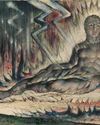
The Philosophy of William Blake
Mark Vernon looks at the imaginative thinking of an imaginative artist.
9 mins
December 2025 / January 2026

Philosophy Now
Philosophical Haiku
Peering through life’s lens God in nature is deduced: The joy of being.
1 mins
December 2025 / January 2026

Philosophy Now
Philosophy Shorts
More songs about Buildings and Food' was the title of a 1978 album by the rock band Talking Heads. It was about all the things rock stars normally don't sing about. Pop songs are usually about variations on the theme of love; tracks like Rose Royce's 1976 hit 'Car Wash' are the exception. Philosophers, likewise, tend to have a narrow focus on epistemology, metaphysics and trifles like the meaning of life. But occasionally great minds stray from their turf and write about other matters, for example buildings (Martin Heidegger), food (Hobbes), tomato juice (Robert Nozick), and the weather (Lucretius and Aristotle). This series of Shorts is about these unfamiliar themes; about the things philosophers also write about.
2 mins
December 2025 / January 2026
Philosophy Now
Hedonic Treadmills in the Vale of Tears
Michael Gracey looks at how philosophers have pursued happiness.
8 mins
December 2025 / January 2026
Listen
Translate
Change font size