कोशिश गोल्ड - मुक्त
How to Be an Antiracist Consequentialist
Philosophy Now
|April / May 2024
Nathaniel Goldberg and Chris Gavaler consider lbram X. Kendi’s requirements for being antiracist.

In his New York Times #1 bestseller How to Be an Antiracist (2019), Ibram X. Kendi defines a racist as anyone ‘supporting a racist policy through their actions or inaction or expressing a racist idea’ (p.13). He then explains that a racist policy ‘is any measure that produces or sustains racial inequity between racial groups’. Such inequity occurs ‘when two or more racial groups are not standing on approximately equal footing’ (p.18). A racist idea, in turn, is ‘any idea that suggests one racial group is inferior or superior to another racial group in any way’ (p.20). From these definitions, it follows that there are three types of racists: (a) Racists supporting policies that produce or sustain unequal footing between racial groups; (b) Racists expressing that a racial group is inferior or superior to another racial group in any way; and (c) Racists doing both.
Kendi has talked about these ideas to audiences around the world. He’s also been interviewed by the BBC, the major US news outlets, Al Jazeera, and elsewhere. People find his views forceful, provocative, and controversial. Most commentators concentrate on (a) and its focus on policy. However, even sympathetic listeners sometimes have trouble with the fact that, based on his definitions, someone may not intend to be or even know that they’re being racist, and yet still be racist.
Kelefa Sanneh (tinyurl.com/sanneh-redefine), writing for
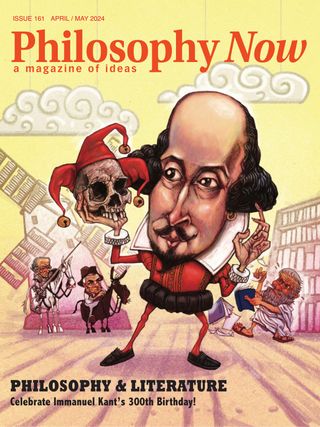

यह कहानी Philosophy Now के April / May 2024 संस्करण से ली गई है।
हजारों चुनिंदा प्रीमियम कहानियों और 10,000 से अधिक पत्रिकाओं और समाचार पत्रों तक पहुंचने के लिए मैगज़्टर गोल्ड की सदस्यता लें।
क्या आप पहले से ही ग्राहक हैं? साइन इन करें
Philosophy Now से और कहानियाँ

Philosophy Now
Bilbo Theorizes About Wellbeing
Eric Comerford overhears Bilbo and Gandalf discussing happiness.

9 mins
December 2025 / January 2026

Philosophy Now
What Women?
Marcia Yudkin remembers almost choking at Cornell
11 mins
December 2025 / January 2026

Philosophy Now
Islamic Philosophers On Tyranny
Amir Ali Maleki looks at tyranny from an Islamic perspective.
4 mins
December 2025 / January 2026

Philosophy Now
Peter Singer
The controversial Australian philosopher defends the right to choose to die on utilitarian grounds
5 mins
December 2025 / January 2026

Philosophy Now
Another Conversation with Martin Heidegger?
Raymond Tallis talks about communication problems.
7 mins
December 2025 / January 2026

Philosophy Now
Letters
When inspiration strikes, don't bottle it up. Email me at rick.lewis@philosophynow.org Keep them short and keep them coming!
17 mins
December 2025 / January 2026

Philosophy Now
The Philosophy of William Blake
Mark Vernon looks at the imaginative thinking of an imaginative artist.
9 mins
December 2025 / January 2026

Philosophy Now
Philosophical Haiku
Peering through life’s lens God in nature is deduced: The joy of being.
1 mins
December 2025 / January 2026

Philosophy Now
Philosophy Shorts
More songs about Buildings and Food' was the title of a 1978 album by the rock band Talking Heads. It was about all the things rock stars normally don't sing about. Pop songs are usually about variations on the theme of love; tracks like Rose Royce's 1976 hit 'Car Wash' are the exception. Philosophers, likewise, tend to have a narrow focus on epistemology, metaphysics and trifles like the meaning of life. But occasionally great minds stray from their turf and write about other matters, for example buildings (Martin Heidegger), food (Hobbes), tomato juice (Robert Nozick), and the weather (Lucretius and Aristotle). This series of Shorts is about these unfamiliar themes; about the things philosophers also write about.
2 mins
December 2025 / January 2026

Philosophy Now
Hedonic Treadmills in the Vale of Tears
Michael Gracey looks at how philosophers have pursued happiness.
8 mins
December 2025 / January 2026
Listen
Translate
Change font size