
मैगज़्टर गोल्ड के साथ असीमित हो जाओ
10,000 से अधिक पत्रिकाओं, समाचार पत्रों और प्रीमियम कहानियों तक असीमित पहुंच प्राप्त करें सिर्फ
कोशिश गोल्ड - मुक्त
Here we go round the mulberry tree
Country Life UK
|August 16, 2023
Familiar from the famous nursery rhyme, the mulberry tree is so prized for the silkworms that feed on its luscious fruit that, long ago, the Chinese would execute anyone exporting a specimen

IF medieval England had wool, France had silk. Across the Channel, people had been weaving imported silk thread since the 11th century and, in 1466, the then King, Louis XI, ordered a new industry set up in Lyon, staffed by Italian weavers, in a bid to dominate European silk-cloth manufacture. The city duly became the silk capital of the Continent and, towards the end of the 16th century, the reigning French monarch, Henry IV, emphasised his country’s prominent role in silk production by establishing mulberry groves for the domestic breeding and feeding of silkworms.
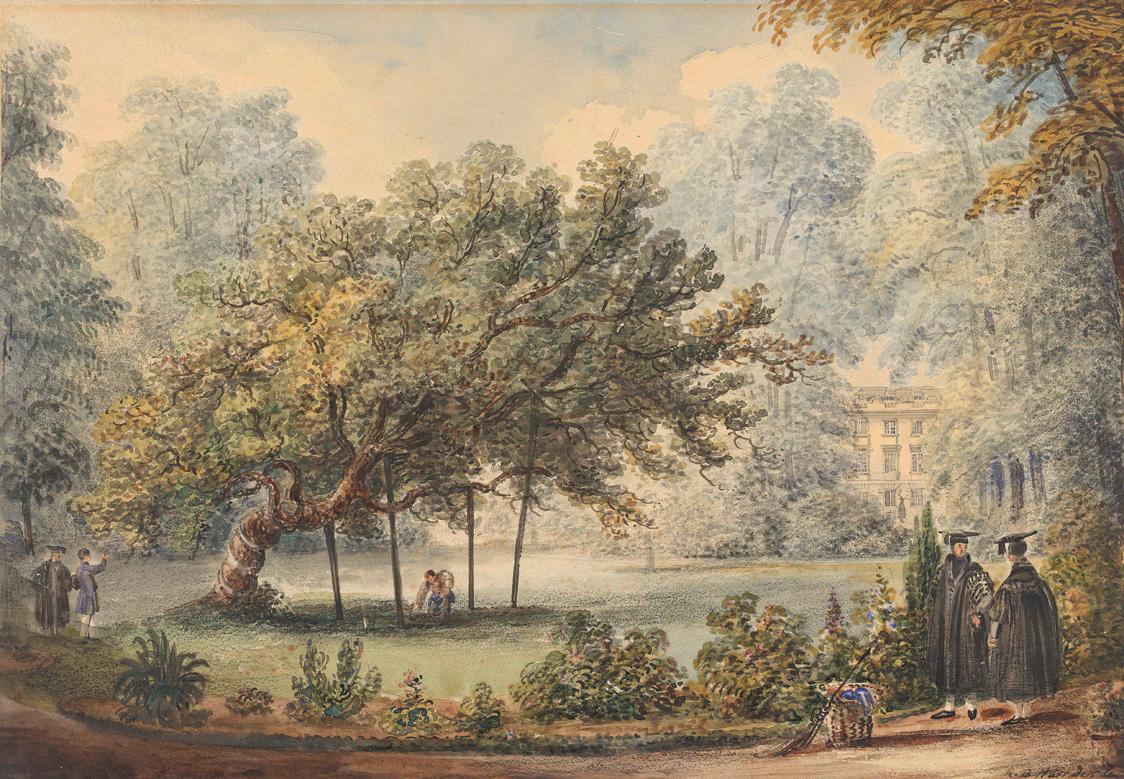
In London, a peeved James I responded with a rival plan to breed ‘English’ silkworms. In 1607, he bade his Lord Lieutenants order landowners across the country to plant mulberry trees. Some 100,000 saplings were brought from the Netherlands and made available at three farthings a plant or six shillings for 100. The King also planted his own four-acre mulberry plot in what is now the north-west corner of Buckingham Palace garden, as well as establishing a silkworm nursery and mulberry garden at Greenwich Palace. Alas, despite the royal edict, the scheme foundered, partly because of untutored silkworm breeding and partly because of some viciously cold winters in which even the Thames froze over.
The tree variety the King chose to import may have also made matters worse. Silkworms prefer the white mulberry Morus alba, whereas the English project involved

यह कहानी Country Life UK के August 16, 2023 संस्करण से ली गई है।
हजारों चुनिंदा प्रीमियम कहानियों और 10,000 से अधिक पत्रिकाओं और समाचार पत्रों तक पहुंचने के लिए मैगज़्टर गोल्ड की सदस्यता लें।
क्या आप पहले से ही ग्राहक हैं? साइन इन करें
Country Life UK से और कहानियाँ
Country Life UK
Opposites can attract
As a big bookcase designed by Peter Waals proves large pieces of furniture can do well, a notable collection shows harmony can be born from difference

3 mins
June 03, 2026
Country Life UK
His green and pleasant land
Few artists travelled as little as John Constable, but his deep knowledge of the parts of England he loved gave him insights that others missed. Susan Owens explores the places that delighted him
6 mins
June 03, 2026

Country Life UK
Dreaming of roses
A thousand English roses now bloom in the restored walled garden that forms the heart of this 27-acre estate, writes Charles Quest-Ritson
4 mins
June 03, 2026

Country Life UK
Ring for peace
A COPIOUS quantity of apple strudel became the unintended consequence of a winter walking holiday in the Austrian Tyrol.
2 mins
June 03, 2026
Country Life UK
Best of the pests
Pity the feral pigeon: long campaigned against as an urban nuisance, it is the descendant of birds lured into human service, some of which distinguished themselves in wartime
3 mins
June 03, 2026
Country Life UK
Red alert
The time is ripe for tomatoes in every form. We are days into British Tomato Fortnight (June 1–14) and weeks from Royal Ascot (June 16–20), where Bright Tomato has been declared the inaugural Colour of the Year by Ascot creative director Daniel Fletcher.
1 mins
June 03, 2026
Country Life UK
Totally tropical
I FIRST grew pineapple guava, also called feijoa (Acca or Feijoa sellowiana) almost a quarter of a century ago, when there were few nurseries stocking them.
3 mins
June 03, 2026
Country Life UK
Brewed awakening: where London learnt to talk
Rupert Clague explores how caffeine-fuelled conversation in Hanoverian London’s ‘penny universities’ helped shape the modern world—and where that same spirit still lingers today
5 mins
June 03, 2026

Country Life UK
The legacy Percy Shaw and cat's eyes
BEHIND the retina in a cat’s eyes lurks the tapetum lucidum, a layer of tissue that acts as a mirror, or a retroreflector, and allows the animal to see in the dark.
1 mins
June 03, 2026
Country Life UK
Britain is told to spill the beans
HOME-GROWN legumes have a vital role to play in strengthening national food security and reducing the UK's increasing reliance on imported food, the audience heard at last month's UK Legume Research Community Conference, held at the James Hutton Institute in Invergowrie, Perthshire.
2 mins
June 03, 2026
Translate
Change font size