
मैगज़्टर गोल्ड के साथ असीमित हो जाओ
10,000 से अधिक पत्रिकाओं, समाचार पत्रों और प्रीमियम कहानियों तक असीमित पहुंच प्राप्त करें सिर्फ
कोशिश गोल्ड - मुक्त
And it was all yellow
Country Life UK
|March 05, 2025
Forsythia are often sniffed at for being too brassy, but there is a lot more going for them, says Charles Quest-Ritson, although don't plant them next to clashing pink-flowering currants
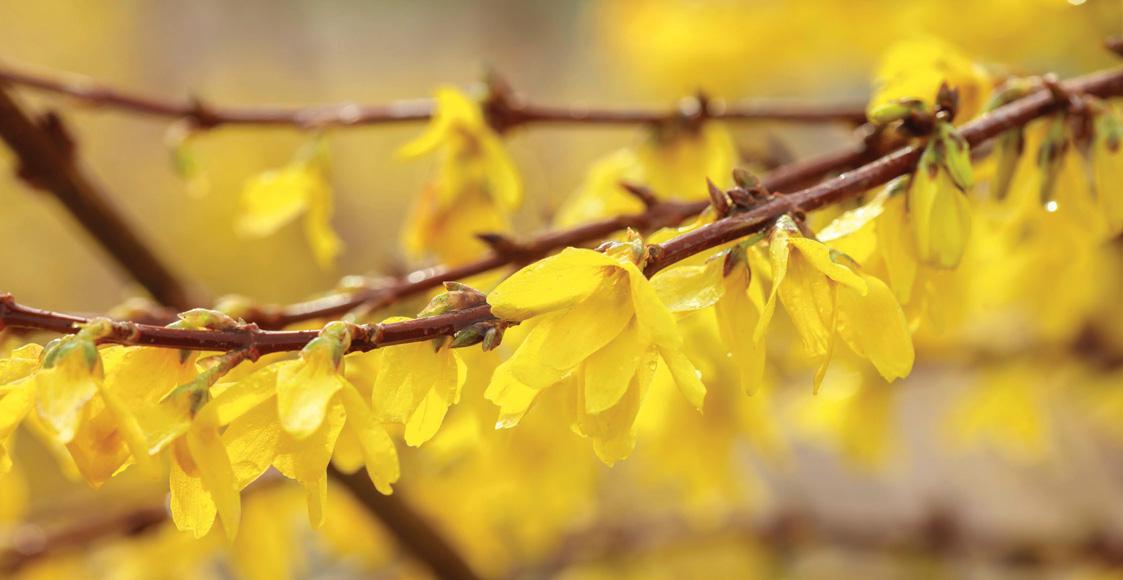
THE trouble with forsythias is that we take them for granted. They are ubiquitous at this time of the year, flaunting their cheerful yellow colour in suburban parks and gardens from Penzance to Thurso. From a distance, they all look very similar, apart from the dwarf cultivars that too few of us grow. Large or small, forsythias make invaluable companions for garden daffodils, although, all too often, one sees them nudging up incongruously to pinky-purple flowering currants.
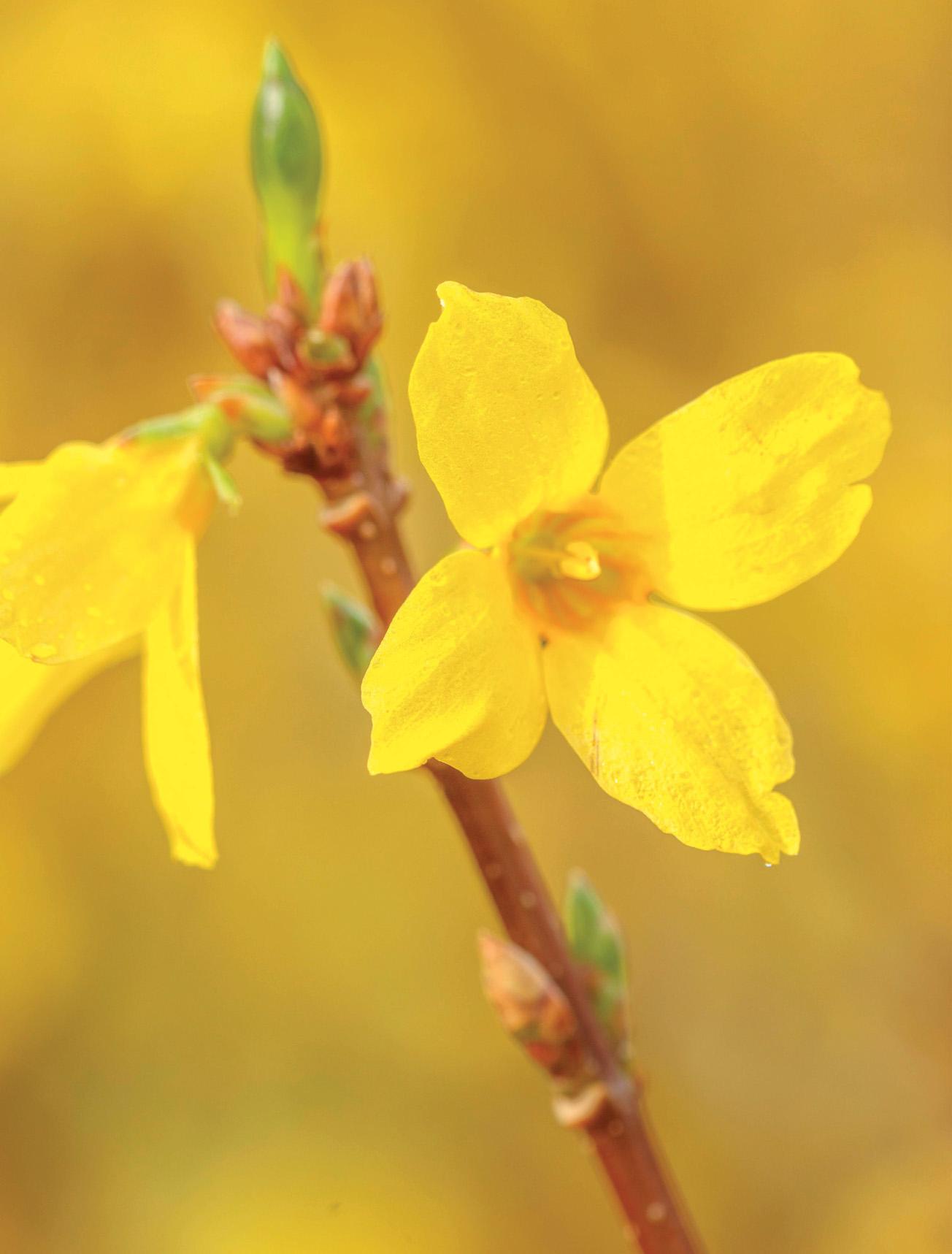
Forsythias are members of the olive family, the Oleaceae, as are ash trees, lilacs, jasmines, privets and olive trees themselves. It is difficult to imagine what all these genera may have in common, although botanists tell us that one distinctive feature is that they have only two stamens. Forsythias have a further peculiarity, which is that they are proponents of heterostyly. This means a whole plant will bear flowers that are either pin-eyed or thrum-eyed, just like primroses. This is an evolutionary insurance against self-pollination and the consequences that follow from in-breeding. It is rare in the plant kingdom as a whole.
Most forsythias, or their ancestors, come from climates with hotter summers than ours. The wood ripens well, which helps them to survive cold winters. You notice this in two ways. First, they flower most abundantly in a Continental climate, where the sheer number of flowers on their bare branches seems extraordinary to English eyes. In northern Italy and parts of Switzerland, forsythias are planted along the central reservation of the motorways. Their brilliance is astonishing, but it also tells you that forsythias can put up with quite a lot of drought.


यह कहानी Country Life UK के March 05, 2025 संस्करण से ली गई है।
हजारों चुनिंदा प्रीमियम कहानियों और 10,000 से अधिक पत्रिकाओं और समाचार पत्रों तक पहुंचने के लिए मैगज़्टर गोल्ड की सदस्यता लें।
क्या आप पहले से ही ग्राहक हैं? साइन इन करें
Country Life UK से और कहानियाँ

Country Life UK
Opposites can attract
As a big bookcase designed by Peter Waals proves large pieces of furniture can do well, a notable collection shows harmony can be born from difference

3 mins
June 03, 2026
Country Life UK
His green and pleasant land
Few artists travelled as little as John Constable, but his deep knowledge of the parts of England he loved gave him insights that others missed. Susan Owens explores the places that delighted him
6 mins
June 03, 2026

Country Life UK
Dreaming of roses
A thousand English roses now bloom in the restored walled garden that forms the heart of this 27-acre estate, writes Charles Quest-Ritson
4 mins
June 03, 2026

Country Life UK
Ring for peace
A COPIOUS quantity of apple strudel became the unintended consequence of a winter walking holiday in the Austrian Tyrol.
2 mins
June 03, 2026
Country Life UK
Best of the pests
Pity the feral pigeon: long campaigned against as an urban nuisance, it is the descendant of birds lured into human service, some of which distinguished themselves in wartime
3 mins
June 03, 2026

Country Life UK
Red alert
The time is ripe for tomatoes in every form. We are days into British Tomato Fortnight (June 1–14) and weeks from Royal Ascot (June 16–20), where Bright Tomato has been declared the inaugural Colour of the Year by Ascot creative director Daniel Fletcher.
1 mins
June 03, 2026
Country Life UK
Totally tropical
I FIRST grew pineapple guava, also called feijoa (Acca or Feijoa sellowiana) almost a quarter of a century ago, when there were few nurseries stocking them.
3 mins
June 03, 2026
Country Life UK
Brewed awakening: where London learnt to talk
Rupert Clague explores how caffeine-fuelled conversation in Hanoverian London’s ‘penny universities’ helped shape the modern world—and where that same spirit still lingers today
5 mins
June 03, 2026

Country Life UK
The legacy Percy Shaw and cat's eyes
BEHIND the retina in a cat’s eyes lurks the tapetum lucidum, a layer of tissue that acts as a mirror, or a retroreflector, and allows the animal to see in the dark.
1 mins
June 03, 2026
Country Life UK
Britain is told to spill the beans
HOME-GROWN legumes have a vital role to play in strengthening national food security and reducing the UK's increasing reliance on imported food, the audience heard at last month's UK Legume Research Community Conference, held at the James Hutton Institute in Invergowrie, Perthshire.
2 mins
June 03, 2026
Listen
Translate
Change font size