कोशिश गोल्ड - मुक्त
Meramec Station Road Calcite
Rock&Gem Magazine
|September 2025
Finding calcite in Limestone Cliffs near St. Louis
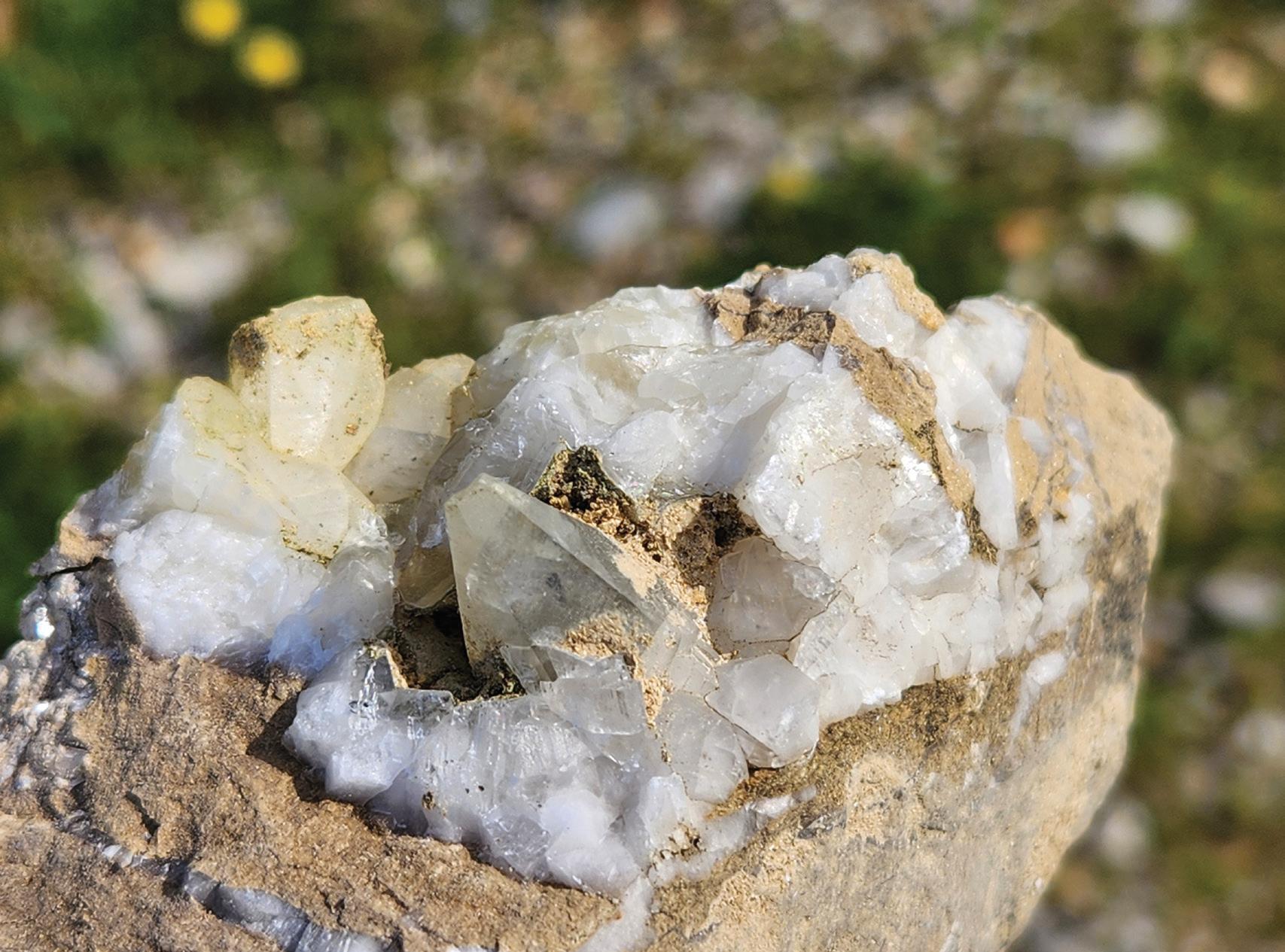
Meramec Station Road, located on the outskirts of southwestern St. Louis, Missouri, has a section of limestone cliffs that offer an opportunity to collect calcite. The cliffs are well exposed along the southern side of Meramec Station Road. Parking is adequate for several vehicles, and the area is frequently visited by local rockhounds and people who just want rocks for their garden. The area is best described as commercial and residential. Collecting is along the base of the cliffs, and there are large talus piles along the length of the cliffs. The calcite occurs in small veins in the limestone. Masses of white calcite with prominent cleavage can be found in the talus and range in size from an inch to nearly a foot. Some of the calcites also have voids that have white to clear dogtooth calcite crystals.
CALCITE BACKGROUND
Calcite is calcium carbonate, or CaCO3. It is an important rock-forming mineral and is found in a wide variety of geologic environments. Calcium carbonate occurs as both a primary mineral, which formed at the same time as the host rock, and as a secondary mineral, which formed later than the host rock. Calcite is 3 on the Mohs hardness scale, and it is easily scratched by steel and most other rocks.
While it has a simple chemical formula, calcium carbonate has a wide variety of crystal habits, and its identification is further complicated by the fact that calcium carbonate has three polymorphs. These are calcite, aragonite and vaterite.
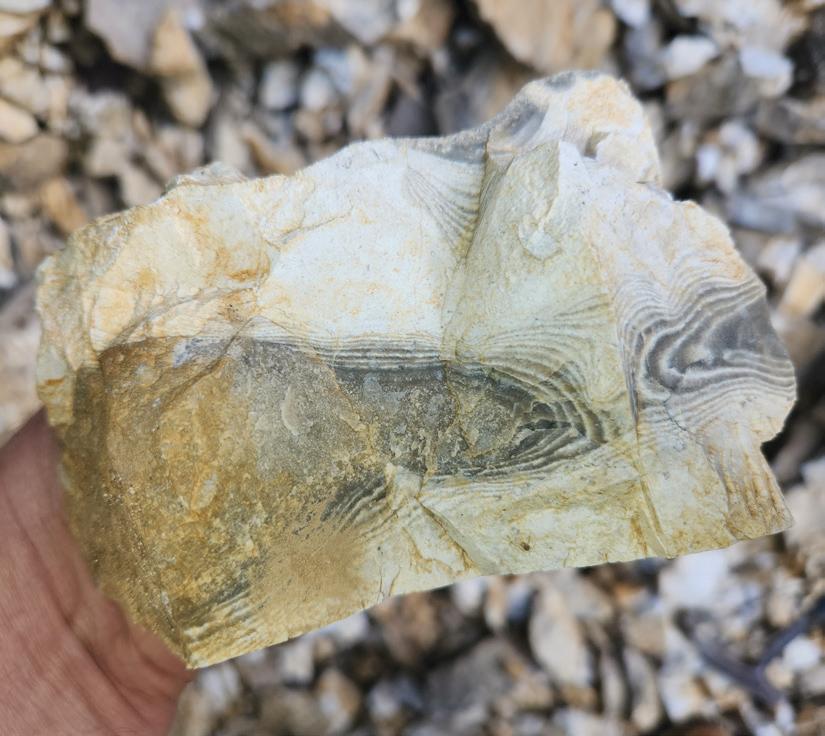 Calcite is commonly found in many rocks, and it is the most stable form of calcium carbonate. It is often found in veins in fractured rocks and is also common as a primary mineral in sedimentary rocks such as limestone and dolomite. Since it is the most stable form, it is the most common of the polymorphs.

यह कहानी Rock&Gem Magazine के September 2025 संस्करण से ली गई है।
हजारों चुनिंदा प्रीमियम कहानियों और 10,000 से अधिक पत्रिकाओं और समाचार पत्रों तक पहुंचने के लिए मैगज़्टर गोल्ड की सदस्यता लें।
क्या आप पहले से ही ग्राहक हैं? साइन इन करें
Rock&Gem Magazine से और कहानियाँ
Rock&Gem Magazine
A New Amber Locality Fills a Gap
A sandstone quarry in central Ecuador has yielded the first significant deposit of Mesozoic amber from South America.

1 min
January / February 2026
Rock&Gem Magazine
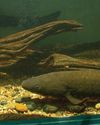
Did "Left-Handed" Fish Leave Water Earlier than Thought?
Fossil evidence suggests that fish (or \"fishapods\") dragged themselves onto land during the middle Devonian Period.
1 min
January / February 2026

Rock&Gem Magazine
"Lab Quakes” Produce Surprising Results
When faults let loose and earthquakes result, the main effect we mortals experience is the violent shaking.
1 min
January / February 2026
Rock&Gem Magazine
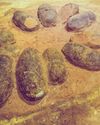
This Egg is No Spring Chicken
How to date a dino egg
1 min
January / February 2026
Rock&Gem Magazine
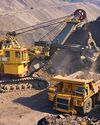
Have we Already Mined the Critical Minerals We Need
Then why are we throwing them away?!
1 min
January / February 2026
Rock&Gem Magazine
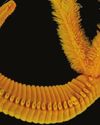
One Toxic Worm
A critter that creates & tolerates orpiment!
1 min
January / February 2026
Rock&Gem Magazine
ROCK & GEM FIELD GUIDE: Silver
Silver (Ag) is a native element and one of Earth's most prized precious metals.
2 mins
January / February 2026
Rock&Gem Magazine
DINOSAURS OF THE HELL CREEK MUSEUM
In the Badlands of South Dakota, just outside the small town of Belle Fourche—pronounced “Bell Foosh”—a new attraction has taken shape that every dinosaur enthusiast should see. The Dinosaurs of the Hell Creek Museum is part hands-on exhibit, part science center and part active research lab.
3 mins
January / February 2026
Rock&Gem Magazine
The Lost Twins of Kongsberg
A Silver Story Resurfaced
3 mins
January / February 2026
Rock&Gem Magazine
Switzerland's ICE PALACE
Walk Inside a Glacier at The Top of Europe
7 mins
January / February 2026
Listen
Translate
Change font size