कोशिश गोल्ड - मुक्त
Scotland's greatest victory
BBC History UK
|September 2023
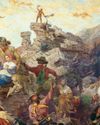
The image of plucky warriors sending a cocksure English army into flight has secured Bannockburn's status in the annals of Scottish history. Helen Carr chronicles the 1314 clash that transformed the balance of power between two warring nations
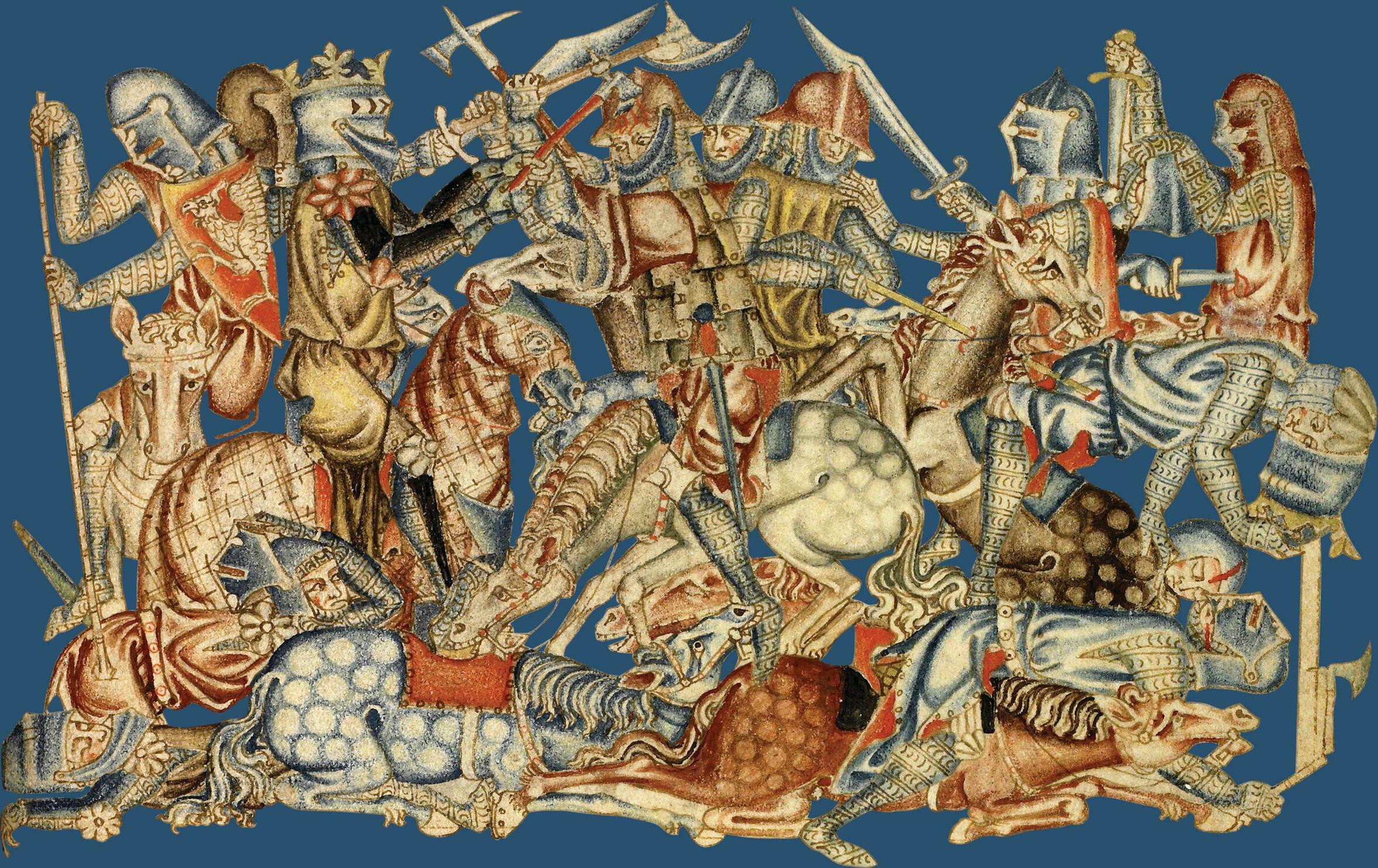
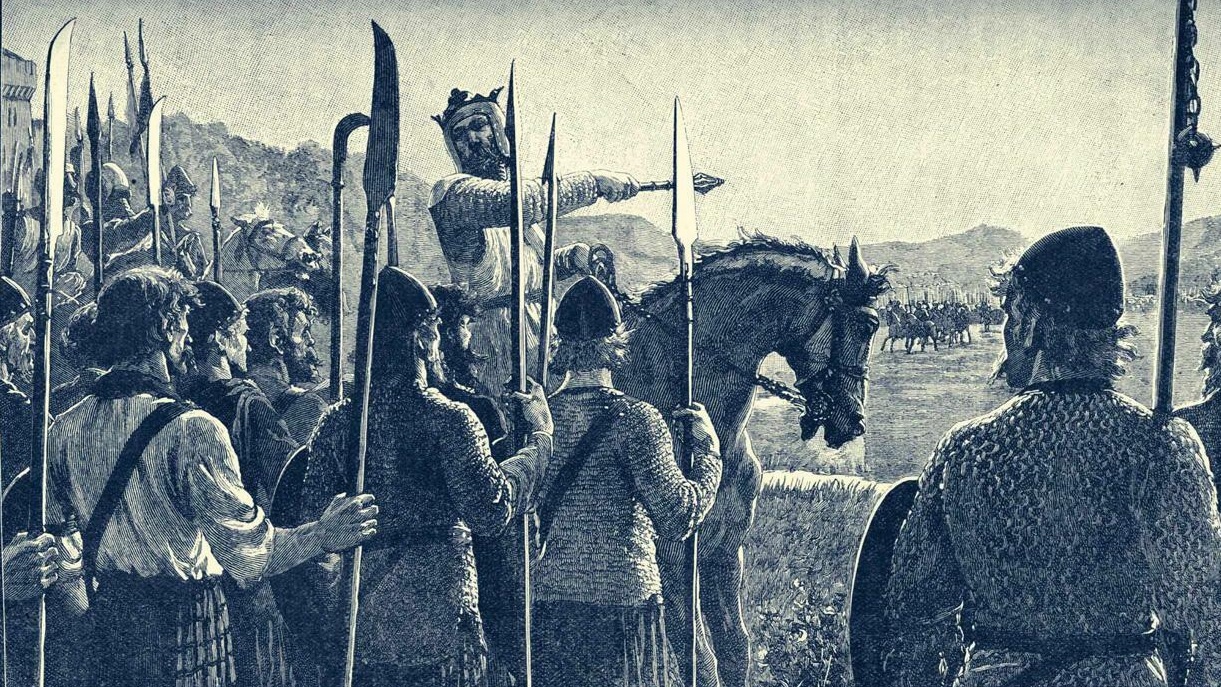
In June 1314 a great army rumbled forwards, parallel to the river Forth, following the old Roman road that led north across the war-ravaged Anglo-Scottish border. The king of England, Edward II, rode at the head of an army of around 18,000 infantry and 2,000 heavy cavalry horses. A baggage train allegedly 20 miles long groaned under the weight of arms, plate, food and wine and the administrative paraphernalia associated with the management of the crown, including England's Great Seal. The army was marching to relieve Stirling Castle, an English-held bastion 40 miles north-west of Edinburgh that was under siege by Edward Bruce, brother of the self-proclaimed king of the Scots, Robert.
Edward II was a king in a hurry. Should the Scots capture Stirling, he would lose access to the north of Scotland and with it, his grip on the land his father, Edward I, the self-styled 'Hammer of the Scots', had conquered at the outbreak of war in 1296. And so he had mustered an army in Berwickon-Tweed, the English administrative centre in the north, and marched in haste. The knight Sir Thomas Gray rode towards Stirling that day and 40 years later his son (also Sir Thomas Gray) would record his father's account of the battle in his book Scalacronica.

यह कहानी BBC History UK के September 2023 संस्करण से ली गई है।
हजारों चुनिंदा प्रीमियम कहानियों और 10,000 से अधिक पत्रिकाओं और समाचार पत्रों तक पहुंचने के लिए मैगज़्टर गोल्ड की सदस्यता लें।
क्या आप पहले से ही ग्राहक हैं? साइन इन करें
BBC History UK से और कहानियाँ
BBC History UK
Royal progress
Alice Loxton's new book begins with a compelling premise.

1 mins
January 2026

BBC History UK
"Leaving Muslim contributions out of European history has allowed Islamophobic sentiment to flourish"
THARIK HUSSAIN speaks to Danny Bird about the long but often overlooked and distorted history of Muslims in Europe - and the enduring resistance to its reappraisal
9 mins
January 2026
BBC History UK
7 UNMISSABLE TRIPS IN 2026
With new routes, big anniversaries and fresh ways of discovering familiar favourites, TOM HALL highlights historical destinations to explore this year
4 mins
January 2026
BBC History UK
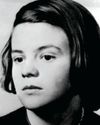
SOPHIE SCHOLL
Novelist Simon Scarrow chooses
2 mins
January 2026
BBC History UK
Portrait of the artists
TRACY BORMAN is enraptured by a beautifully written and richly illustrated exploration of early modern English art
2 mins
January 2026
BBC History UK
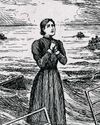
Humble heroes
Statues celebrate monarchs, rulers and conquerors - but who remembers the brave folk who gave their lives to save others? Anna Maria Barry recounts stories of selfsacrificing but otherwise ordinary people from the 19th and 20th centuries who are commemorated in one London park.
9 mins
January 2026
BBC History UK
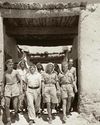
BACK FROM THE DEAD
Britain’s War Office thanked the SAS for its remarkable efforts in WW2 by abolishing it – yet soon realised the error of its ways. Gavin Mortimer tells the story of how the elite unit reinvented itself to confront the challenges of the postwar world
8 mins
January 2026
BBC History UK
Q&A - A selection of historical conundrums answered by experts
Were Roman gladiators vegetarian?
8 mins
January 2026
BBC History UK
Martha McGill on a pioneering study of folk beliefs in early modern England
I was recently chatting with a handful of early modernists about the history book we'd take to a desert island.
1 min
January 2026
BBC History UK
Independent empires
Viewing the British empire through an American lens provides an intriguing alternative perspective on the 'Land of the Free', says DAVID ARMITAGE
4 mins
January 2026
Translate
Change font size