
मैगज़्टर गोल्ड के साथ असीमित हो जाओ
10,000 से अधिक पत्रिकाओं, समाचार पत्रों और प्रीमियम कहानियों तक असीमित पहुंच प्राप्त करें सिर्फ
कोशिश गोल्ड - मुक्त
Anne Boleyn, ‘princess' of France
BBC History UK
|July 2024
JOANNE PAUL is impressed by an account of how the Tudor queen's continental connections shaped her meteoric rise and dramatic fall

Draped in a jewel-studded gold cloak, the strapping king Henry VIII entered the lodging of Queen Claude at Ardres in the north-eastern corner of France. Not to be outdone, Claude was dripping in emeralds and diamonds, her splendor accentuated by the gold-clad ladies-in-waiting who surrounded her. It was June 1520.
The king's attentions were, initially at least, directed towards Claude. But it would have been highly out of character for him not to have passed his gaze over her women, described as "the most beautiful that could be".
Among them was the woman he would later fall in love with, move heaven and Earth to marry, and ultimately - destroy.
When Henry and Anne encountered one another for the first time, as Estelle Paranque's new book highlights, they were in France, not England, and Anne was presented as a member of the French, not English, court. Far more than an affectation, Anne's Frenchness was at the core of her identity and her interactions with the Tudor court. It was also, as Paranque demonstrates, at the core of her sudden and dramatic fall.
Thorns, Lust and Glory: The Betrayal of Anne Boleyn shifts the perspective on this well-worn Tudor tale by placing the French experience front and centre. This fits with a recent movement in Tudor popular history, presenting a more holistic, less nationally bounded vision of the period, more accurate to the politics of the time. State lines were mutable, royal families interbred (sometimes, at least), and a death, battle, marriage or birth on the continent often had dramatic implications in England.
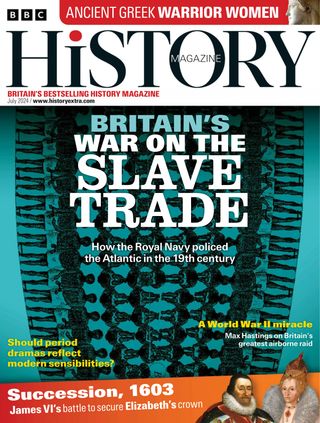

यह कहानी BBC History UK के July 2024 संस्करण से ली गई है।
हजारों चुनिंदा प्रीमियम कहानियों और 10,000 से अधिक पत्रिकाओं और समाचार पत्रों तक पहुंचने के लिए मैगज़्टर गोल्ड की सदस्यता लें।
क्या आप पहले से ही ग्राहक हैं? साइन इन करें
BBC History UK से और कहानियाँ

History Extra
Personal stories
Few shows have enjoyed the longevity of Who Do You Think You Are? and it's easy to understand why it has endured.

1 min
June 2026

History Extra
Tidal change
Southern mythos notwithstanding, there exists no static, exceptional American South.
1 mins
June 2026

History Extra
Marriage story
Emily Howes on her novel about Catherine Dickens' relationship with her famous husband
1 mins
June 2026
History Extra
Sexual her-story
A witty, wide-ranging account of the myths and power structures behind female sexuality impresses SARAH JONES
2 mins
June 2026

History Extra
History man
According to Tom Hanks, during his childhood 'The War' was a recurring topic in the conversations of the adults around him.
1 min
June 2026
History Extra
How to be a master of disguise
10 do's and don'ts when attending a masquerade
2 mins
June 2026
History Extra
Age of indulgence
Our content producer Charlotte Vosper picks episodes of the HistoryExtra podcast about Georgian Britain
1 min
June 2026

History Extra
Gaffer tape
While Bobby Robson and Gareth Southgate both led England to World Cup semi-finals, Alf Ramsey remains the only manager to actually win the trophy.
1 mins
June 2026

History Extra
What's the origin of the Fosbury Flop?
Like the Salchow in ice skating, the Fosbury Flop is a sport technique that immortalises the name of its creator.
1 min
June 2026

History Extra
EXHIBITIONS
In 1776, the United States of America was born - heralded by the Declaration of Independence.
1 min
June 2026
Listen
Translate
Change font size