कोशिश गोल्ड - मुक्त
MIND OVER MATTER
The New Yorker
|December 15, 2025
Did the celebrated neurologist Oliver Sacks write his patients into case studies of his own psyche?
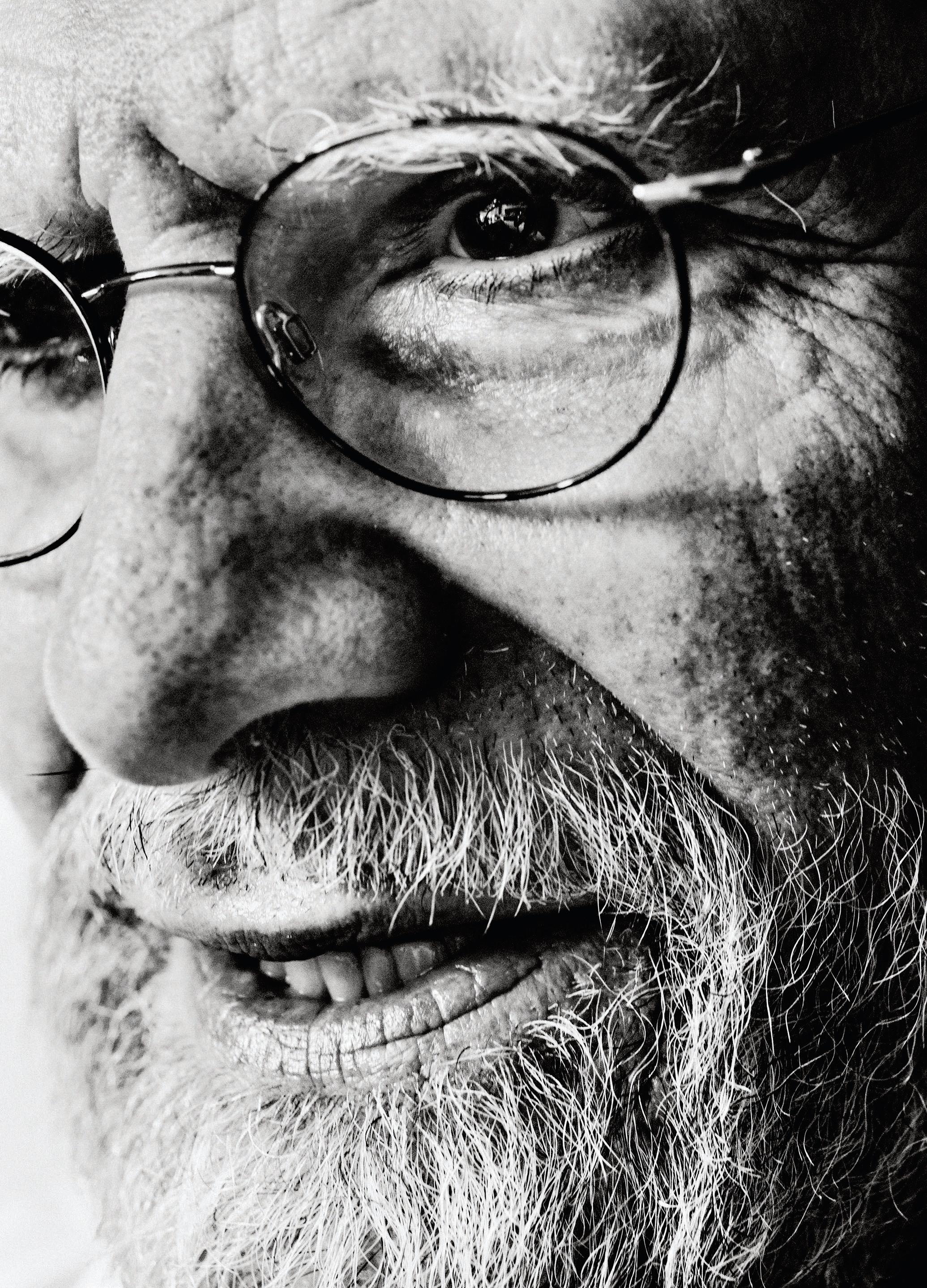
Sacks, the author of "Awakenings," popularized the link between storytelling and healing. He was in therapy for five decades.
When Oliver Sacks arrived in New York City, in September, 1965, he wore a butter-colored suit that reminded him of the sun. He had just spent a romantic week in Europe travelling with a man named Jenö Vincze, and he found himself walking too fast, fizzing with happiness. “My blood is champagne,” he wrote. He kept a letter Vincze had written him in his pocket all day, feeling as if its pages were glowing. Sacks had moved to New York to work as a fellow in neuropathology at the Albert Einstein College of Medicine, in the Bronx, and a colleague observed that he was “walking on air.” Every morning, he carefully polished his shoes and shaved. He adored his bosses. “I smile like a lighthouse in all directions,” he wrote Vincze.
Sacks was thirty-two, and he told Vincze that this was his first romantic relationship that was both physical and reciprocal. He felt he was part of a “two man universe,” seeing the world for the first time—“seeing it clear, and seeing it whole.” He wandered along the shipping piers on the Hudson River, where gay men cruised, with a notebook that he treated as a diary and as an endless letter to Vincze. “To watch life with the eyes of a homosexual is the greatest thing in the world,” Vincze had once told Sacks.

यह कहानी The New Yorker के December 15, 2025 संस्करण से ली गई है।
हजारों चुनिंदा प्रीमियम कहानियों और 10,000 से अधिक पत्रिकाओं और समाचार पत्रों तक पहुंचने के लिए मैगज़्टर गोल्ड की सदस्यता लें।
क्या आप पहले से ही ग्राहक हैं? साइन इन करें
The New Yorker से और कहानियाँ

The New Yorker
AND YOUR LITTLE DOG, TOO
When animals attack.

8 mins
December 15, 2025
The New Yorker
Katy Waldman on Mary McCarthy's "One Touch of Nature"
I first encountered Mary McCarthy not through her novels or criticism but through her political reporting. A former editor recommended that I read “The Mask of State: Watergate Portraits” before covering Paul Manafort’s arraignment in 2017. (Were we ever so young?) I loved McCarthy’s witty cameos of malefactors—behold Maurice Stans, Nixon’s erstwhile Secretary of Commerce, “a silver-haired, sideburned super-accountant and magic fundraiser, who gave a day-and-a-half-long demonstration of the athletics of evasion, showing himself very fit for a man of his age.” McCarthy’s sentences were like mousetraps, snapping shut on both visual information and something deeper, the kind of quintessence that fictional characters possess and that we often long for real people to have, too.
2 mins
December 15, 2025

The New Yorker
KILLING BORROWED TIME
Will Geese redeem noisy, lawless rock and roll?
5 mins
December 15, 2025

The New Yorker
PRISON BREAKS
A new study illuminates the origins of incarceration
13 mins
December 15, 2025

The New Yorker
UNDERSTANDING THE SCIENCE
“Everyone thinks they're on this big journey now,” Debbie said, refilling her glass.
22 mins
December 15, 2025

The New Yorker
ALL RISE
A new Afghan bakery, in New York's golden age of bread.
7 mins
December 15, 2025

The New Yorker
HOW TO LEAVE THE U.S.A.
Why fed-up Americans are going Dutch.
26 mins
December 15, 2025

The New Yorker
TRADING PLACES
The ex-bankers behind HBO's \"Industry\" are the latest British élites to dramatize their own kind.
26 mins
December 15, 2025

The New Yorker
BRIGHT LIGHTS, BIG CITY
The new Studio Museum in Harlem shows that Black art matters.
10 mins
December 15, 2025
The New Yorker
MIND OVER MATTER
Did the celebrated neurologist Oliver Sacks write his patients into case studies of his own psyche?
36 mins
December 15, 2025
Listen
Translate
Change font size