कोशिश गोल्ड - मुक्त
On Famous Walkers, or Why You Should Pace Around While Writing
Writer’s Digest
|March / April 2026
I couldn't mentally settle down to write this article, so I stepped outside for a 20-minute walk. During that walk, I managed to craft my opening sentence (yes, the one you just read). What is it about walking that unclogs my mental pathways?
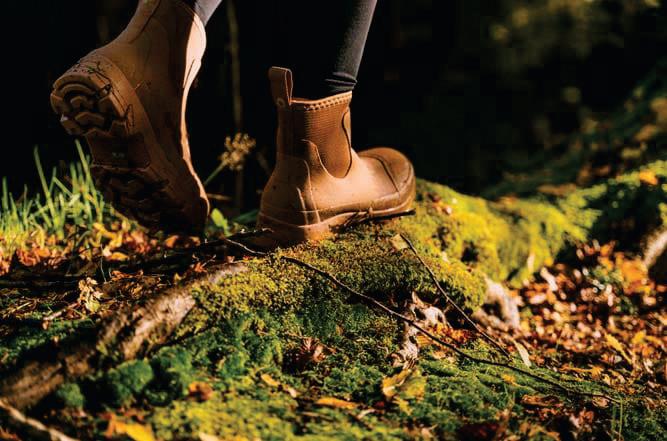
In 1921, Canadian poet Robert W. Service wrote that “walking … leaves me free to think.” So many writers pace the floor while working out a knotty story problem or a convoluted sentence. Why do we do that?
When I talk about walking in this article, keep in mind that rolling and/or dancing in a wheelchair offer many of the same benefits.
Scholarly research has shown that walking boosts focus and creativity and improves mood. When our heart pumps faster, it increases circulation. Walking stimulates blood flow to the legs and, perhaps more relevantly for us writers, to the brain. Better blood flow means that more oxygen, proteins, and other nutrients reach our neurons.
Since walking involves motion, it changes our physical perspective, even in a familiar space. This can help change our mental perspective and give us new insights.
If you’re not yet a walker, I encourage you to join this longstanding tradition, if only for the sake of your writing.
FAMOUS WALKERS
From Charles Dickens to Rebecca Solnit, writing and walking have long gone hand in glove (or foot in shoe, as it were). Cheryl Strayed famously walked 1,100 miles on the Pacific Crest Trail and wrote about it in her memoir Wild.
In 17th-century Japan, Matsuo Bashō felt uninspired in his writing, so he embarked on foot from Edo (now Tokyo) into the interior of the country. He travelled light, carrying a pack with clothing for inclement weather—and his “ink and brushes.” Bashō prioritized his writing tools as part of his travels.
I guess it worked out for him. Hundreds of years later, people are still talking about The Narrow Road to the Deep North.
Luckily, you don't have to depart on an epic journey to find inspiration.

यह कहानी Writer’s Digest के March / April 2026 संस्करण से ली गई है।
हजारों चुनिंदा प्रीमियम कहानियों और 10,000 से अधिक पत्रिकाओं और समाचार पत्रों तक पहुंचने के लिए मैगज़्टर गोल्ड की सदस्यता लें।
क्या आप पहले से ही ग्राहक हैं? साइन इन करें
Writer’s Digest से और कहानियाँ

Writer’s Digest
Fate and Prophesy
Defying destiny may be just as hazardous as succumbing to it.”

5 mins
May / June 2026

Writer’s Digest
How to Pitch in Person Without Losing the Plot
Conference-ready tips to make sure your story stands out.
5 mins
May / June 2026
Writer’s Digest
How to Handle Money as a Writer
That is, in case you actually make any ...
8 mins
May / June 2026

Writer’s Digest
Dress Your Manuscript for the Job You Want It to Have
Dress Your Manuscript for the Job You Want It to Have How often have you heard the adage “dress for the job you want”? Probably often enough that it’s a cliché.
5 mins
May / June 2026

Writer’s Digest
Mike Chen
The award-winning science-fiction author discusses the importance of fandom, writing for IP giants like Star Wars, and tackling his biggest project yet: a space opera.
13 mins
May / June 2026
Writer’s Digest
Outlaw Openers
There was a time when starting a sentence with And, But, or So felt like breaking the law.
2 mins
May / June 2026

Writer’s Digest
Collaborate to Create
Why co-authoring nonfiction is a pro strategy worth considering.
7 mins
May / June 2026
Writer’s Digest
The Life-Changing Magic of Tidying Up Your Writing Portfolio
Creating an organized online home for your nonfiction writing samples gives you a strategic advantage.
5 mins
May / June 2026
Writer’s Digest
20 Elevator Pitches for Recently Published Books
One of the most important professional skills an author can develop is the ability to craft an enticing elevator pitch for their book.
5 mins
May / June 2026
Writer’s Digest
On Writing & Newsroom Autobiography
Today, the rise of 24-hour cable news has dramatically reshaped how we consume information.
2 mins
May / June 2026
Listen
Translate
Change font size