कोशिश गोल्ड - मुक्त
HELPING HANDS
BBC Wildlife
|June 2025
Every year in Germany, thousands of fawns perish during hay-making season. Now volunteers are using technology to rescue them
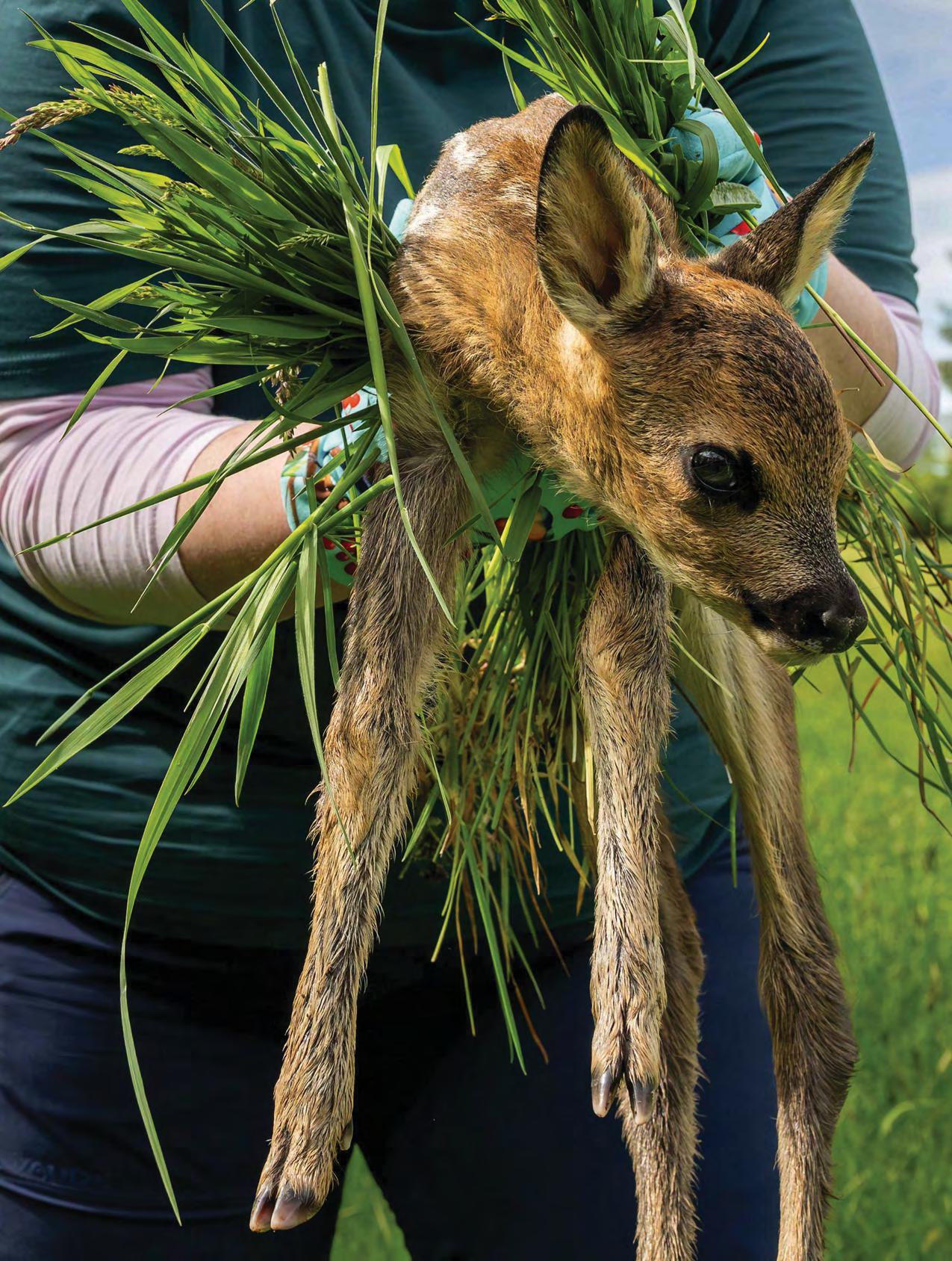
IT'S DAWN IN A MEADOW IN southern Bavaria. A faint breeze ruffles the grass and whispers through the leaves of the woodland nearby. It seems deserted. Yet look closely – there, in the shadow between blades of grass, two glossy brown eyes glitter. Curled unseen in its green den lies a tiny roe deer, with black nose, outsized ears and fur dappled with spots.
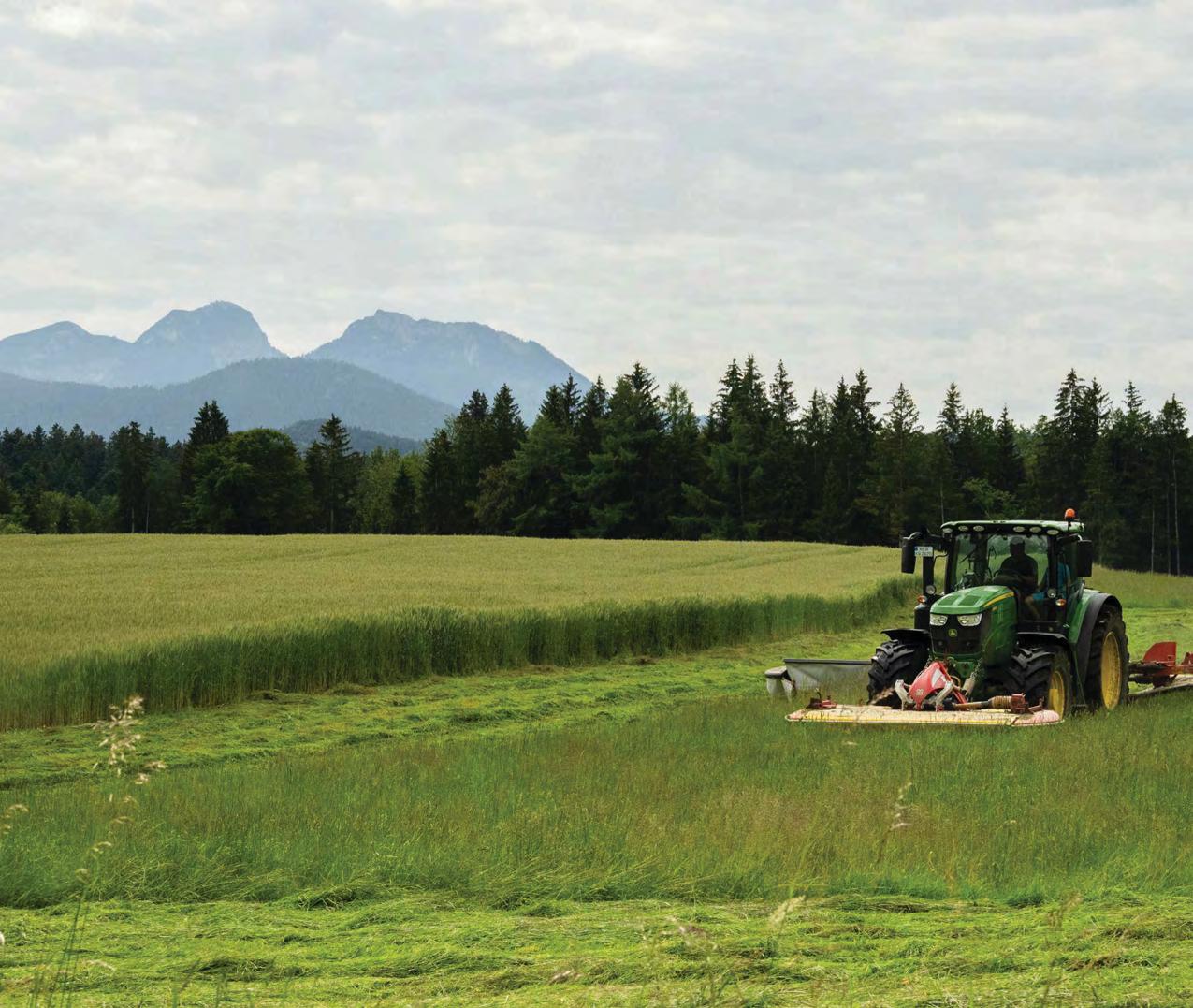
Not far away, farmer Klaus Waldschütz is busy attaching his mower to his tractor. It's hay season, and the weather is fine and dry - perfect for haymaking. Klaus has 6ha of grassland and meadow to cut, dry out, rake and bale. It will be a long few days, but the hay crop is vital nourishment for the farm's dairy herd through the winter months.
With a dry weather window this morning, farmers all over Bavaria are preparing their hay mowers. These are impressive pieces of kit containing whirling knives that swiftly reduce the knee-high grass down to a few centimetres.
Evolution has not prepared the fawns for such behemoths. The loss of life is staggering: in Germany alone, between 50,000 and 100,000 deer are thought to perish beneath the blades of hay mowers each year, according to Deutsche Wildtier Stiftung (German Wildlife Foundation). Such collisions trouble farmers. Klaus remembers when his father accidentally killed a youngster during mowing. “It was after a long period of rain. The grass was pressed down, so he didn’t notice the deer. He felt bad because a living creature was harmed. A farmer works with nature and its animals.”
 Why don’t fawns simply run from the mowers? The answer is rooted in the ingenious strategy roe deer have evolved to protect their newborns from predators, a strategy that has served the species well - until relatively recently.

यह कहानी BBC Wildlife के June 2025 संस्करण से ली गई है।
हजारों चुनिंदा प्रीमियम कहानियों और 10,000 से अधिक पत्रिकाओं और समाचार पत्रों तक पहुंचने के लिए मैगज़्टर गोल्ड की सदस्यता लें।
क्या आप पहले से ही ग्राहक हैं? साइन इन करें
BBC Wildlife से और कहानियाँ
BBC Wildlife
"I was terrified the elephant would ram us"
African elephant in Kenya

2 mins
January 2026
BBC Wildlife
ALL YOU EVER NEEDED TO KNOW ABOUT THE Fennec fox
THE FENNEC FOX IS THE SMALLEST fox in the world, with a body length that can be as little as 24cm.
3 mins
January 2026

BBC Wildlife
INTO THE PLASTISPHERE
A unique synthetic ecosystem is evolving in our oceans – welcome to the plastisphere
7 mins
January 2026

BBC Wildlife
“More than half of all animal life exists in a parasitic relationship, and all life lives in symbiosis”
Our survival depends on species evolving to live together - but some relationships take dark turns
7 mins
January 2026
BBC Wildlife
Are animals able to dream?
SLEEP IS A MYSTERIOUS THING. FOR A long time, we weren't sure why we do it.
1 mins
January 2026
BBC Wildlife
Does a cuckoo know it's a cuckoo?
ABSURD LITTLE BIRDS ACROSS THE world lay their eggs in the nests of other species, leaving the hapless parents to raise a changeling at the expense of their own offspring.
2 mins
January 2026
BBC Wildlife
Orcas killing young sharks
Juvenile great whites are easy prey for orca pod
1 mins
January 2026

BBC Wildlife
Ocean goes on tour
Acclaimed film touring the UK, backed by live orchestra and choir
1 min
January 2026
BBC Wildlife
Feisty bats hunt like lions
Winged mammals use a 'hang and wait' strategy to take down large prey
1 mins
January 2026
BBC Wildlife
SNAP-CHAT
Richard Birchett on magical merlins, wily coyotes and charging deer
2 mins
January 2026
Listen
Translate
Change font size