
मैगज़्टर गोल्ड के साथ असीमित हो जाओ
10,000 से अधिक पत्रिकाओं, समाचार पत्रों और प्रीमियम कहानियों तक असीमित पहुंच प्राप्त करें सिर्फ
कोशिश गोल्ड - मुक्त
Interim Relief
Down To Earth
|February 01, 2017
The Supreme Court's order to compensate endosulfan victims within three months is a welcome move, but India still needs to strengthen its pesticide management system to avoid a similar crisis in the future.

IN FEBRUARY 2001, Down To Earth broke the story on endosulfan poisoning in Padre village in Kasargod, Kerala. Due to two decades of aerial spraying of the pesticide, diseases such as cerebral palsy, mental and/or physical retardation, epilepsy, congenital anomalies, liver and blood cancer, infertility, and asthma had become unusually common among the residents of Kasargod. Apart from the effects on the community, the pesticide also affected the local ecology—bees, frogs and fish disappeared from the area. The Pollution Monitoring Laboratory of the Centre for Science and Environment (CSE), a Delhi-based non-profit, provided evidence that all these were linked to the spraying of the pesticide. A bitter fight ensued between the community and the pesticide industry (see ‘End of endosulfan’, p16), which eventually led to the banning of the pesticide by the Supreme Court (SC), in 2011. And on January 10, 2017, the SC directed the Kerala government to release the entire compensation, ₹5 lakh to each of the over 4,000 victims, within three months.
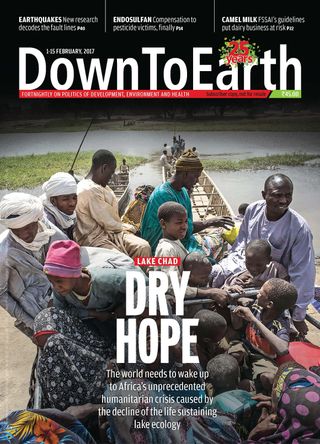

यह कहानी Down To Earth के February 01, 2017 संस्करण से ली गई है।
हजारों चुनिंदा प्रीमियम कहानियों और 10,000 से अधिक पत्रिकाओं और समाचार पत्रों तक पहुंचने के लिए मैगज़्टर गोल्ड की सदस्यता लें।
क्या आप पहले से ही ग्राहक हैं? साइन इन करें
Down To Earth से और कहानियाँ

Down To Earth
THINK TWICE BEFORE FELLING SAL TREES
Many trees considered to be affected by sal borer in the 1990s are still alive today

1 mins
February 16, 2026

Down To Earth
EDGE OF SURVIVAL
Caste divides deny marginalised communities land, resources and essential aid, leaving them more vulnerable to climate disasters
6 mins
February 16, 2026

Down To Earth
A WISH LIST?
Union Budget for 2026-27 conveys the impression of a roll-call of intentions and ambitious proposals, with little detail on their formulation
6 mins
February 16, 2026
Down To Earth
Break down the gender wall
THE RULING National Democratic Alliance (NDA) government has been heavily invested in the goal to make India a developed economy by 2047.
2 mins
February 16, 2026

Down To Earth
MENSTRUAL HEALTH, NOW A FUNDAMENTAL RIGHT
In a landmark judgement, the Supreme Court has recognised menstrual health and hygiene as a fundamental right under Article 21 of the Constitution of India, which guarantees the right to life and dignity.
8 mins
February 16, 2026

Down To Earth
Of devolution and new disasters
The 16th Finance Commission pushes for changes in view of new fiscal and climatic conditions
11 mins
February 16, 2026
Down To Earth
Rising risks of plastics
NEGATIVE IMPACTS on human health due to emissions linked to the plastic lifecycle could double by 2040, according to a study published in The Lancet Planetary Health in January.
1 min
February 16, 2026

Down To Earth
GAP BETWEEN EPIDEMICS NARROWING
A watershed-based and landscape-level approach is needed to address forest degradation
2 mins
February 16, 2026
Down To Earth
WAITING TO STRIKE
Sal heartwood borer is considered the biggest threat to forestry in India, especially to the sal tree, where it lives and breeds.
11 mins
February 16, 2026

Down To Earth
A SPRING DELIGHT
Mustard flowers are not meant only for the eyes. Invite them to your plate once in a while
3 mins
February 16, 2026
Translate
Change font size