कोशिश गोल्ड - मुक्त
Collateral damage
Down To Earth
|December 16, 2020
India’s latest plan to save its vultures from dying due to drugs used on cattle offers little hope

AFTER A gap of almost 15 years, the Union Ministry of Environment, Forest and Climate Change (MOEFCC) has released the second National Vulture Conservation Action Plan (2020-25). Yet the report continues to grapple with the same question that prompted India’s first-ever vulture conservation plan in 2006: how to stop the use of a medicine that wiped out almost the entire vulture population in the country. The most common vultures— oriental white-backed, long-billed, and slender-billed declined by more than 96 per cent in a decade (1993-2003), says the latest action plan.
In 2004, bird experts established that diclofenac, a non-steroidal drug given to cattle to treat inflammation, was behind the population crash. When a vulture consumed a cattle carcass with traces of diclofenac, it developed gout and almost immediately died of kidney failure.
In 2006, on the recommendation of the first conservation plan, the Drug Controller General of India (DCGI) banned the veterinary use of diclofenac. In 2015, it restricted the vial size of diclofenac formulation for humans to 3 ml to check its use by the veterinarian, who need much higher dosage for treating cattle. It was also made a schedule H drug (under the Drug and Cosmetics Act 1940), which means it cannot be sold without a doctor’s prescription.
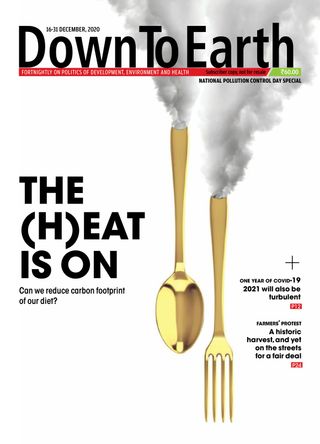

यह कहानी Down To Earth के December 16, 2020 संस्करण से ली गई है।
हजारों चुनिंदा प्रीमियम कहानियों और 10,000 से अधिक पत्रिकाओं और समाचार पत्रों तक पहुंचने के लिए मैगज़्टर गोल्ड की सदस्यता लें।
क्या आप पहले से ही ग्राहक हैं? साइन इन करें
Down To Earth से और कहानियाँ

Down To Earth
Bitter pill
THE WEB SERIES PHARMA EXPOSES HARSH TRUTHS OF THE PHARMACEUTICAL INDUSTRY, WHERE PROFIT OFTEN BECOMES MORE IMPORTANT THAN HUMAN HEALTH

3 mins
January 16, 2026
Down To Earth
CHAOS IN-DEFINITION
The Aravallis are perhaps India's most litigated hill range. More than 4,000 court cases have failed to arrest their destruction. The latest dispute concerns a narrow legal definition of this geological antiquity, much of which has been obliterated by mining and urban sprawl. While the Supreme Court has stayed its own judgement accepting that definition, it must see the underlying reality and help reconcile development and national security with conservation.
19 mins
January 16, 2026
Down To Earth
BITS: INDIA
Indore has recorded 16 deaths and more than 1,600 hospitalisations between December 24 and January 6.
1 min
January 16, 2026
Down To Earth
GUARANTEE EXPIRES
India's rural employment guarantee law is replaced with a centrally controlled, budget-capped scheme. Is this an attack on the right to work?
3 mins
January 16, 2026
Down To Earth
BLOOM OR BANE
Surge of vibrant pink water lilies in Kuttanad, Kerala, provides socio-economic benefits, but the plant's ecological impacts must be understood
4 mins
January 16, 2026
Down To Earth
INVISIBLE EMPLOYER
Field and academic evidence shows sharp falls in casual agricultural employment at places where groundwater access declines
3 mins
January 16, 2026

Down To Earth
Schemed for erasure
Does the VB-G RAMG Act address structural weaknesses long observed in MGNREGA's implementation?
10 mins
January 16, 2026

Down To Earth
School of change
An open school in Panagar, Madhya Pradesh, aims to protect children of tribal settlements from falling into the trap of addiction
2 mins
January 16, 2026

Down To Earth
PULSE OF RESILIENCE
As a climate-ready crop, cowpea shows potential for widespread use in India
3 mins
January 16, 2026
Down To Earth
BITS GLOBAL
Britain recorded its hottest and sunniest year ever in 2025, the country's meteorological office said on January 2.
1 min
January 16, 2026
Translate
Change font size