
मैगज़्टर गोल्ड के साथ असीमित हो जाओ
10,000 से अधिक पत्रिकाओं, समाचार पत्रों और प्रीमियम कहानियों तक असीमित पहुंच प्राप्त करें सिर्फ
कोशिश गोल्ड - मुक्त
COOL IDEA
Down To Earth
|April 16, 2022
Ahmedabad residents strategically use shade, ventilation and building materials to keep their homes comfortable: and it does not cost the earth

A learning and resource centre at Lilapur village in Ahmedabad with a modular roof, made from recycled coconut husk and paper waste, which can reduce indoor temperatures by 5-6°C.
IT IS early April, and mercury levels have already crossed 40°C in Ahmedabad, the industrial city of Gujarat. But Meena Soni's two-room house in Vishwas Nagar colony seems to emanate coolness, with the temperature at a comfortable 34°C or so. The reason, says Soni, is the unique modular cooling roof she installed a few years ago.
Made from recycled coconut husk and paper waste, the roof is removable, waterproof and a worthy upgrade to the earlier asbestos sheet that would turn the house into a furnace during summer. "Every year during this season, the health of my asthmatic husband used to worsen quite often, requiring him to seek urgent medical attention," she says. Now, her husband weathers the city's temperature spikes without visits to the hospital, and Soni does tailoring more consistently and comfortably. "We also save almost ₹400 a month on electricity bills," she says.
The roof, available under brand name ModRoof, costs almost ₹27,000 for an average roof of 9 sq m in a low-income settlement and is durable for 25 years. Like Soni, more than 200 low-income households from across the city have installed ModRoof in recent years with the help of a loan from Ahmedabad-based non-profit, Mahila Housing Trust (MHT), which has been promoting low-cost cool roof solutions since 2012.
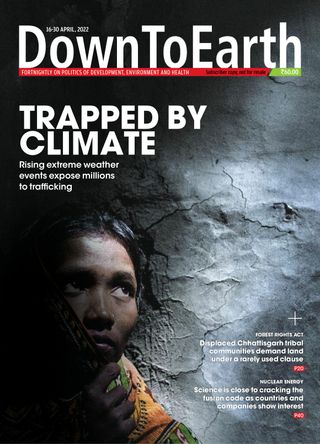

यह कहानी Down To Earth के April 16, 2022 संस्करण से ली गई है।
हजारों चुनिंदा प्रीमियम कहानियों और 10,000 से अधिक पत्रिकाओं और समाचार पत्रों तक पहुंचने के लिए मैगज़्टर गोल्ड की सदस्यता लें।
क्या आप पहले से ही ग्राहक हैं? साइन इन करें
Down To Earth से और कहानियाँ

Down To Earth
GREAT NICOBAR DILEMMA
In the fragile ecosystem of Nicobar, strategic development must align with constitutional commitment to protect environment, indigenous dignity

3 mins
March 16, 2026
Down To Earth
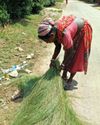
CATCH BY THE ROOTS
Sabai grass could be a game-changer for the marginalised economies of West Bengal's dry uplands. All it needs is an efficient market strategy
4 mins
March 16, 2026

Down To Earth
POWERING TRANSITION
India's renewable ambitions are rising rapidly, with half of its installed power capacity now coming from non-fossil sources. Yet the gap between capacity and generation remains wide. The experiences of two pioneering states, Karnataka and Tamil Nadu, which together generate over a fifth of the country's renewable energy, offer crucial lessons for accelerating the transition, reports PUJA DAS from Bengaluru, Chennai, Mumbai and New Delhi
16 mins
March 16, 2026
Down To Earth
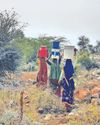
At core of survival
Water scarcity defines life in a village inside Sariska Tiger Reserve's critical habitat, as debates over its relocation drag on
5 mins
March 16, 2026

Down To Earth
What's on your plate
An upcoming digital tool can help people learn about the origin of their meals and make climate-positive food choices
2 mins
March 16, 2026

Down To Earth
'Bad environment can never be good economics'
The Supreme Court of India and even the high courts were once very active and took a proactive role in protecting the environment; unfortunately, that is no longer true
4 mins
March 16, 2026
Down To Earth
Things fall apart
IN THE past year, the world has counted more missiles and bombs than hours.
2 mins
March 16, 2026

Down To Earth
Universities in crisis, innovation is stifled
Political control and skewed policies have led to unrest in academia, stifling creativity and meaningful research
4 mins
March 16, 2026

Down To Earth
SPARK IN THE GAME
The Reserve Bank of India's restored recognition of Default Loss Guarantees re-enables credit flow into last-mile electric mobility
3 mins
March 16, 2026

Down To Earth
Ushering in new eras
An appraisal of the state of biodiversity conservation, pollution reduction and climate adaptation regimes in India
3 mins
March 16, 2026
Translate
Change font size