
मैगज़्टर गोल्ड के साथ असीमित हो जाओ
10,000 से अधिक पत्रिकाओं, समाचार पत्रों और प्रीमियम कहानियों तक असीमित पहुंच प्राप्त करें सिर्फ
Sputnik Spark Of The Space Age
BBC Sky at Night Magazine
|October 2017
Sixty years ago this month a small silver orb made the first-ever orbit of planet Earth.

On the night of 4 October 1957 an R7 ‘Semyorka’ rocket launched from the Tyuratam missile range (now Baikonur Cosmodrome) in Kazakhstan. The 83kg satellite it delivered into orbit would change the world forever. As Sputnik transmitted its monotonous series of beeps to the world below, it announced the beginning of the Space Age.
Sputnik was a major scientific milestone, but it also had a massive political impact. The fact that this breakthrough had been made by the Soviet Union terrified the West and opened up a new front in the Cold War.
The satellite’s origins lay in the arms race that followed the Second World War. After the Americans had dropped their atomic bombs on Hiroshima and Nagasaki, the Soviets quickly developed a nuclear weapon of their own – but with no long-range bombers and no airstrips anywhere in range of the US, they had no way to deliver it. What they needed was a missile; a missile 10 times more powerful than anything that had been built before.
To build this missile Stalin appointed Sergei Pavlovich Korolev, a talented aeronautical engineer who would become the chief designer of the entire Soviet space programme. Korolev was undoubtedly the right man to build the missile, but he wasn’t really interested in warfare. He was interested in space exploration and from earliest of the days of the missile programme he was preparing to send his rockets into orbit.
By the mid 1950s the Soviets were working on a satellite named Object D. The plan was to launch it in 1957, as part of the International Geophysical Year. It would weigh over a tonne and would carry instruments to study the Earth’s atmosphere and magnetic field, as well as the solar wind and cosmic rays.

यह कहानी BBC Sky at Night Magazine के October 2017 संस्करण से ली गई है।
हजारों चुनिंदा प्रीमियम कहानियों और 10,000 से अधिक पत्रिकाओं और समाचार पत्रों तक पहुंचने के लिए मैगज़्टर गोल्ड की सदस्यता लें।
क्या आप पहले से ही ग्राहक हैं? साइन इन करें
BBC Sky at Night Magazine से और कहानियाँ
BBC Sky at Night Magazine
MOONWATCH
January's top lunar feature to observe

2 mins
January 2026
BBC Sky at Night Magazine
Speed up your processing workflow
How to use Photoshop's Actions tool to drastically cut your processing time
3 mins
January 2026
BBC Sky at Night Magazine
Chasing Canada's polar lights
With solar maximum peaking and a new Moon promising dark skies, Jamie Carter travels to Churchill, Manitoba to hunt the Northern Lights - and dodge polar bears – in Canada's far north
7 mins
January 2026

BBC Sky at Night Magazine
Beyond Pluto: The search for the hidden planets
Could one – or even two - undiscovered planets lurk at the edges of our Solar System? Nicky Jenner explores how close we are to finding the elusive 'Planet 9'
6 mins
January 2026
BBC Sky at Night Magazine
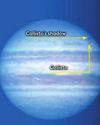
Jupiter moon events
Jupiter is a magnificent planet to observe.
2 mins
January 2026

BBC Sky at Night Magazine
What samples from space have taught us
Alastair Gunn explains what scientists have learnt in the 20 years since the first unmanned mission brought materials back from alien worlds
3 mins
January 2026
BBC Sky at Night Magazine
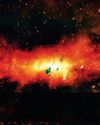
The Milky Way as you've never seen it before
This is the largest low-frequency radio colour image of our Galaxy ever assembled
1 min
January 2026

BBC Sky at Night Magazine
Merger of ‘impossibly' massive black holes explained
Scientists discover how enormous, fast-spinning black holes can exist after all
1 mins
January 2026
BBC Sky at Night Magazine
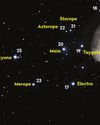
Lunar occultation of the Pleiades
BEST TIME TO SEE: 27 January from 20:30 UT
1 min
January 2026
BBC Sky at Night Magazine
The Universe's expansion may be slowing down
New study suggests current theories of dark energy could be wrong
1 mins
January 2026
Translate
Change font size