कोशिश गोल्ड - मुक्त
Meteorites, messengers from other planets
BBC Sky at Night Magazine
|July 2022
Stuart Atkinson takes a look at five of the most famous 'celebrity meteorites'

We would be amazed if we could look up at the night sky and see all the rocks flying through space around us. Our Solar System contains billions of them, all orbiting the Sun-like miniature worlds. Occasionally, Earth crosses paths with one of these meteoroids and it burns up in our atmosphere as a meteor or shooting star. But some survive their fiery passage and land on the ground as a charred rock. Most of these are never found, but a few are seen to fall and then are recovered to be studied by scientists. All these meteorites are fascinating, but some are more valued by scientists and collectors. One might even say they are 'celebrity meteorites'. Here, we look at five of these most famous space rocks.
The Winchcombe meteorite
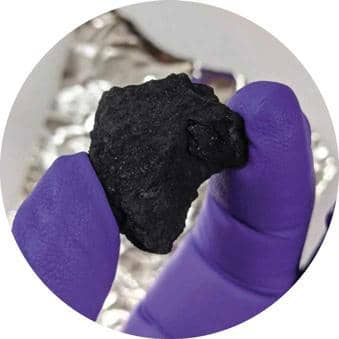
Late on the evening of 28 February 2021, thousands of people across the UK and northern Europe saw a bright fireball streaking across the sky, and some of them heard sonic booms. The fireball was also recorded by the cameras of the UK Fireball Alliance (www.ukfall.org.uk), a network of cameras scattered across the UK. By combining the eyewitness reports and analysing the survey images, experts calculated that meteorites may have landed in, or near, the Gloucestershire village of Winchcombe. The next day a hunt began, and before too long dark, fragile rocks were spotted in the grass. One family found a pile of the rocks on their driveway, surrounded by black powder - yet more pieces of what would become known as the 'Winchcombe meteorite'. A rare, carbonaceous chondrite-type rock, it was the first meteorite to be recovered in the UK in 30 years.

यह कहानी BBC Sky at Night Magazine के July 2022 संस्करण से ली गई है।
हजारों चुनिंदा प्रीमियम कहानियों और 10,000 से अधिक पत्रिकाओं और समाचार पत्रों तक पहुंचने के लिए मैगज़्टर गोल्ड की सदस्यता लें।
क्या आप पहले से ही ग्राहक हैं? साइन इन करें
BBC Sky at Night Magazine से और कहानियाँ

BBC Sky at Night Magazine
Crush: Close Encounters with Gravity
Gravity is something that we're all innately familiar with. It keeps our feet on the ground, fights against a rocket trying to leave Earth and governs the movement of the planets and stars.

1 mins
April 2026
BBC Sky at Night Magazine
Exploring the Universe
There's no shortage of children's books about astronomy.
2 mins
April 2026
BBC Sky at Night Magazine
Make your Milky Way images pop
Simple, free processing techniques using FastStone Image Viewer
3 mins
April 2026
BBC Sky at Night Magazine
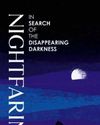
Nightfaring: In Search of the Disappearing Darkness
This book is a manifesto for dark skies, written as a travel memoir.
1 mins
April 2026
BBC Sky at Night Magazine
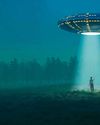
Flying saucers- The making of a modern myth
Our obsession with UFOs goes back further than you might think. Robert Pateman traces how early science fiction, dubious sightings and an alien-mad media led to the 1950s saucer fever
9 mins
April 2026
BBC Sky at Night Magazine
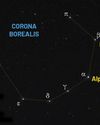
STAR OF THE MONTH
Alphecca, the brightest jewel in the Crown
1 min
April 2026

BBC Sky at Night Magazine
How to use a planisphere
Navigate the sky with the original stargazer's tool. No batteries, apps or Wi-Fi required!
3 mins
April 2026
BBC Sky at Night Magazine
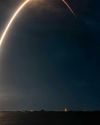
Why rockets don't launch straight up
For a rocket to get its payload into space, it has to follow a curved path. But what would happen if it didn't?
2 mins
April 2026
BBC Sky at Night Magazine
Q&A WITH A DARK MATTER SPECIALIST
Dark matter makes up 27 per cent of all matter in the Universe. So why is it so hard to find? Meet one of the people making a map that leads us to it
3 mins
April 2026

BBC Sky at Night Magazine
Why I want to put a hotel on the Moon
Bored of the beach? Sick of city breaks? Step this way. Space entrepreneur Skyler Chan explains how he'll build a holiday destination on the Moon by 2030
2 mins
April 2026
Translate
Change font size