
मैगज़्टर गोल्ड के साथ असीमित हो जाओ
10,000 से अधिक पत्रिकाओं, समाचार पत्रों और प्रीमियम कहानियों तक असीमित पहुंच प्राप्त करें सिर्फ
DIY ASTRONOMY - Make a solar projector
BBC Sky at Night Magazine
|April 2022
How to construct a home-built projector for safely viewing the Sun

CAUTION Never observe or image the Sun with the naked eye or any unfiltered optical instrument
This month's project is to build a solar projector, which you can use to safely view the Sun. Not only is it easy to operate, but it's useful for catching sunspot activity, a solar eclipse or a transit event. As it is not safe to look directly at the Sun with the naked eye (or any unfiltered optical equipment), our design keeps your eyes well away from the light path, which is inside an enclosed casing. The image is projected onto a screen which can be viewed by several people simultaneously.
Cost-effective design
The design makes use of binoculars, a mirror and a screen. Charity shop 7x50 binoculars are a good bet, particularly those built with metal and glass parts and costing under £10. There may be some heat build-up during observations, so don't use pricey binoculars or ones with plastic eyepiece parts. We only need to use one-half of the optics, but we can keep the other, as removing it interferes with the focus mechanism.
Before building the projector, test the optics. Take care with this; after capping one objective lens, hold the binoculars at waist height so that they point towards the Sun and project a crisp image onto a white wall or a card. We found that holding them 450mm from the wall worked well, producing a bright disc about 30mm across. You can increase or shorten the length of the viewing tube part of your projector if you need a different setup.

यह कहानी BBC Sky at Night Magazine के April 2022 संस्करण से ली गई है।
हजारों चुनिंदा प्रीमियम कहानियों और 10,000 से अधिक पत्रिकाओं और समाचार पत्रों तक पहुंचने के लिए मैगज़्टर गोल्ड की सदस्यता लें।
क्या आप पहले से ही ग्राहक हैं? साइन इन करें
BBC Sky at Night Magazine से और कहानियाँ
BBC Sky at Night Magazine
MOONWATCH
January's top lunar feature to observe

2 mins
January 2026
BBC Sky at Night Magazine
Speed up your processing workflow
How to use Photoshop's Actions tool to drastically cut your processing time
3 mins
January 2026
BBC Sky at Night Magazine
Chasing Canada's polar lights
With solar maximum peaking and a new Moon promising dark skies, Jamie Carter travels to Churchill, Manitoba to hunt the Northern Lights - and dodge polar bears – in Canada's far north
7 mins
January 2026
BBC Sky at Night Magazine
Beyond Pluto: The search for the hidden planets
Could one – or even two - undiscovered planets lurk at the edges of our Solar System? Nicky Jenner explores how close we are to finding the elusive 'Planet 9'
6 mins
January 2026
BBC Sky at Night Magazine
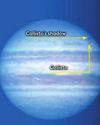
Jupiter moon events
Jupiter is a magnificent planet to observe.
2 mins
January 2026

BBC Sky at Night Magazine
What samples from space have taught us
Alastair Gunn explains what scientists have learnt in the 20 years since the first unmanned mission brought materials back from alien worlds
3 mins
January 2026
BBC Sky at Night Magazine
The Milky Way as you've never seen it before
This is the largest low-frequency radio colour image of our Galaxy ever assembled
1 min
January 2026
BBC Sky at Night Magazine
Merger of ‘impossibly' massive black holes explained
Scientists discover how enormous, fast-spinning black holes can exist after all
1 mins
January 2026
BBC Sky at Night Magazine
Lunar occultation of the Pleiades
BEST TIME TO SEE: 27 January from 20:30 UT
1 min
January 2026
BBC Sky at Night Magazine
The Universe's expansion may be slowing down
New study suggests current theories of dark energy could be wrong
1 mins
January 2026
Translate
Change font size