
मैगज़्टर गोल्ड के साथ असीमित हो जाओ
10,000 से अधिक पत्रिकाओं, समाचार पत्रों और प्रीमियम कहानियों तक असीमित पहुंच प्राप्त करें सिर्फ
Artemis takes aim at the Moon
BBC Sky at Night Magazine
|April 2022
As Artemis I goes through its final preparations, Niamh Shaw looks at this first step in a programme to return humanity to the Moon permanently

Back in 2019, the year of the 50th anniversary of the Apollo lunar human space programme, Jim Bridestine, then NASA Administrator announced details of Project Artemis and with it the commitment to a single monumental goal: to establish a permanent human Moon base. With the project costing an estimated $93 billion by 2025, NASA's first milestone in this programme is the Artemis I mission, which is due to launch from Kennedy Space Center in mid 2022.
A four-week return mission to the Moon, Artemis I will be the first integrated test flight of NASA's Deep Space Exploration System, which includes the Orion spacecraft, Space Launch System (SLS) rocket and the Exploration Ground Systems (EGS) at Kennedy Space Center. There will be no lunar landing for Artemis I, but it will lay the foundation for the future Artemis missions to build on.
The Artemis spacecraft has a launch window of two weeks every month when the Moon is in the right position relative to Earth. As of writing, the earliest of these runs from 7-21 May, but launch windows from 6-16 June and 29 June to 12 July are also being seriously considered.
Once the mission has made its way off the launch pad at the Kennedy Space Center, though, it won't be short of objectives. Over the course of the mission Artemis I will deploy science CubeSats, the Orion craft will travel thousands of kilometres beyond the Moon in a retrograde orbit as well as conducting two flybys, skimming just 100km over the surface.



यह कहानी BBC Sky at Night Magazine के April 2022 संस्करण से ली गई है।
हजारों चुनिंदा प्रीमियम कहानियों और 10,000 से अधिक पत्रिकाओं और समाचार पत्रों तक पहुंचने के लिए मैगज़्टर गोल्ड की सदस्यता लें।
क्या आप पहले से ही ग्राहक हैं? साइन इन करें
BBC Sky at Night Magazine से और कहानियाँ
BBC Sky at Night Magazine
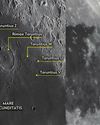
MOONWATCH
January's top lunar feature to observe

2 mins
January 2026
BBC Sky at Night Magazine
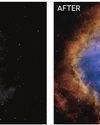
Speed up your processing workflow
How to use Photoshop's Actions tool to drastically cut your processing time
3 mins
January 2026
BBC Sky at Night Magazine
Chasing Canada's polar lights
With solar maximum peaking and a new Moon promising dark skies, Jamie Carter travels to Churchill, Manitoba to hunt the Northern Lights - and dodge polar bears – in Canada's far north
7 mins
January 2026

BBC Sky at Night Magazine
Beyond Pluto: The search for the hidden planets
Could one – or even two - undiscovered planets lurk at the edges of our Solar System? Nicky Jenner explores how close we are to finding the elusive 'Planet 9'
6 mins
January 2026
BBC Sky at Night Magazine
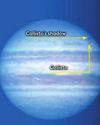
Jupiter moon events
Jupiter is a magnificent planet to observe.
2 mins
January 2026

BBC Sky at Night Magazine
What samples from space have taught us
Alastair Gunn explains what scientists have learnt in the 20 years since the first unmanned mission brought materials back from alien worlds
3 mins
January 2026
BBC Sky at Night Magazine
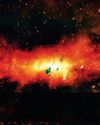
The Milky Way as you've never seen it before
This is the largest low-frequency radio colour image of our Galaxy ever assembled
1 min
January 2026

BBC Sky at Night Magazine
Merger of ‘impossibly' massive black holes explained
Scientists discover how enormous, fast-spinning black holes can exist after all
1 mins
January 2026
BBC Sky at Night Magazine
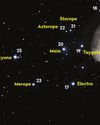
Lunar occultation of the Pleiades
BEST TIME TO SEE: 27 January from 20:30 UT
1 min
January 2026
BBC Sky at Night Magazine
The Universe's expansion may be slowing down
New study suggests current theories of dark energy could be wrong
1 mins
January 2026
Translate
Change font size