कोशिश गोल्ड - मुक्त
WELCOME TO YOUR FUTURE COMMUTE
BBC Science Focus
|January 2022
JUST A FEW YEARS AGO, IT FELT LIKE FLYING CARS WERE STILL A DISTANT SCI-FI FUTURE WE COULD ONLY DREAM ABOUT. BUT INVESTMENT HAS INCREASED RAPIDLY, AND A NUMBER OF COMPANIES ARE NOW BUILDING AIR TAXIS TO MAKE OUR CITY JOURNEYS FASTER, EASIER AND CLEANER

It’s hard to decide whether flying taxis are arriving very late or extremely early. On the one hand, the promise of airborne cabs zipping between skyscrapers has been a science fiction staple for decades. On the other, it wasn’t long ago that air taxis were filed in the ‘we’ll see’ folder of future technology, alongside hoverboards and hotels on the Moon.
But after years of wishful thinking, it’s suddenly happening. Investment in advanced aerial mobility (as the sector is known) has more than tripled in the last year, and analysts at Morgan Stanley expect the global air taxi market to be worth £2.7tr by 2050.

Early or late, the future is en-route and will be coming in to land sooner than the majority of people realise. A number of companies around the world are currently preparing eVTOL vehicles (electric vertical take-off and landing vehicles), which could revolutionise the way we get around big cities.
Quiet, comfortable and carbon-free, eVTOLs promise to rise above congested roads, easing urban transport issues while getting passengers to their destinations in record time. Meanwhile, regulators on the ground are working hard to prepare the rules and infrastructure required to make this new form of transport feasible.
CHOCKS AWAY
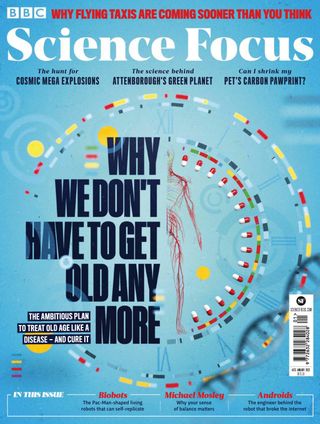

यह कहानी BBC Science Focus के January 2022 संस्करण से ली गई है।
हजारों चुनिंदा प्रीमियम कहानियों और 10,000 से अधिक पत्रिकाओं और समाचार पत्रों तक पहुंचने के लिए मैगज़्टर गोल्ड की सदस्यता लें।
क्या आप पहले से ही ग्राहक हैं? साइन इन करें
BBC Science Focus से और कहानियाँ

BBC Science Focus
DOES MY DOG HAVE ADHD?
Officially, Attention-Deficit Hyperactivity Disorder (ADHD) is a human condition. People are diagnosed with it. Dogs are not. Yet many of its core features, including hyperactivity, impulsivity and distractibility, can be found in dogs.

1 min
March 2026

BBC Science Focus
DOES MY BRAIN LIVE A LITTLE IN THE PAST?
Yes, your brain does live a little in the past. It can't help it. The information it receives via your senses is always a little out of date. Whether it's light entering the retinas in your eyes, or sounds vibrating the hairs in your ears, it not only takes time for the data to arrive, but your brain then has to process it.
2 mins
March 2026
BBC Science Focus
ASTRONOMY FOR BEGINNERS
RETURN OF THE EVENING STAR (VENUS)
1 mins
March 2026

BBC Science Focus
CAN YOU STOP YOUR SENSE OF TASTE DULLING AS YOU AGE?
Sometimes I hear people say that food just doesn't taste the same as they get older. It's tempting to blame this on age, but there are other factors at play, too.
1 mins
March 2026
BBC Science Focus
MICROBIOMES OF THE SUPERAGERS
BY STUDYING THE INCREASING NUMBER OF PEOPLE WHO ARE LIVING BEYOND THEIR 100TH BIRTHDAYS, SCIENTISTS ARE DISCOVERING THAT THE SECRET TO REACHING A RIPE OLD AGE IN RUDE HEALTH MIGHT LIE IN OUR GUTS
8 mins
March 2026

BBC Science Focus
HOW BIG WERE MEDIEVAL WAR HORSES?
You might picture knights charging into battle on towering steeds, but medieval horses were typically no bigger than modern-day ponies.
1 min
March 2026

BBC Science Focus
FORCES OF HABIT
Could new research on setting up healthy habits resuscitate those stuttering New Year resolutions?
3 mins
March 2026

BBC Science Focus
5 DANGERS HIDING IN YOUR PROCESSED FOOD
We all know that ultra-processed foods are bad for us, but what ingredients should we particularly try to avoid? And what are they doing to our bodies?
9 mins
March 2026

BBC Science Focus
Mosquitoes are becoming thirstier for human blood
Habitat loss may be pushing mosquitoes towards human hosts with deadly consequences
1 mins
March 2026

BBC Science Focus
HOW CAN I GET OVER MY EX?
Relationship breakups can be brutal, just look at the popularity of songs like 'Someone Like You' by Adele, or all the covers of 'Cry Me a River' by Julie London.
1 mins
March 2026
Translate
Change font size