कोशिश गोल्ड - मुक्त
AUGMENTED INTELLIGENCE: A BETTER TYPE OF AI?
BBC Science Focus
|New Year 2022
Why are we working so hard to make computers that compute better, when we could be using computers to help us think and act better?

For years, writers, scientists and entrepreneurs have shown us visions of our future relationships with computers and robots. These vary from the devastation of autonomous robots annihilating us, to the marvels of superhuman enhancement in robot suits. While the Terminator and Iron Man concepts push those ideas to the extreme, they highlight a clear choice in our use of technology. Should we aim for total automation with the target of greater safety and higher efficiency? Or should we aspire to augmentation – using technology to enhance our abilities without replacing us? As artificial intelligence and robotics mature enough to become integrated into everyday life, we need to start making this choice. We need to choose wisely, or we might just automate ourselves and the natural world out of existence.
Humans have always been fascinated by automation. Centuries ago, mechanical creations called automatons were constructed to mimic musicians playing, birds singing, or animals moving. Much of the Industrial Revolution was premised on the idea that automation is better: fabrics could be woven faster and cheaper. Never mind the pollution or the awful working conditions – the products are so much more affordable!
The idea continues in our factories today, where everything that can be automated is automated. Car factories are the largest adopters of robots, and today all welding and painting is done by robots, with ambitions for entire vehicles to soon be built automatically. And while robots have been around for several decades, the last 10 years have seen an explosion in artificial intelligence (and specifically methods such as machine learning). These advanced computer algorithms inspired by the way the brain works provide the latest way we can perform automation.
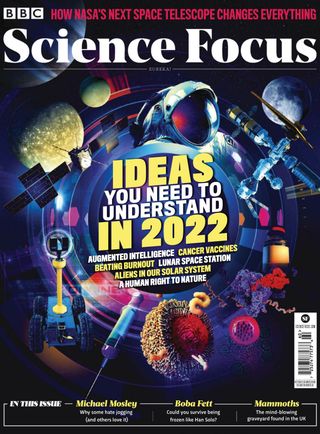

यह कहानी BBC Science Focus के New Year 2022 संस्करण से ली गई है।
हजारों चुनिंदा प्रीमियम कहानियों और 10,000 से अधिक पत्रिकाओं और समाचार पत्रों तक पहुंचने के लिए मैगज़्टर गोल्ड की सदस्यता लें।
क्या आप पहले से ही ग्राहक हैं? साइन इन करें
BBC Science Focus से और कहानियाँ

BBC Science Focus
DOES MY DOG HAVE ADHD?
Officially, Attention-Deficit Hyperactivity Disorder (ADHD) is a human condition. People are diagnosed with it. Dogs are not. Yet many of its core features, including hyperactivity, impulsivity and distractibility, can be found in dogs.

1 min
March 2026

BBC Science Focus
DOES MY BRAIN LIVE A LITTLE IN THE PAST?
Yes, your brain does live a little in the past. It can't help it. The information it receives via your senses is always a little out of date. Whether it's light entering the retinas in your eyes, or sounds vibrating the hairs in your ears, it not only takes time for the data to arrive, but your brain then has to process it.
2 mins
March 2026

BBC Science Focus
ASTRONOMY FOR BEGINNERS
RETURN OF THE EVENING STAR (VENUS)
1 mins
March 2026

BBC Science Focus
CAN YOU STOP YOUR SENSE OF TASTE DULLING AS YOU AGE?
Sometimes I hear people say that food just doesn't taste the same as they get older. It's tempting to blame this on age, but there are other factors at play, too.
1 mins
March 2026
BBC Science Focus
MICROBIOMES OF THE SUPERAGERS
BY STUDYING THE INCREASING NUMBER OF PEOPLE WHO ARE LIVING BEYOND THEIR 100TH BIRTHDAYS, SCIENTISTS ARE DISCOVERING THAT THE SECRET TO REACHING A RIPE OLD AGE IN RUDE HEALTH MIGHT LIE IN OUR GUTS
8 mins
March 2026

BBC Science Focus
HOW BIG WERE MEDIEVAL WAR HORSES?
You might picture knights charging into battle on towering steeds, but medieval horses were typically no bigger than modern-day ponies.
1 min
March 2026

BBC Science Focus
FORCES OF HABIT
Could new research on setting up healthy habits resuscitate those stuttering New Year resolutions?
3 mins
March 2026

BBC Science Focus
5 DANGERS HIDING IN YOUR PROCESSED FOOD
We all know that ultra-processed foods are bad for us, but what ingredients should we particularly try to avoid? And what are they doing to our bodies?
9 mins
March 2026

BBC Science Focus
Mosquitoes are becoming thirstier for human blood
Habitat loss may be pushing mosquitoes towards human hosts with deadly consequences
1 mins
March 2026

BBC Science Focus
HOW CAN I GET OVER MY EX?
Relationship breakups can be brutal, just look at the popularity of songs like 'Someone Like You' by Adele, or all the covers of 'Cry Me a River' by Julie London.
1 mins
March 2026
Translate
Change font size