कोशिश गोल्ड - मुक्त
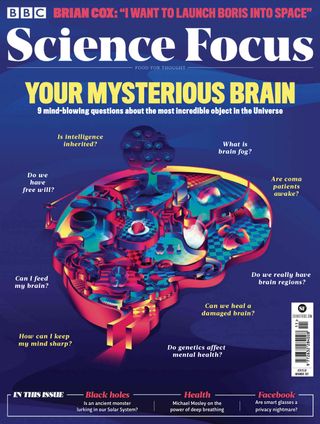
YOUR MYSTERIOUS BRAIN
BBC Focus - Science & Technology
|November 2021
Science has mapped the surface of Mars and translated the code for life. By comparison, we know next to nothing about what’s between our ears. Over the next few pages, we ask leading scientists to answer some of the most important questions about our brains…
-

Do we really have free will?
DR LISA FELDMAN BARRETT
Lisa is a professor of psychology at Northeastern University. Her latest book is Seven And A Half Lessons About The Brain (£14.99, Picador).
The question of free will is still hotly debated. On the one hand, we clearly experience ourselves as able to make choices and freely act on them. If you fancy some crisps, you can choose to walk into a shop, buy a packet and eat them. Or you can choose to eat a pastry, a salad, or nothing at all. This certainly feels like free will.
On the other hand, neuroscience evidence clearly shows that the brain usually initiates our actions before we’re aware of them. Here’s what I mean. Your brain’s primary task is to regulate the systems of your body to keep you alive and well. But there’s a snag: your brain spends its days locked in a dark, silent box (your skull) with no direct access to what’s going on inside your body or outside in the world. It receives ongoing information about the state of your body and the world – ‘sense data’– from the sensory surfaces of your body (your retina in your eyes, your cochlea in your ears, and so on). These sense data are outcomes of events in the world and inside your body. But your brain does not have access to the events or their causes. It only receives the outcomes. A loud bang, for example, might be thunder, a gunshot, or a drum, and each possible cause means different actions for your brain to launch.

यह कहानी BBC Focus - Science & Technology के November 2021 संस्करण से ली गई है।
हजारों चुनिंदा प्रीमियम कहानियों और 10,000 से अधिक पत्रिकाओं और समाचार पत्रों तक पहुंचने के लिए मैगज़्टर गोल्ड की सदस्यता लें।
क्या आप पहले से ही ग्राहक हैं? साइन इन करें
BBC Focus - Science & Technology से और कहानियाँ

BBC Science Focus
DOES MY DOG HAVE ADHD?
Officially, Attention-Deficit Hyperactivity Disorder (ADHD) is a human condition. People are diagnosed with it. Dogs are not. Yet many of its core features, including hyperactivity, impulsivity and distractibility, can be found in dogs.

1 min
March 2026

BBC Science Focus
DOES MY BRAIN LIVE A LITTLE IN THE PAST?
Yes, your brain does live a little in the past. It can't help it. The information it receives via your senses is always a little out of date. Whether it's light entering the retinas in your eyes, or sounds vibrating the hairs in your ears, it not only takes time for the data to arrive, but your brain then has to process it.
2 mins
March 2026

BBC Science Focus
ASTRONOMY FOR BEGINNERS
RETURN OF THE EVENING STAR (VENUS)
1 mins
March 2026

BBC Science Focus
CAN YOU STOP YOUR SENSE OF TASTE DULLING AS YOU AGE?
Sometimes I hear people say that food just doesn't taste the same as they get older. It's tempting to blame this on age, but there are other factors at play, too.
1 mins
March 2026

BBC Science Focus
MICROBIOMES OF THE SUPERAGERS
BY STUDYING THE INCREASING NUMBER OF PEOPLE WHO ARE LIVING BEYOND THEIR 100TH BIRTHDAYS, SCIENTISTS ARE DISCOVERING THAT THE SECRET TO REACHING A RIPE OLD AGE IN RUDE HEALTH MIGHT LIE IN OUR GUTS
8 mins
March 2026

BBC Science Focus
HOW BIG WERE MEDIEVAL WAR HORSES?
You might picture knights charging into battle on towering steeds, but medieval horses were typically no bigger than modern-day ponies.
1 min
March 2026

BBC Science Focus
FORCES OF HABIT
Could new research on setting up healthy habits resuscitate those stuttering New Year resolutions?
3 mins
March 2026

BBC Science Focus
5 DANGERS HIDING IN YOUR PROCESSED FOOD
We all know that ultra-processed foods are bad for us, but what ingredients should we particularly try to avoid? And what are they doing to our bodies?
9 mins
March 2026

BBC Science Focus
Mosquitoes are becoming thirstier for human blood
Habitat loss may be pushing mosquitoes towards human hosts with deadly consequences
1 mins
March 2026

BBC Science Focus
HOW CAN I GET OVER MY EX?
Relationship breakups can be brutal, just look at the popularity of songs like 'Someone Like You' by Adele, or all the covers of 'Cry Me a River' by Julie London.
1 mins
March 2026
Translate
Change font size