कोशिश गोल्ड - मुक्त
SWARM INTELLIGENCE
BBC Focus - Science & Technology
|New Year 2021
Small, simple, cheap satellites are being developed to explore and study space in new ways. If we deploy them in vast swarms, these ‘CubeSats’ could change the way we see and protect our planet

The roar of engines from the Rockot launch vehicle split the air as it lifted off from the Plesetsk Cosmodrome in northern Russia on 30 June 2003. The rocket was 30m tall and had been chartered by the German company Eurockot Launch Services. But instead of carrying one large satellite into orbit, the Rockot was carrying eight smaller ones.
At the time, no one paid it much attention. After all, it wasn’t the launch of a flagship, billion-dollar mission. Yet in hindsight we can see that’s exactly what made the launch so important – perhaps even a watershed in the way we use and explore space.
Some of the satellites lofted into orbit that day were tiny CubeSats, with dimensions of just 10 x 10 x 10cm. Made of standardised parts, CubeSats are relatively quick and simple to construct. When they were conceived in the late 1990s, they were thought of as educational tools to teach students the basics of how to build satellites. The idea was that the students would take the knowledge they gained on CubeSats and apply it to the large spacecraft of the traditional satellite industry. And while some did just that, others used their experience to take on an entirely different challenge: to use the miniature satellites for something more than just education.
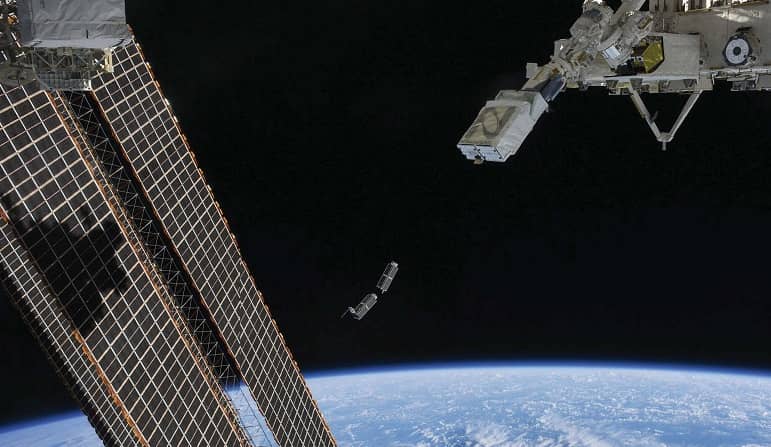
“There are now some very smart people in Europe and around the world who have set themselves a challenge to miniaturise technology such that it can fit into a very small volume. People refer to it as thinking inside the box,” says Roger Walker from the European Space Agency (ESA).

यह कहानी BBC Focus - Science & Technology के New Year 2021 संस्करण से ली गई है।
हजारों चुनिंदा प्रीमियम कहानियों और 10,000 से अधिक पत्रिकाओं और समाचार पत्रों तक पहुंचने के लिए मैगज़्टर गोल्ड की सदस्यता लें।
क्या आप पहले से ही ग्राहक हैं? साइन इन करें
BBC Focus - Science & Technology से और कहानियाँ

BBC Science Focus
DOES MY DOG HAVE ADHD?
Officially, Attention-Deficit Hyperactivity Disorder (ADHD) is a human condition. People are diagnosed with it. Dogs are not. Yet many of its core features, including hyperactivity, impulsivity and distractibility, can be found in dogs.

1 min
March 2026

BBC Science Focus
DOES MY BRAIN LIVE A LITTLE IN THE PAST?
Yes, your brain does live a little in the past. It can't help it. The information it receives via your senses is always a little out of date. Whether it's light entering the retinas in your eyes, or sounds vibrating the hairs in your ears, it not only takes time for the data to arrive, but your brain then has to process it.
2 mins
March 2026
BBC Science Focus
ASTRONOMY FOR BEGINNERS
RETURN OF THE EVENING STAR (VENUS)
1 mins
March 2026

BBC Science Focus
CAN YOU STOP YOUR SENSE OF TASTE DULLING AS YOU AGE?
Sometimes I hear people say that food just doesn't taste the same as they get older. It's tempting to blame this on age, but there are other factors at play, too.
1 mins
March 2026
BBC Science Focus
MICROBIOMES OF THE SUPERAGERS
BY STUDYING THE INCREASING NUMBER OF PEOPLE WHO ARE LIVING BEYOND THEIR 100TH BIRTHDAYS, SCIENTISTS ARE DISCOVERING THAT THE SECRET TO REACHING A RIPE OLD AGE IN RUDE HEALTH MIGHT LIE IN OUR GUTS
8 mins
March 2026

BBC Science Focus
HOW BIG WERE MEDIEVAL WAR HORSES?
You might picture knights charging into battle on towering steeds, but medieval horses were typically no bigger than modern-day ponies.
1 min
March 2026

BBC Science Focus
FORCES OF HABIT
Could new research on setting up healthy habits resuscitate those stuttering New Year resolutions?
3 mins
March 2026

BBC Science Focus
5 DANGERS HIDING IN YOUR PROCESSED FOOD
We all know that ultra-processed foods are bad for us, but what ingredients should we particularly try to avoid? And what are they doing to our bodies?
9 mins
March 2026
BBC Science Focus
Mosquitoes are becoming thirstier for human blood
Habitat loss may be pushing mosquitoes towards human hosts with deadly consequences
1 mins
March 2026

BBC Science Focus
HOW CAN I GET OVER MY EX?
Relationship breakups can be brutal, just look at the popularity of songs like 'Someone Like You' by Adele, or all the covers of 'Cry Me a River' by Julie London.
1 mins
March 2026
Translate
Change font size