
मैगज़्टर गोल्ड के साथ असीमित हो जाओ
10,000 से अधिक पत्रिकाओं, समाचार पत्रों और प्रीमियम कहानियों तक असीमित पहुंच प्राप्त करें सिर्फ
कोशिश गोल्ड - मुक्त
Go Hungry, Baby
THE WEEK
|July 14, 2019
A faulty system deprives almost two-thirds of Bihar’s children of supplementary nutrition, leaving them malnourished and prone to diseases

It is early morning, but heat and humidity hang heavily over the Musahar settlement of Manjhi Tola of Harivanshpur panchayat, Vaishali district. As we make our way to the house of Sunny Kumari, one of the seven children in the panchayat who died in the Acute Encephalitis Syndrome (AES) outbreak in June, what is more oppressive is the destitution enveloping every individual, especially kids. Naked and mudcaked children—many of them with obvious signs of malnourishment like shrunken limbs, dilated stomach and discoloured hair—dot the settlement, mostly in the care of slightly older sisters. A few roam around aimlessly, while others eat whatever they have—from dry, leftover chapatis to palm fruits and rice soaked in water. Three lucky ones, however, happily munch on mini snack packages, probably from a roadside kiosk.
About a kilometre away, in anganwadi number 91, helper Sona Devi claims she has made khichdi for children—providing a “hot cooked meal” is part of the supplementary nutrition programme of the Integrated Child Development Services. But a peek into her aluminum vessel reveals nothing more than boiled rice, just enough for seven children. There is not even dal. In the outer room, nine girls wait for this “nutritious diet”. None of them is from Manjhi Tola, even though the settlement falls under the anganwadi’s jurisdiction. Sona defends the meagre quantity of food, saying not many children visit the centre, but she is unable to explain the menu.
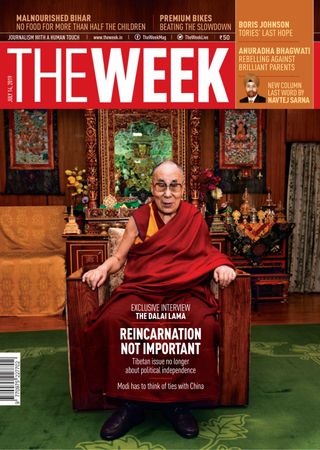

यह कहानी THE WEEK के July 14, 2019 संस्करण से ली गई है।
हजारों चुनिंदा प्रीमियम कहानियों और 10,000 से अधिक पत्रिकाओं और समाचार पत्रों तक पहुंचने के लिए मैगज़्टर गोल्ड की सदस्यता लें।
क्या आप पहले से ही ग्राहक हैं? साइन इन करें
THE WEEK से और कहानियाँ

THE WEEK India
Fire, smoke and soaring worries
The PSLV C-62 fiasco is a stress test of ISRO's technical systems, organisational processes and market credibility

7 mins
January 25, 2026

THE WEEK India
The dinosaur and the dictator
Dictators have a few things in common with T. rex, the king of dinosaurs. Both dominate their sphere of influence through brute force.
2 mins
January 25, 2026
THE WEEK India
We are developing master plans for tourism destinations
Across the world, the tourism development is more about providing seamless connection and basic infra like transportation, lodging and boarding.
2 mins
January 25, 2026

THE WEEK India
A TIGHTROPE WALK
As small-caps are yet to find valuation comfort, 2026 would be a challenging year for them
4 mins
January 25, 2026
THE WEEK India
ON THIN ICE
With the intensification of great-power rivalries in the region, Greenland's strategic and resource potential has become salient
5 mins
January 25, 2026

THE WEEK India
Elgin, Ephesus and Erdogan
Lord Elgin was wrong. Not the eighth earl whom we know as a viceroy of India, but his more famous father, the seventh who had carted away the Parthenon Marbles from Athens during 1802-1812. Elgin feared the Ottoman Turks, who had occupied Greece, might vandalise them.
2 mins
January 25, 2026
THE WEEK India
Art at the heart
The sixth edition of the Kochi-Muziris Biennale reclaims its legacy
6 mins
January 25, 2026

THE WEEK India
BENIGN PROSTATIC HYPERPLASIA (BPH): Understanding Symptoms, Diagnosis & Modern Treatment Options
Benign Prostatic Hyperplasia (BPH) is a very common medical condition affecting aging men, particularly those above 50 years.
2 mins
January 25, 2026

THE WEEK India
ERA OF THE NEW NORMAL
The confrontations with China and Pakistan have added another dimension to the ever-evolving nature of the Indian military
5 mins
January 25, 2026

THE WEEK India
Affordable CAR-T Therapy Brings New Hope for Blood Cancer Patients in India
For thousands of Indians battling blood cancers, a once-unimaginable dream is fast becoming reality. Cutting-edge CART cell therapy a breakthrough treatment that uses a patient's own immune system to fight cancer is now available in India at a fraction of global costs, offering renewed hope to patients with advanced disease.
1 mins
January 25, 2026
Translate
Change font size