कोशिश गोल्ड - मुक्त
Twilight of the separatists?
Outlook
|August 10, 2020
Geelani says goodbye to the Hurriyat. Did India prompt it, or is Pakistan shifting its strategy? Either way, it’s a season of bitter goodbyes in Kashmir.
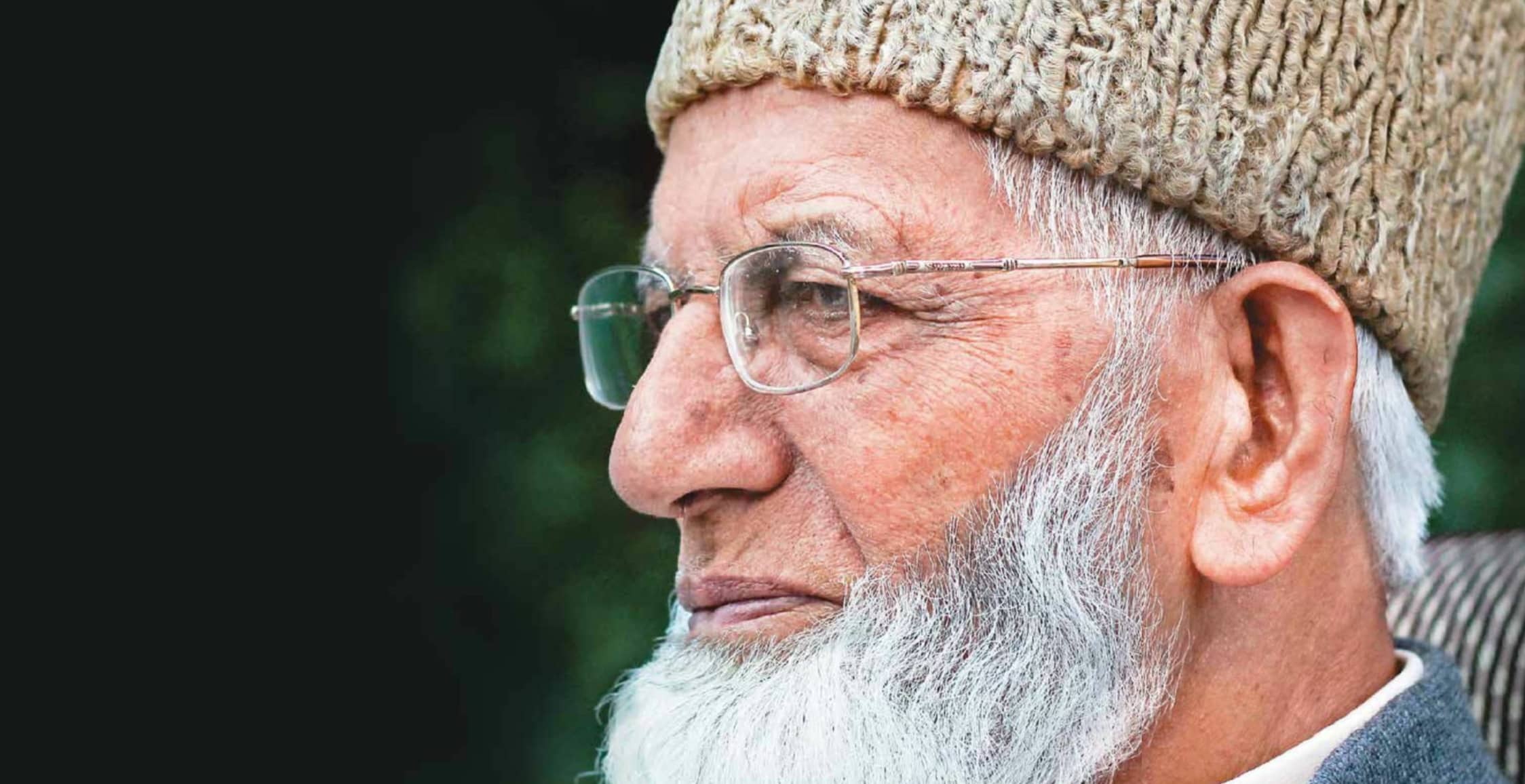
You could think of it as a final ellipsis in one man’s life, or as the turning point of a whole phase of history in Kashmir—with India, and then Pakistan, applying the vector force. For the past 30 years, 91-year-old Syed Ali Geelani has remained the pivot of Kashmiri separatism. He symbolised Kashmir’s hardline politics against Indian rule— the door that slammed shut in the face of even the occasional peace overture. Unlike some of his former associates, more amenable to dialogue under tolerable conditions, Geelani has all along enunciated the maximalist position: that the only condition for dialogue with New Delhi is that the latter accept Kashmir as a disputed territory. His street cred bore out that role of the white-bearded pater familias of resistance politics.
During the surge of protests post the killing of Burhan Wani in 2016, Geelani refused to meet the parliamentary delegation that knocked on his door at his Hyderpora residence. He described the overture as meaningless, saying they have neither the mandate nor “the intention to resolve” Kashmir. In two statements issued in September 2016, the then Hurriyat chairman asked India to accept Kashmir as a disputed territory and start demilitarisation to pave the way for a referendum—only that could “settle this issue permanently, peacefully and democratically,” he had said. That unflinching stance, in line with the sentiment on the street, meant he was acknowledged on all sides as the real inflexible one. Even if formally he was only the life-time chairman of his Hurriyat faction, he was the face and voice of Kashmir’s veto.
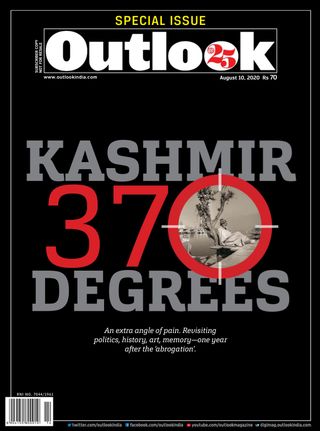

यह कहानी Outlook के August 10, 2020 संस्करण से ली गई है।
हजारों चुनिंदा प्रीमियम कहानियों और 10,000 से अधिक पत्रिकाओं और समाचार पत्रों तक पहुंचने के लिए मैगज़्टर गोल्ड की सदस्यता लें।
क्या आप पहले से ही ग्राहक हैं? साइन इन करें
Outlook से और कहानियाँ

Outlook
The Big Blind Spot
Caste boundaries still shape social relations in Tamil Nadu-a state long rooted in self-respect politics

8 mins
December 11, 2025
Outlook
Jat Yamla Pagla Deewana
Dharmendra's tenderness revealed itself without any threats to his masculinity. He adapted himself throughout his 65-year-long career as both a product and creature of the times he lived through
5 mins
December 11, 2025
Outlook
Fairytale of a Fallow Land
Hope Bihar can once again be that impossibly noisy village in Phanishwar Nath Renu's Parti Parikatha-divided, yes, but still capable of insisting that rights are not favours and development is more than a slogan shouted from a stage
14 mins
December 11, 2025

Outlook
The Lesser Daughters of the Goddess
The Dravidian movement waged an ideological war against the devadasi system. As former devadasis lead a new wave of resistance, the practice is quietly sustained by caste, poverty, superstition and inherited ritual
2 mins
December 11, 2025

Outlook
The Meaning of Mariadhai
After a hundred years, what has happened to the idea of self-respect in contemporary Tamil society?
5 mins
December 11, 2025

Outlook
When the State is the Killer
The war on drugs continues to be a war on the poor
5 mins
December 11, 2025

Outlook
We Are Intellectuals
A senior law officer argued in the Supreme Court that \"intellectuals\" could be more dangerous than \"ground-level terrorists\"
5 mins
December 11, 2025

Outlook
An Equal Stage
The Dravidian Movement used novels, plays, films and even politics to spread its ideology
12 mins
December 11, 2025
Outlook
The Dignity in Self-Respect
How Periyar and the Self-Respect Movement took shape in Tamil Nadu and why the state has done better than the rest of the country on many social, civil and public parameters
5 mins
December 11, 2025

Outlook
When Sukumaar Met Elakkiya
Self-respect marriage remains a force of socio-political change even a century later
7 mins
December 11, 2025
Translate
Change font size